
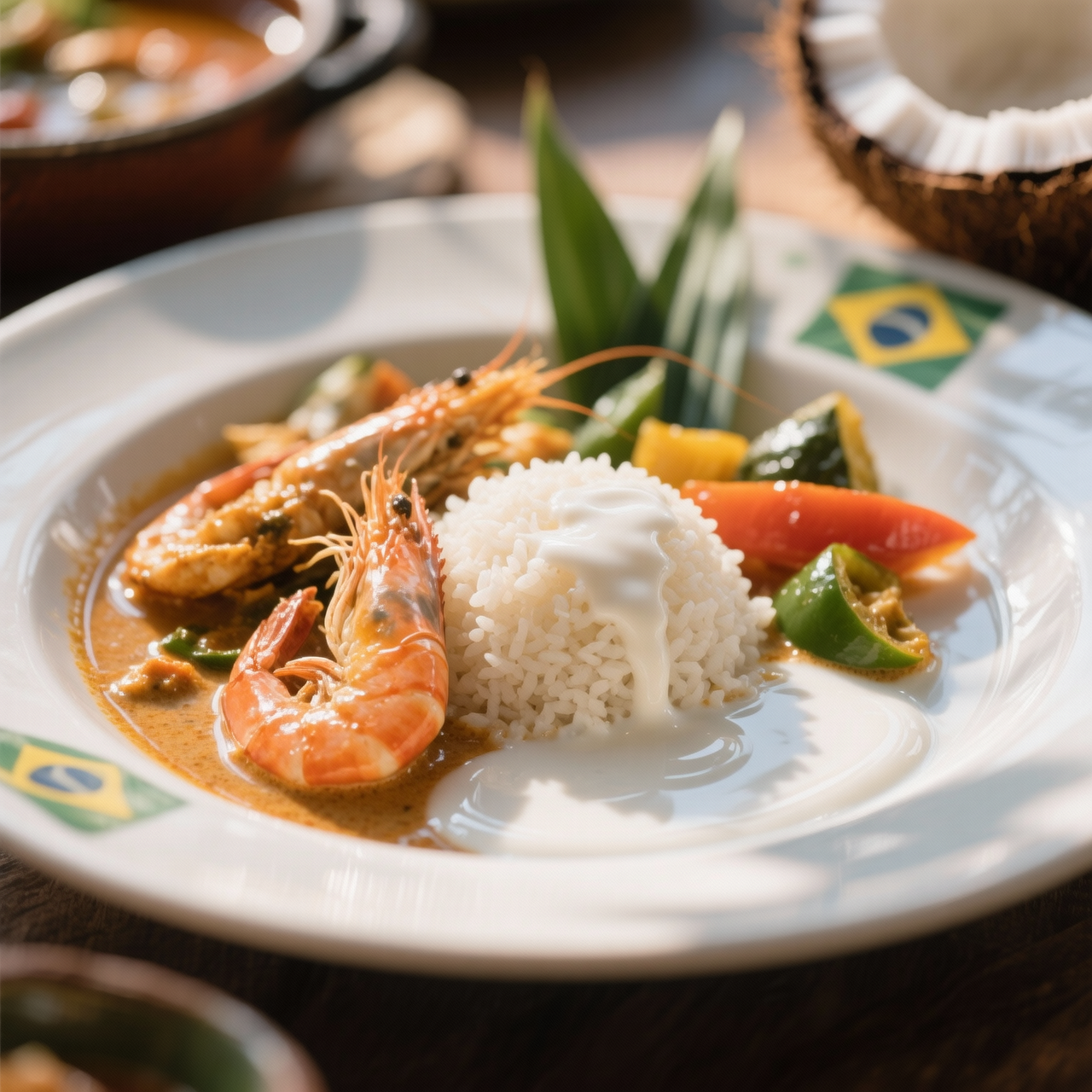
Leite de Coco (Cooking Coconut Milk)
When we talk about authentic Brazilian coastal cuisine, particularly the beloved moquecas of Bahia and Espírito Santo, the soul of the dish lies entirely in the leite de coco. I’m not talking about the canned, homogenized stuff you find in the international aisle; I mean freshly pressed coconut milk, extracted by hand from grated mature coconut meat. This traditional method, passed down through generations of coastal communities, yields a rich, velvety liquid that separates beautifully into a thick cream and a lighter milk, both of which are crucial for building the complex layers of a true moqueca. Making it from scratch matters because it preserves the vibrant, grassy sweetness and the luxurious mouthfeel that canned versions simply cannot replicate. The fresh milk emulsifies perfectly with dendê oil and the natural juices of the seafood or vegetables, creating a sauce that clings to every bite. However, there are common pitfalls to watch out for. The biggest mistake people make is using young, green coconuts instead of mature, brown ones; young coconuts yield watery, sweet water, not the fat-rich milk we need. Another frequent error is overheating the milk during the extraction process or the actual cooking. If you boil the fresh milk too vigorously, it will break and curdle, ruining the silky texture of your sauce. You must treat it with gentle heat, allowing it to simmer softly so the fats integrate smoothly. Finally, always press the coconut with warm, not hot, water to extract the maximum amount of oil without cooking the meat prematurely. Mastering this foundational element transforms a simple stew into a profound culinary experience.
Nutrition
| Per serving | Calories | Protein | Carbs | Fat | Sat fat | Fibre | Sugar | Sodium |
|---|---|---|---|---|---|---|---|---|
| beginner | 240kcal | 3g | 6g | 24g | 20g | 3g | 1g | 20mg |
| intermediate | 260kcal | 2g | 6g | 26g | 14g | 2g | 1g | 120mg |
| expert | 140kcal | 2g | 3g | 14g | 12g | 1g | 1g | 15mg |
Per serving · Ava-estimated — a guide, not a clinical figure.
- 500 gfresh coconut meat— finely grated or chopped into small pieces
- 500 mlwarm water— heated to about 60C to help extract the milk without cooking the coconut
This beginner-friendly approach to traditional Brazilian coconut milk (leite de coco) bypasses the labor-intensive process of grating and pressing fresh coconuts by utilizing high-quality jarred coconut paste or unsweetened coconut cream. This shortcut delivers the rich, authentic flavor and creamy texture required for a classic moqueca sauce without the steep learning curve. The key technique here is gentle reduction; because jarred products can sometimes separate or taste overly processed, simmering the mixture allows the flavors to meld and the emulsion to stabilize. Watch the heat carefully—coconut milk scorches easily. Keep the heat at a bare simmer and stir frequently, especially as the sauce thickens. You are looking for a luxurious, coat-the-back-of-a-spoon consistency that will beautifully braise your seafood or vegetables. This method guarantees a confident first attempt at building the foundational sauce for your Brazilian feast, proving that authentic flavor is entirely achievable with smart, modern pantry shortcuts.
Equipment
- Blender— for emulsifying the paste and water
- Heavy-bottomed saucepan— prevents scorching during reduction
- Fine-mesh strainer(optional)— optional, for ultra-smooth texture
Method
- 1
Combine the jarred coconut paste and warm water in a blender, then blend on high until completely smooth and emulsified.
Warm water helps melt the solidified coconut fats for a better blend.
emulsifying~ 2 min - 2
Pour the blended coconut mixture into a heavy-bottomed saucepan and bring to a gentle simmer over medium-low heat.
Do not let it reach a rolling boil, or the fats will separate.
simmering~ 5 minTricky bit - 3
Stir frequently and let the mixture reduce for 10 to 15 minutes until it thickens enough to coat the back of a spoon.
Scrape the bottom of the pan to prevent the thickening milk from scorching.
reducing~ 12 minTricky bit - 4
Remove the pan from the heat, stir in a pinch of salt to taste, and let the sauce rest for five minutes before serving.
The sauce will continue to thicken slightly as it cools.
resting~ 5 min
Cooking from frozen
Thaw in the refrigerator overnight and whisk vigorously or blend briefly to re-emulsify the separated fats before gently reheating.
Storage times are a guide — always use your judgement and store food safely.