
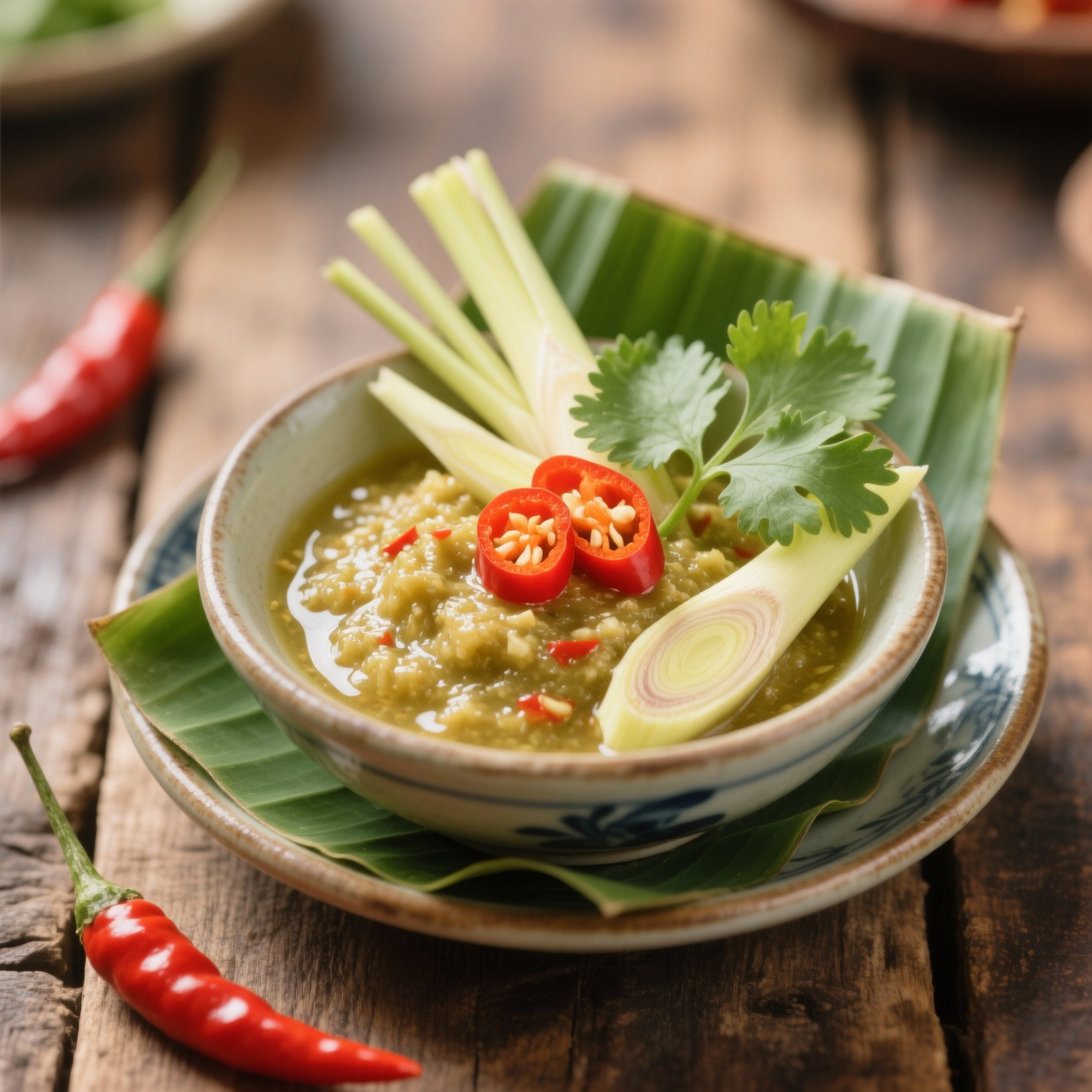
Lemongrass-Chilli Paste
When I first encountered the vibrant punch of Vietnamese lemongrass-chilli paste at a bustling market stall in Hanoi, I understood immediately why this unassuming condiment is the quiet backbone of so many beloved dishes. It is not merely a sauce but a foundational marinade base that carries the bright, citrusy top notes of pounded lemongrass, the deep earthy warmth of galangal, and the slow-building heat of fresh bird’s eye chillies. I make this paste because it bridges the gap between tedious daily prep and effortless weeknight cooking. By blending everything into a concentrated, oil-emulsified base, you capture the volatile aromatics before they fade. However, the most common mistake I see home cooks make is rushing the grinding process or skipping the oil. Lemongrass is notoriously fibrous; if you don’t bruise and mince it properly before blending, your paste will turn stringy and unpalatable. Another frequent pitfall is adding too much salt too early without tasting, which throws off the delicate balance when the paste is later used in marinades or stir-fries. I always recommend toasting your dried chillies lightly first to unlock their natural sweetness, then blending with a neutral oil until the mixture is silky and homogenous. When you treat this paste as a living ingredient rather than a static condiment, it becomes your most reliable kitchen ally. I keep mine portioned and ready to go, knowing that a single spoonful can transform humble vegetables or tofu into something deeply aromatic and authentically Vietnamese. It’s a small batch of effort that pays dividends in every single meal.
Nutrition
| Per serving | Calories | Protein | Carbs | Fat | Sat fat | Fibre | Sugar | Sodium |
|---|---|---|---|---|---|---|---|---|
| beginner | 75kcal | 1g | 9g | 4g | 1g | 1g | 4g | 320mg |
| intermediate | 165kcal | 2g | 14g | 12g | 2g | 2g | 8g | 420mg |
| expert | 165kcal | 2g | 7g | 14g | 2g | 3g | 3g | 380mg |
Per serving · Ava-estimated — a guide, not a clinical figure.
- 150 glemongrass stalk— trim tough outer layers and use only tender white to pale green lower portions
- 100 gfresh red chilli— stems removed, adjust seeds for desired heat level
- 30 ggarlic clove— peeled
- 80 gshallot— peeled and halved
- 20 gginger root— peeled and roughly chopped
- 40 gcoconut sugar— packed for consistent measurement
- 45 mlsoy sauce— ensure vegan-friendly or substitute with tamari
- 60 mlneutral oil— rice bran or sunflower oil aids smooth blending and prevents freezer burn
- 30 mllime juice— freshly squeezed and strained
- 5 gsalt— fine sea salt
This beginner-friendly version strips away the traditional mortar-and-pestle grinding, relying instead on a quality jarred lemongrass-chilli base or pre-minced aromatics to save time and effort. By using a reliable food processor or high-speed blender, you will achieve a smooth, vibrant paste without the elbow grease. The key here is balancing convenience with authenticity: always taste your jarred base before blending, as sodium and heat levels vary wildly between brands. We will gently bloom the paste in a splash of neutral oil to unlock its essential oils, then simmer briefly to meld the flavors and cook out any raw notes. Watch your heat closely during this step because chillies can scorch quickly and turn bitter. Once the mixture thickens and smells fragrant, you are done. Pour it into clean containers and freeze in ice-cube trays for effortless weeknight marinades. This approach guarantees a confident first attempt with zero guesswork, delivering that bright, citrusy Vietnamese punch in under thirty minutes while keeping your kitchen remarkably clean.
Equipment
- Food processor or blender— A mini-chopper works well for smaller batches
- Small saucepan— Use heavy-bottomed to prevent hot spots
- Ice cube tray(optional)— Silicone makes popping out frozen cubes easier
Method
- 1
Add the jarred lemongrass-chilli base, minced garlic, chopped shallots, palm sugar, and a splash of neutral oil into a food processor.
Scrape down the sides halfway through to ensure an even texture.
processing~ 2 min - 2
Heat a tablespoon of oil in a small saucepan over medium-low heat, then carefully spoon in the blended paste.
Stand back slightly as moisture hits the hot oil.
blooming~ 1 min - 3
Stir the mixture constantly for three minutes until it darkens slightly and the oil pools around the edges.
Keep a wooden spoon handy to scrape the bottom and prevent sticking.
reducing~ 3 minTricky bit - 4
Remove from heat and immediately scoop the warm paste into an ice cube tray or small freezer-safe containers.
Label with the date and freeze flat for quick thawing later.
portioning~ 2 min
Cooking from frozen
Thaw overnight in the refrigerator and stir vigorously to recombine the separated oils before use.
Storage times are a guide — always use your judgement and store food safely.