
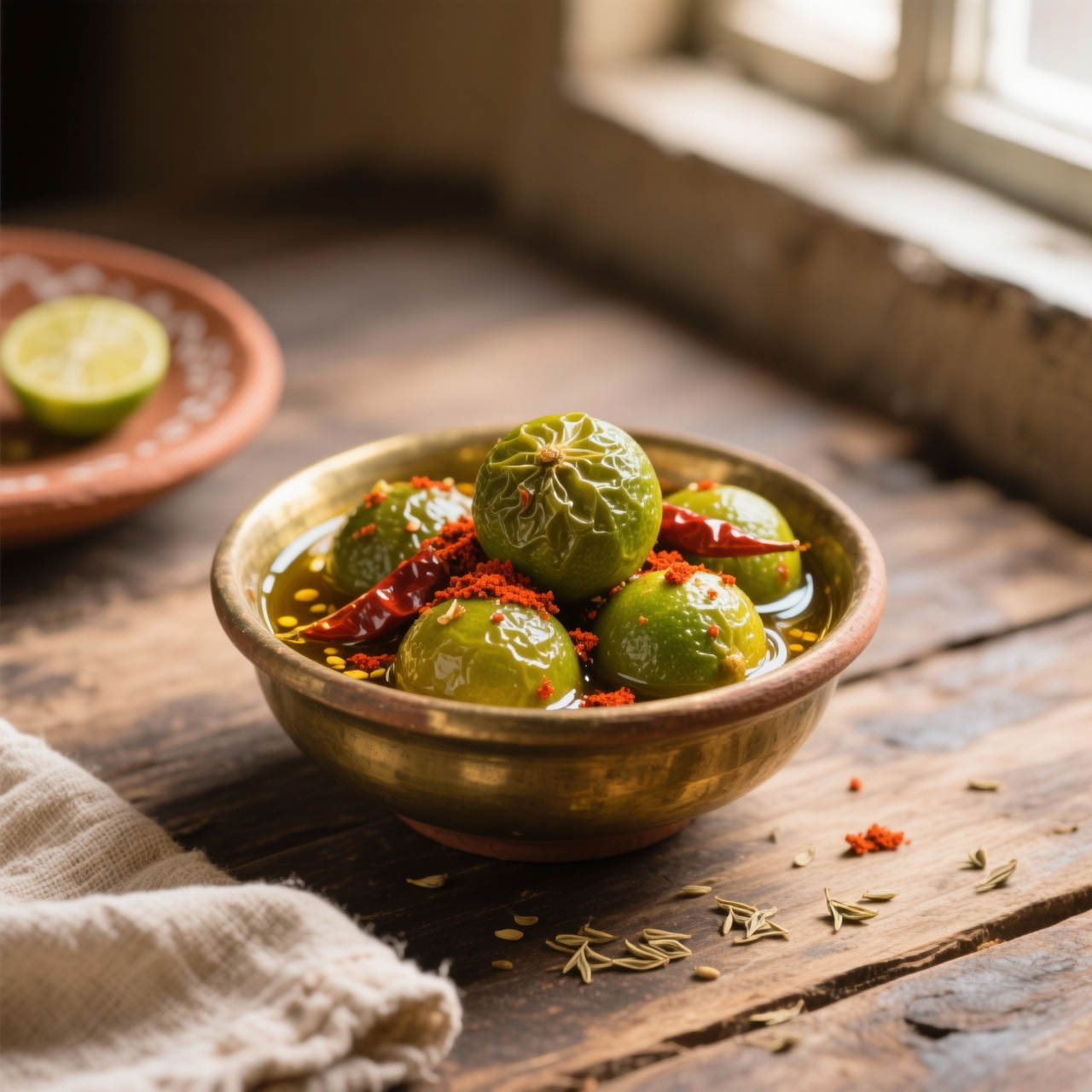
Lime Pickle (Achar)
I’ve always believed that patience is the quietest form of love, and nowhere does that truth reveal itself more vividly than in a jar of lime pickle. This isn’t a quick condiment you whip up for Tuesday dinner; it’s a slow, sun-warmed alchemy that has anchored Indian kitchens for centuries. Born from the need to preserve the fleeting summer harvest through scorching seasons, lime pickle transforms sharp, bitter citrus into something deeply complex—tangy, fiery, and profoundly comforting. When I first started making it, I underestimated how the salt and oil work as a living ecosystem. The limes soften over weeks, their peels surrendering their oils while mustard seeds, fenugreek, and turmeric weave through the brine. Why does it matter? Because it teaches us to wait, to trust time, and to honor the bold, unapologetic flavors that define Indian home cooking. But I’ve learned the hard way that this process demands respect. The most common pitfall is rushing the maturation or skimping on salt, which invites spoilage instead of preservation. Moisture is the enemy; even a single wet spoon dipped into the jar can cloud the oil and breed mold. I’ve also seen cooks over-roast the spices, turning them bitter and overshadowing the lime’s bright acidity. The magic lies in balance: enough salt to preserve, enough oil to seal, and enough weeks to let the flavors marry. When you finally crack open a properly matured jar after three or four weeks, the aroma alone feels like stepping into a grandmother’s sunlit pantry. It’s not just a condiment; it’s a testament to restraint, tradition, and the quiet reward of waiting.
Nutrition
| Per serving | Calories | Protein | Carbs | Fat | Sat fat | Fibre | Sugar | Sodium |
|---|---|---|---|---|---|---|---|---|
| beginner | 165kcal | 2g | 8g | 14g | 2g | 2g | 3g | 1100mg |
| intermediate | 145kcal | 1g | 5g | 14g | 2g | 1g | 2g | 680mg |
| expert | 150kcal | 1g | 4g | 15g | 3g | 1g | 1g | 580mg |
Per serving · Ava-estimated — a guide, not a clinical figure.
- 500 glime— washed thoroughly, completely dried, and cut into wedges
- 200 mlmustard oil— heated to smoking point then cooled completely to room temperature
- 60 gsalt— preferably non-iodized rock salt
- 15 gturmeric powder
- 30 gred chili powder— adjust to taste preference
- 10 gfenugreek seed— dry roasted and coarsely ground
- 15 gfennel seed— coarsely ground
- 20 gmustard seed— coarsely ground
- 2 gasafoetida
This beginner-friendly version of Lime Achar prioritizes approachability and consistency over traditional labor-intensive methods. Instead of grinding raw spices from scratch, you’ll use a high-quality store-bought Indian pickle spice blend or ready-made mustard-fenugreek paste, which guarantees balanced flavor without guesswork. The limes are quickly softened with a brief hot water soak rather than sun-drying for days, significantly cutting down active time while preserving their essential oils. Watch closely during the tempering stage: the oil should shimmer but never smoke, as overheating will scorch the spices and create a bitter base. Sterilizing your storage jars is non-negotiable for safe fermentation, so follow the boiling-water method precisely to prevent spoilage. Don’t rush the maturation process; seal the jar tightly and store it in a cool, dark spot for at least two to three weeks. The flavors will mellow and meld beautifully, transforming sharp citrus and bold spices into a rich, spoonable condiment that pairs effortlessly with rice, flatbreads, or grilled vegetables.
Equipment
- Heavy-bottomed pan— non-stick is fine here
- Sterilized glass jars— must be completely dry
- Wooden spoon— prevents scratching and metal reactions
Method
- 1
Submerge whole limes in hot water for ten minutes to soften the peels without cooking them.
Water should be just below boiling to preserve essential oils.
blanching~ 10 min - 2
Drain, pat completely dry, and quarter the limes before tossing them thoroughly with salt.
Any residual moisture will cause mold during fermentation.
curing~ 5 minTricky bit - 3
Warm the oil in a heavy-bottomed pan over medium heat, then stir in your jarred spice paste until fragrant.
Keep heat steady to bloom the spices without burning the mustard seeds.
tempering~ 3 minTricky bit - 4
Fold the spiced oil mixture evenly into the salted lime quarters until every piece is thoroughly coated.
Use a dry wooden spoon to maintain a sterile environment.
emulsifying~ 2 min - 5
Pack the mixture tightly into sterilized jars, leaving minimal headspace, and seal immediately for maturation.
Store in a cool, dark place and gently shake the jar once weekly.
fermenting~ 5 min
Storage times are a guide — always use your judgement and store food safely.