
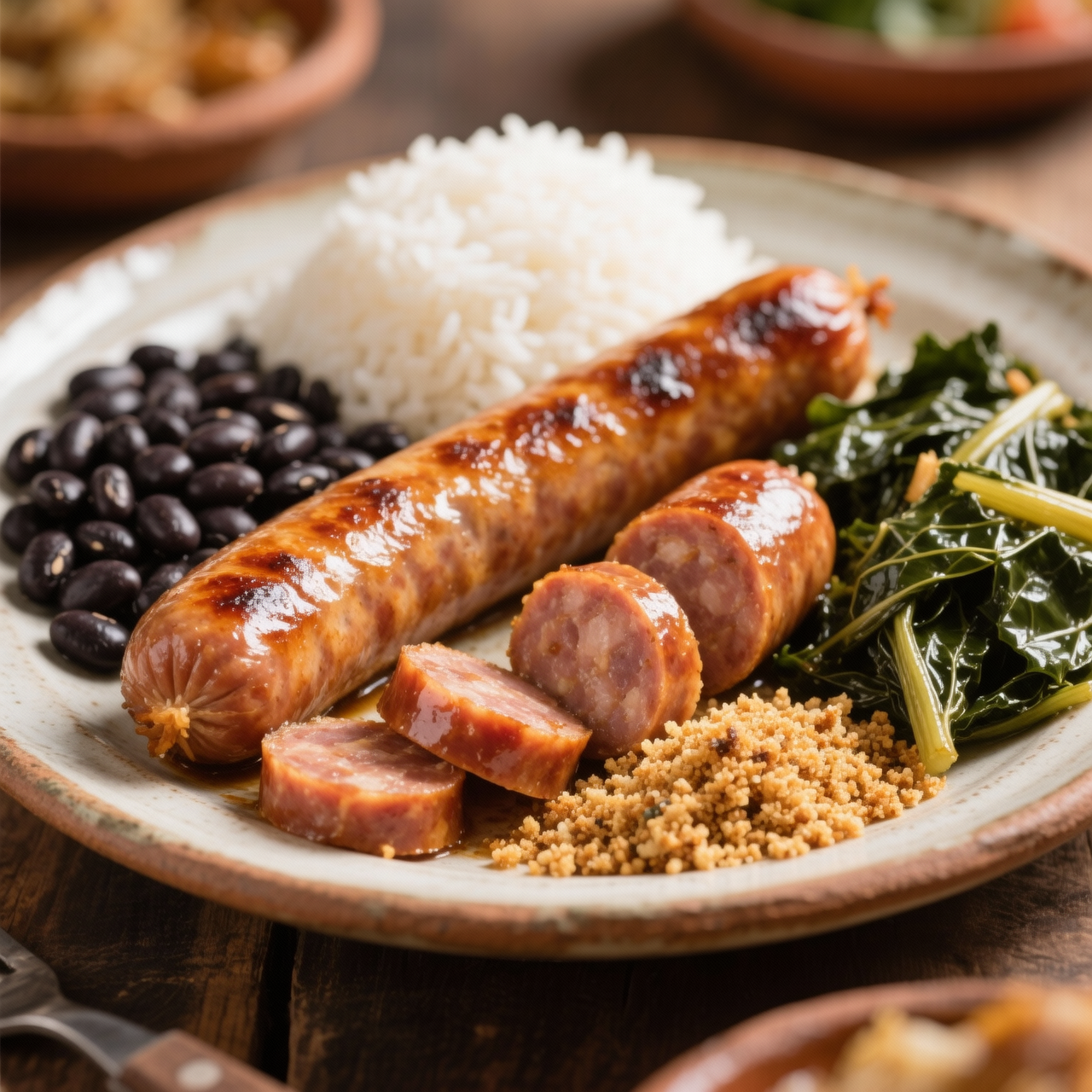
Linguiça (Brazilian Sausage)
When I first moved to Brazil, I was shocked by the price and quality of supermarket linguiça. Those plastic-wrapped trays of pale, rubbery links cost nearly as much as a decent cut of steak, yet they were pumped full of water, soy protein, and preservatives, tasting of little more than smoke and salt. Making linguiça from scratch isn't just a culinary triumph; it's a reclaiming of a beloved staple. Rooted in Portuguese tradition but fiercely adapted by Brazilian immigrants in the south, particularly in São Paulo and Rio Grande do Sul, this sausage is the soul of a weekend churrasco. The magic lies in the fat-to-meat ratio and the generous, unapologetic seasoning of garlic, paprika, and a splash of cachaça or white wine. The most common pitfall I see is using meat that is too lean. You need pork shoulder with at least twenty percent fat, otherwise, your sausages will be dry and crumbly. Another mistake is overworking the meat; mix it just until the spices are distributed, keeping everything ice-cold so the fat doesn't smear. By grinding and stuffing your own, you control the texture and the cure, creating a plump, juicy link that snaps perfectly when it hits the grill. It costs a fraction of the artisanal butcher's price, and infinitely less than those sad, processed supermarket packs, giving you a freezer stash of authentic, preservative-free Brazilian sunshine ready to elevate any meal.
Nutrition
| Per serving | Calories | Protein | Carbs | Fat | Sat fat | Fibre | Sugar | Sodium |
|---|---|---|---|---|---|---|---|---|
| beginner | 400kcal | 26g | 1g | 32g | 11g | 0g | 0g | 650mg |
| intermediate | 580kcal | 42g | 2g | 44g | 16g | 1g | 0g | 850mg |
| expert | 510kcal | 38g | 2g | 38g | 14g | 0g | 0g | 650mg |
Per serving · Ava-estimated — a guide, not a clinical figure.
- 1000 gpork shoulder— trimmed of silverskin and cut into 1-inch cubes
- 300 gpork back fat— cut into 1-inch cubes
- 6 clovesgarlic clove— minced
- 22 gkosher salt
- 5 gblack peppercorn— freshly ground
- 15 gpaprika— sweet or smoked
- 5 gdried oregano
- 30 mlwhite wine vinegar
- 2 mhog casing— rinsed and soaked in warm water
Shop-bought Brazilian linguiça often costs around $8 for a small pack of four, but it is typically loaded with cheap starch fillers, artificial preservatives, and excessive sodium that masks the lack of real pork flavor. This from-scratch beginner version skips the mechanical grinder and stuffer, relying on high-quality pre-ground pork shoulder and a simple piping bag to create authentic, juicy links without the industrial shortcuts. The technique is highly forgiving: you simply mix the pork with fresh garlic, smoked paprika, salt, and a splash of white wine vinegar to mimic the traditional tangy cure. Instead of a multi-day fermentation, a brief rest in the fridge allows the flavors to meld. Watch out for overmixing the meat, which can make the sausages tough; mix just until the spices are evenly distributed. When piping, leave a little space at the ends and twist gently to form links, ensuring they cook evenly and retain their succulent juices when pan-fried.
Equipment
- Heavy-bottomed pan— cast iron or stainless steel works best for a good crust
- Large mixing bowl— wide enough to mix the meat comfortably without spilling
- Piping bag— a sturdy reusable bag or a doubled heavy-duty ziplock bag with the corner snipped
Method
- 1
Rinse the hog casings under cool water and soak them in a bowl of fresh cool water for 10 minutes to rehydrate and remove excess salt.
Run water through the inside of the casing to check for holes before using.
soaking~ 10 min - 2
Mash the minced garlic, salt, smoked paprika, black pepper, and white wine vinegar together in a small bowl until it forms a coarse, fragrant paste.
Mashing the garlic with the salt helps break it down into a smoother puree.
muddling~ 3 min - 3
Add the ground pork shoulder and the spice paste to the large bowl, mixing gently with your hands just until the spices are evenly distributed.
Do not overwork the meat or the sausages will become dense and tough.
mixing~ 2 minTricky bit - 4
Slide the entire length of a soaked casing onto the snipped corner of the piping bag, then pack the meat mixture tightly into the bag.
Push out any large air pockets in the bag before starting to pipe.
piping~ 4 min - 5
Squeeze the meat steadily into the casing to form a continuous tube, then pinch and twist gently every 4 inches to create individual links.
Leave a little space at the very ends of the casing to tie off later if needed.
linking~ 5 min - 6
Prick any visible air bubbles with a sterilized needle, then cook the links in the heavy-bottomed pan over medium-low heat, turning occasionally, until browned and cooked through.
Keep the heat moderate; too high will cause the casings to split and the fat to render out too quickly.
pan-frying~ 10 minTricky bit
Cooking from frozen
Thaw overnight in the fridge before reheating in a skillet or oven.
Storage times are a guide — always use your judgement and store food safely.