
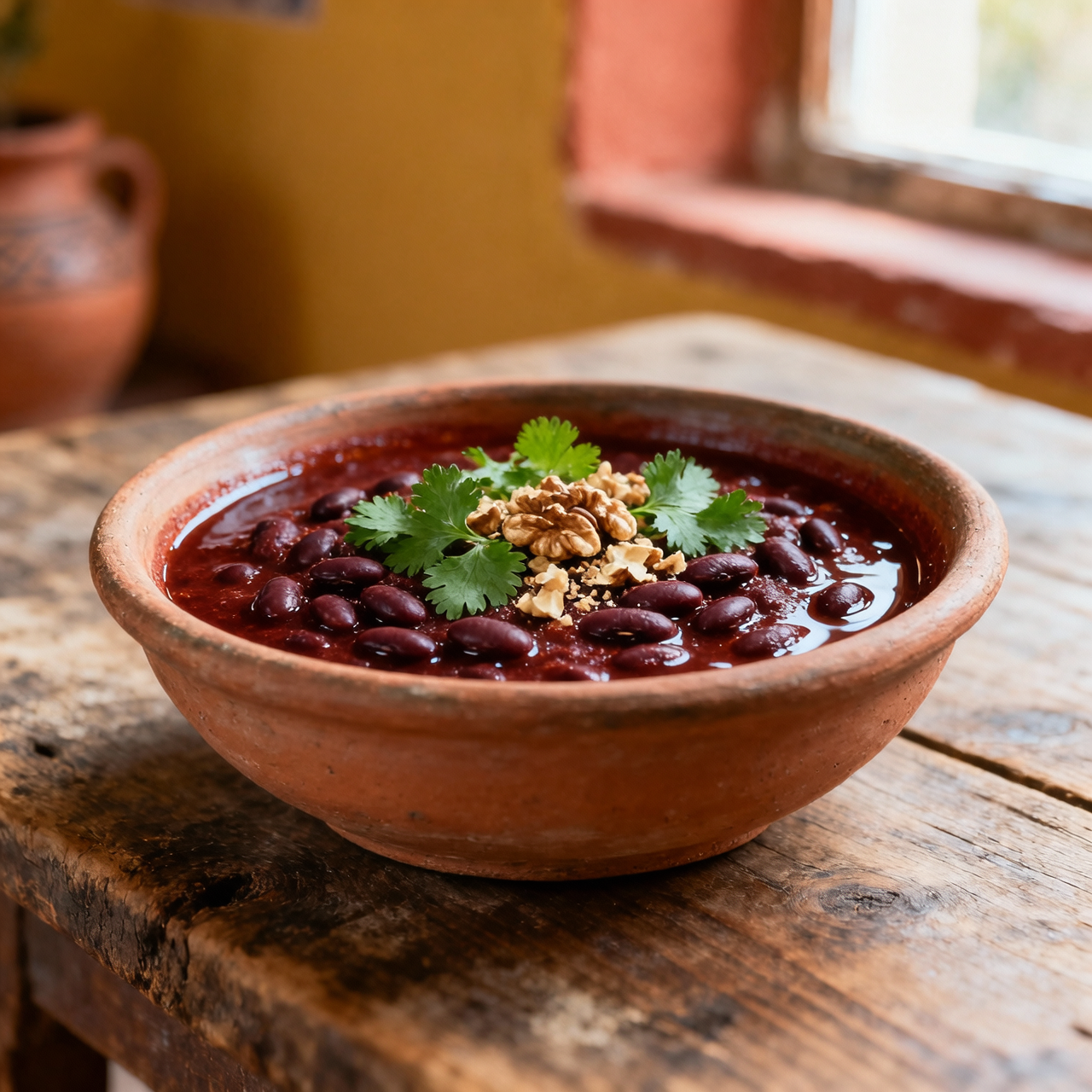
Lobio
I first encountered lobio not in a bustling Tbilisi market, but simmering quietly on a stovetop in a village home outside of Kutaisi, where time seemed to move at the pace of a slow boil. At its heart, this Georgian bean stew is a testament to the country agrarian resilience and deep-rooted culinary philosophy. For centuries, lobio has been a cornerstone of the Georgian table, transforming humble red kidney beans into a rich, aromatic centerpiece through patience, walnuts, fresh herbs, and the unmistakable warmth of blue fenugreek. What makes it matter, especially today, is how effortlessly it bridges tradition and modern dietary values, remaining naturally vegan, deeply nourishing, and profoundly satisfying without relying on meat or dairy. Yet, for all its simplicity, lobio is notoriously easy to misstep. I have watched countless home cooks rush the beans, skipping the overnight soak or failing to simmer them low and slow, which leaves the texture stubbornly firm and the flavors underdeveloped. Another frequent trap is the heavy-handed addition of acidic ingredients like tkemali or vinegar too early in the cooking process, which halts the softening of the legumes and throws off the stew delicate balance. The herbs, too, are often treated as an afterthought rather than the soul of the dish; cilantro, basil, and savory must be folded in generously and at the very end to preserve their brightness. When done right, lobio is more than a meal; it is a slow, deliberate act of care, a bowl of earthy comfort that speaks directly to the Georgian belief that food should nourish both body and spirit. I have learned to respect its rhythm, and in doing so, I have found a recipe that truly feeds you.
Nutrition
| Per serving | Calories | Protein | Carbs | Fat | Sat fat | Fibre | Sugar | Sodium |
|---|---|---|---|---|---|---|---|---|
| beginner | 610kcal | 28g | 76g | 24g | 2g | 30g | 8g | 940mg |
| intermediate | 610kcal | 28g | 76g | 24g | 2g | 30g | 8g | 940mg |
| expert | 610kcal | 28g | 76g | 24g | 2g | 30g | 8g | 940mg |
Per serving · Ava-estimated — a guide, not a clinical figure.
- 400 gdried red kidney bean— sorted and rinsed
- 300 gyellow onion— peeled
- 18 ggarlic clove— fresh
- 60 gtomato paste— pure concentrate
- 50 graw walnut half
- 40 gfresh cilantro— stems and leaves separated
- 10 gcoriander seed— whole
- 5 gblue fenugreek seed
- 2 gdried red pepper flake
- 60 mlsunflower oil
- 15 mlred wine vinegar
- 8 gsea salt— fine
- 2 gblack peppercorn— cracked
This version is designed for your first confident attempt without sacrificing the soul of the dish. We streamline the process by using a rapid hot-water soak for the beans and relying on jarred tomato paste that has already been stabilized for consistent acidity. The spice blend is added directly to the pan, skipping the traditional dry-toasting step, which makes timing much more forgiving. Your primary focus should be maintaining a gentle simmer once the beans hit the pan; vigorous boiling will split the skins and turn the broth cloudy. Watch the tomato paste closely when it hits the oil, as it should darken slightly and smell sweet, not bitter, before you proceed. The final resting period is non-negotiable here, as it allows the starches to thicken the sauce naturally without needing extra thickeners. You will notice the flavors shift from sharp to rounded as the dish cools to room temperature. Trust the process, taste for balance before serving, and adjust the salt or vinegar only at the very end. This approach guarantees a deeply comforting, cohesive bowl every single time.
Equipment
- Large pot— stainless steel or enamel works best
- Wooden spoon— heat-resistant
- Fine mesh strainer— for draining
Method
- 1
Soak the dried red kidney beans in hot tap water for one hour to reduce cooking time.
Water should cover beans by five centimeters
rehydrating~ 60 min - 2
Drain the beans, rinse thoroughly, and transfer to a large pot with fresh water.
Cover by two inches
rinsing~ 2 min - 3
Simmer the beans until tender, skimming any foam that rises to the surface.
Test one bean for softness
simmering~ 30 min - 4
Finely dice the onion and mince the garlic while the beans cook.
Keep pieces uniform for even cooking
dicing~ 5 min - 5
Heat the sunflower oil in a separate pan and sauté the onion until translucent.
Do not brown
sweating~ 5 min - 6
Stir in the tomato paste and cook until the raw tang disappears.
Stir constantly to prevent scorching
blooming~ 2 minTricky bit - 7
Drain the cooked beans, reserving one cup of cooking liquid, and add them to the pan.
Save the starchy liquid
deglazing~ 1 min - 8
Add the coriander seeds, blue fenugreek, pepper flakes, and salt, then simmer for ten minutes.
Gentle heat preserves bean shape
reducing~ 10 min - 9
Fold in the walnuts, garlic, vinegar, and cilantro, then let rest off heat.
Acid goes in last
finishing~ 5 min