
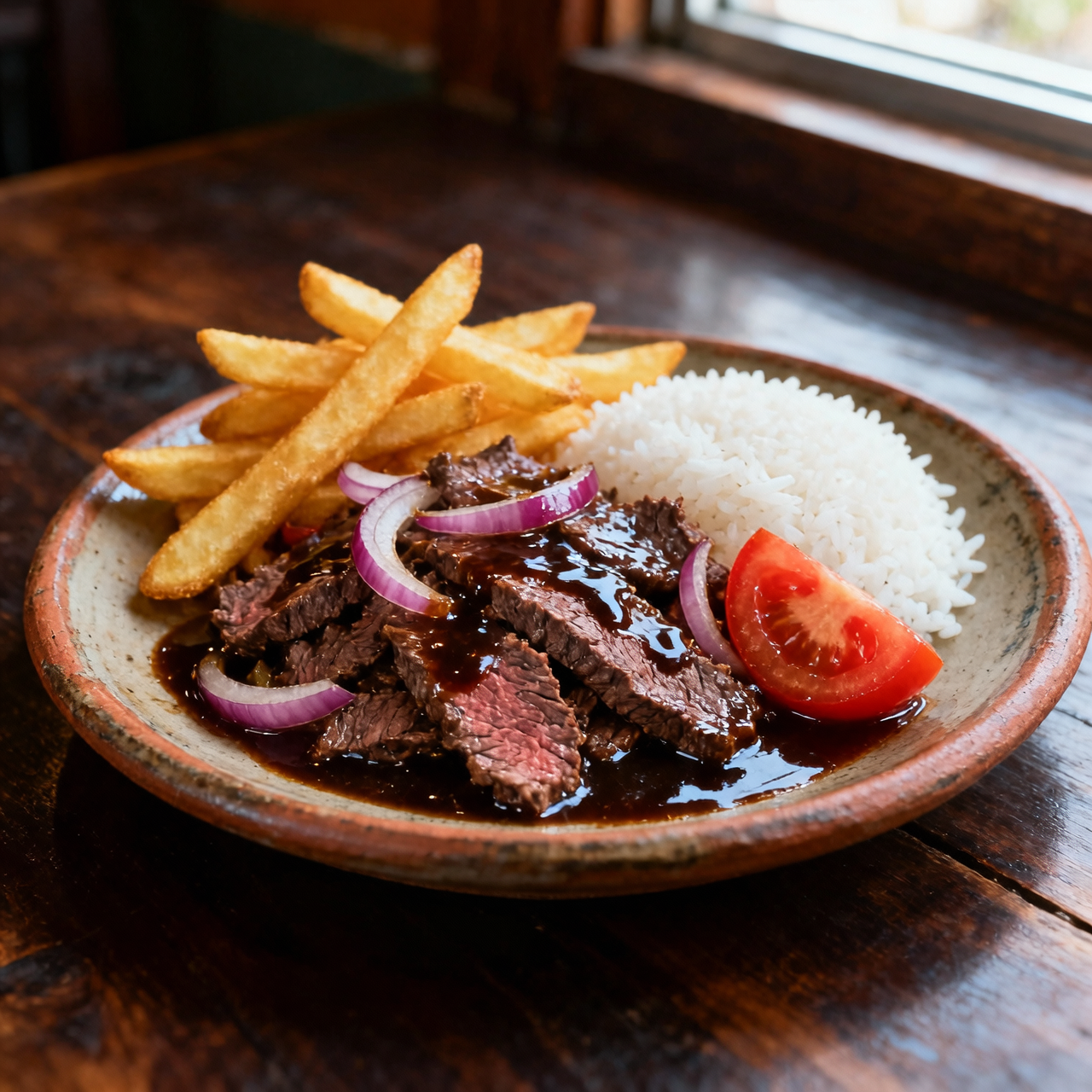
Lomo Saltado
When I first encountered lomo saltado in a bustling Lima kitchen, I didn't just see a stir-fry; I saw a living dialogue between continents. Born in the late nineteenth century, this dish emerged when Chinese immigrants brought their wok techniques to Peru and married them with native ingredients like aji amarillo and locally raised beef. That historical collision is exactly why this recipe matters to me. It refuses to be pigeonholed into a single culinary tradition, instead thriving in the vibrant space between Cantonese high heat and Andean earthiness. Yet, I have watched countless home cooks strip away its soul by treating it like a standard American beef stir-fry. The most common pitfall? Overcrowding the pan. If you crowd the skillet, the beef steams instead of searing, robbing you of that essential caramelized crust and leaving the sauce watery and dull. Another frequent mistake is rushing the aromatics. Soy sauce, vinegar, and tomatoes need a precise, almost choreographed sequence to bloom without turning bitter. I always insist on slicing the sirloin against the grain, keeping the strips thick enough to withstand the blistering wok, and finishing with a splash of rice wine and a handful of freshly chopped cilantro. When done right, the meat stays tender, the onions retain a slight crunch, and the fries soak up just enough savory broth without disintegrating. For me, mastering lomo saltado is not about rigid rules; it is about respecting the heat, timing, and cultural fusion that birthed it. Every time I toss those ingredients together, I am honoring a century of migration, adaptation, and shared tables.
Nutrition
| Per serving | Calories | Protein | Carbs | Fat | Sat fat | Fibre | Sugar | Sodium |
|---|---|---|---|---|---|---|---|---|
| beginner | 670kcal | 47g | 67g | 23g | 6g | 5g | 6g | 1360mg |
| intermediate | 670kcal | 47g | 67g | 23g | 6g | 5g | 6g | 1360mg |
| expert | 670kcal | 47g | 67g | 23g | 6g | 5g | 6g | 1360mg |
Per serving · Ava-estimated — a guide, not a clinical figure.
- 600 gbeef sirloin— trimmed of excess fat
- 250 gred onion— peeled and sliced into thick wedges
- 300 groma tomato— cut into thick wedges
- 30 gaji panca paste— traditional Peruvian smoked chili paste
- 15 ggarlic— minced
- 30 mlsoy sauce— regular or tamari
- 15 mlred wine vinegar
- 3 gground cumin
- 8 gkosher salt
- 2 gblack pepper— freshly cracked
- 45 mlvegetable oil— high smoke point
- 15 gfresh cilantro— roughly chopped
- 400 grusset potato— cut for frying
- 200 gjasmine rice— uncooked
This version is designed to strip away the intimidation factor while preserving the soul of the dish. You will lean on high-quality jarred aji panca paste and standard soy sauce, bypassing the labor of grinding spices or fermenting chilies. The focus here is on sequencing and temperature control rather than advanced wok mastery. A heavy skillet works perfectly, and you will learn to cook the beef in two manageable batches to guarantee a proper sear instead of a steam. Watch closely as you add the tomatoes and onions; they only need a minute in the pan to soften slightly while retaining their structural integrity. The biggest pitfall at this stage is rushing the sauce reduction, which leads to a watery result rather than a glossy glaze. Keep your vinegar and soy measured, and stir constantly once they hit the pan. I have built this pathway to give you immediate, reliable feedback on how heat transforms raw ingredients into a cohesive main course. Once you can execute this confidently, you will naturally start to feel when to push the pan hotter or adjust the acid balance. Trust the visual cues over the clock, and you will have a deeply satisfying meal on the table with minimal stress.
Equipment
- Large nonstick skillet— heavy bottom preferred
- Chef knife— sharp edge required
- Wooden spatula— heat resistant
Method
- 1
Pat the beef strips completely dry and toss with half the salt and pepper.
Moisture prevents proper browning.
drying~ 1 min - 2
Heat half the vegetable oil in a large nonstick skillet over medium-high heat.
Wait until the oil shimmers.
heating~ 2 min - 3
Sear the beef in a single layer until browned on both sides.
Work in two batches to avoid steaming.
searing~ 3 minTricky bit - 4
Transfer the browned beef to a clean plate and add the remaining oil to the same pan.
Keep the pan hot.
transferring~ 1 min - 5
Stir-fry the onion wedges for two minutes until the edges just soften.
Do not overcook.
sautéing~ 2 min - 6
Add the garlic, aji panca paste, and cumin, cooking for thirty seconds until fragrant.
Keep the heat moderate to avoid burning.
blooming~ 1 minTricky bit - 7
Return the beef and tomatoes to the pan, then pour in the soy sauce and red wine vinegar.
Stir constantly to coat everything evenly.
deglazing~ 1 min - 8
Remove from heat, fold in the fresh cilantro, and serve immediately over hot rice and fries.
Let the residual heat finish the vegetables.
finishing~ 1 min