
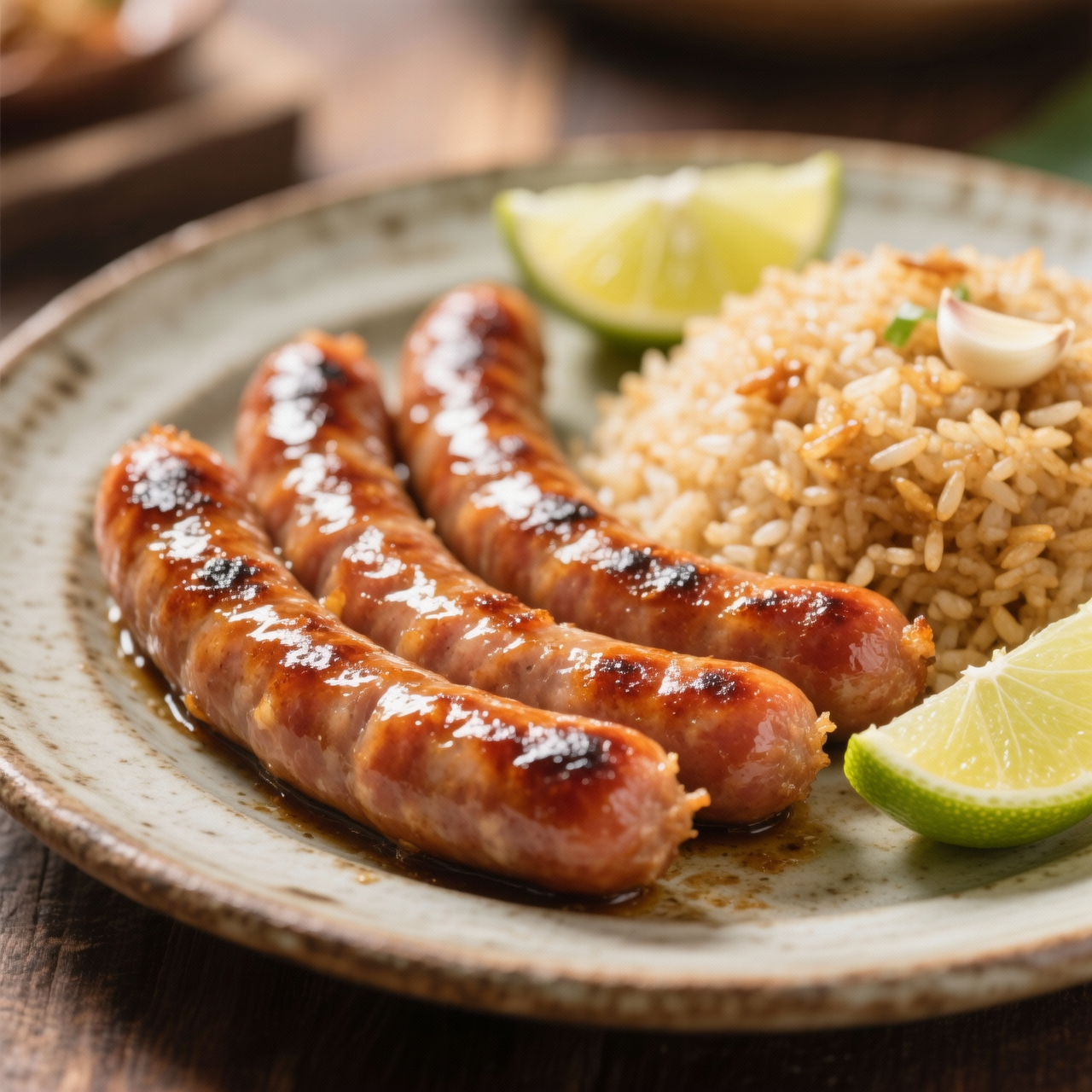
Longganisa (Sausage)
I’ve always believed that a proper Filipino breakfast begins with the sizzle of longganisa in the pan, but the journey to mastering it is rarely straightforward. When Spanish colonizers brought chorizo to the islands centuries ago, local cooks didn’t just copy it; they transformed it, trading heavy paprika and dried meats for our own bright vinegar, generous garlic, and a touch of brown sugar. That evolution is why making it from scratch matters so deeply to me today. Store-bought links might cost you upwards of eight dollars a pound at the grocer, yet they are almost always padded with soy protein, sodium nitrites, and a confusing list of stabilizers that dull the very flavors you crave. The real magic lies in a simple, unprocessed blend of well-chilled pork shoulder, freshly minced garlic, a careful balance of cane vinegar and salt, and a slow, deliberate mix that respects the meat’s natural texture. The most common pitfalls I see beginners fall into are overworking the mixture until it becomes pasty, skipping the crucial overnight chill, or frying it straight from the fridge, which guarantees split casings and a bitter, scorched crust. Give the meat time to marry with the seasoning, keep everything cold, and you will be rewarded with a deeply savory, slightly tangy sausage that caramelizes beautifully without needing artificial binders or shortcuts. Once you taste the difference, you will never go back to the plastic-wrapped aisle again.
Nutrition
| Per serving | Calories | Protein | Carbs | Fat | Sat fat | Fibre | Sugar | Sodium |
|---|---|---|---|---|---|---|---|---|
| beginner | 485kcal | 22g | 14g | 35g | 11g | 0g | 12g | 640mg |
| intermediate | 460kcal | 26g | 12g | 34g | 12g | 0g | 10g | 520mg |
| expert | 580kcal | 32g | 18g | 42g | 15g | 1g | 14g | 890mg |
Per serving · Ava-estimated — a guide, not a clinical figure.
- 800 gpork shoulder— Select a cut with approximately 20 percent fat for authentic texture.
- 200 gpork back fat— Keep cold and finely diced or ground.
- 30 ggarlic— Finely minced or pressed into a paste.
- 50 gbrown sugar— Light or dark variety.
- 30 mlsoy sauce— Regular sodium level recommended for preservation.
- 15 mlcane vinegar— White or apple cider vinegar can substitute.
- 5 gsalt— Fine sea salt or kosher salt.
- 2 gblack pepper— Freshly ground for best aroma.
- 2 gannatto powder— Provides traditional color without altering flavor.
- 3 mhog casing(optional)— Rinse thoroughly and soak in lukewarm water before stuffing.
Store-bought Filipino longganisa often costs over a dollar per link and relies on heavy preservatives, artificial colorants, and excessive sodium to mask low-quality meat fillers. Making it from scratch at this beginner level strips away the complicated casing-stuffing and meat-grinding steps while preserving the bold, garlicky, sweet-and-sour profile you expect. You will work with fresh ground pork shoulder and mix a quick marinade directly from whole pantry staples. The key to success here is patience during the resting phase; letting the seasoned meat sit for at least thirty minutes allows the vinegar, soy sauce, and brown sugar to penetrate evenly, ensuring every bite is cohesive rather than crumbly. Watch your pan temperature closely during cooking. Because fresh longganisa contains no commercial binders or starch, high heat will cause the natural fats to render too quickly and burn the sugar before the interior cooks through. Keep the flame low and steady, adding just a splash of water to the pan to gently steam the sausages before letting them crisp in their own rendered fat. This forgiving, casing-free approach yields a reliable batch hero that freezes beautifully.
Equipment
- Large mixing bowl— glass or stainless steel works best for even temperature control
- Heavy-bottomed skillet— cast iron or thick aluminum prevents hot spots
- Measuring spoons— essential for balancing sweet and acidic ratios
- Parchment paper(optional)— prevents sticking during freezer storage
Method
- 1
Combine ground pork shoulder, finely minced fresh garlic, brown sugar, cane vinegar, soy sauce, black pepper, and salt in a large bowl until the mixture becomes uniformly sticky.
Sticky texture indicates proper protein extraction, which prevents crumbling later.
emulsifying~ 3 min - 2
Cover the bowl tightly and refrigerate the seasoned meat for at least thirty minutes.
This resting period is non-negotiable for flavor penetration and natural binding.
curing~ 30 min - 3
Divide the chilled mixture into twelve equal portions and roll each into a compact, oval patty roughly three inches long.
Chill your hands under cold water to prevent the pork fat from warming too quickly.
portioning~ 5 minTricky bit - 4
Place the shaped longganisa in a cold heavy-bottomed skillet and add three tablespoons of water before turning the heat to medium-low.
Starting cold prevents the sugar from scorching before the meat sets.
cold-start rendering~ 1 min - 5
Cover the pan and simmer gently for eight minutes, then uncover and continue cooking until the liquid evaporates and the sausages brown evenly on all sides.
Tilt the pan occasionally to baste the links in their own rendered fat.
pan-frying~ 10 minTricky bit
Cooking from frozen
Thaw overnight in the fridge, then pan-fry on medium-low with a splash of water until the liquid evaporates and the casing caramelizes.
Storage times are a guide — always use your judgement and store food safely.