
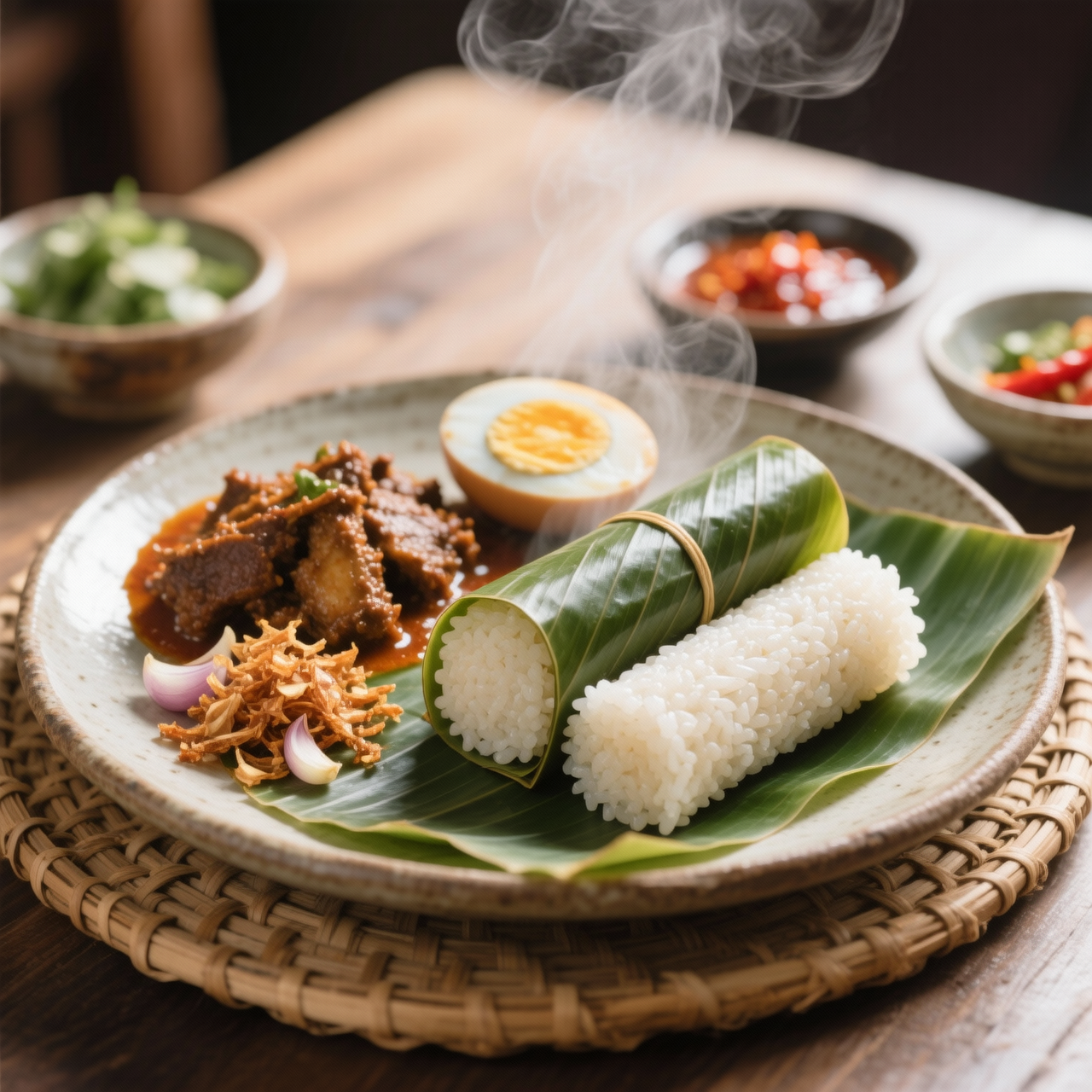
Lontong (Rice Cake)
I first learned to make lontong in a cramped Jakarta kitchen, watching my grandmother patiently wrap half-soaked rice into neat cylinders of banana leaf. Unlike the glossy, vacuum-sealed packs you might find at the supermarket—which usually cost around three to four dollars and rely on stabilizers, artificial aromatics, and aggressive parboiling to mimic tradition—homemade lontong carries a quiet, earthy fragrance that only slow simmering and natural leaves can impart. Those commercial blocks often taste of nothing but starch, turning dense and rubbery the moment they cool, while a properly made cake breathes with a delicate chew that holds up beautifully against the rich peanut sauce of gado-gado or the smoky char of satay. The process is deceptively simple, yet it demands respect for timing and moisture. I’ve ruined plenty by skipping the overnight soak, which leaves the grains stubbornly hard in the center, or by tying the leaves too tightly, causing them to burst under pressure. The most common mistake, though, is rushing the boil. Lontong requires a gentle, rolling simmer for at least an hour and a half, followed by a crucial rest in the hot water as it cools. If you skip the cooling soak, the rice won’t fully gelatinize and the cake will crumble when sliced. When you do it right, you get a clean, fragrant disc that slices like butter, ready to soak up any sauce or stand proudly on its own. It’s a humble side, but in Indonesian cooking, it’s the quiet anchor that turns a meal into a celebration.
Nutrition
| Per serving | Calories | Protein | Carbs | Fat | Sat fat | Fibre | Sugar | Sodium |
|---|---|---|---|---|---|---|---|---|
| beginner | 240kcal | 5g | 52g | 1g | 0g | 1g | 0g | 5mg |
| intermediate | 310kcal | 6g | 69g | 1g | 0g | 1g | 0g | 130mg |
| expert | 165kcal | 3g | 36g | 0g | 0g | 1g | 0g | 5mg |
Per serving · Ava-estimated — a guide, not a clinical figure.
- 200 glong-grain white rice— rinsed thoroughly until water runs clear
- 2 large piecebanana leaf— briefly passed over a low flame or blanched to increase pliability
- 1500 mlwater— used for boiling the wrapped rice rolls
- 5 gsalt(optional)— added to the boiling water for subtle seasoning
Store-bought lontong costs around $2–$3 per pack but relies on pre-cooked, parboiled rice packed in synthetic plastic sleeves that leach microplastics when boiled, resulting in a gummy, flavourless texture with a distinct chemical aftertaste. This beginner-friendly from-scratch version strips away the fuss of traditional banana-leaf wrapping while preserving the clean, dense bite that makes it the perfect companion to satay and gado-gado. Instead of intricate folding, you will use heat-safe silicone molds or tightly wrapped food-grade parchment tubes to compress the rice, making the process far more forgiving for first-timers. The key to success here is the rice-to-water ratio and a steady, low simmer; too much water creates mush, while a rolling boil will split the wrapping. Watch closely for the tell-tale firmness when gently pressing the logs after cooking, and never skip the resting period—cooling completely in the fridge is what transforms the starch into that signature sliceable, cake-like consistency. You will achieve restaurant-grade density with minimal equipment, using just one pot and a few basic pantry staples to create a clean, neutral canvas for rich Indonesian sauces.
Equipment
- Heavy-bottomed pot— Must have a tight-fitting lid to maintain consistent steam pressure
- Silicone loaf molds— Or heat-safe food-grade plastic bags for wrapping
- Kitchen twine(optional)— To secure parchment wraps tightly
Method
- 1
Rinse the medium-grain rice under cold running water until the liquid runs completely clear.
Swirl with your fingers to release surface starch without crushing grains.
rinsing~ 2 min - 2
Transfer the washed rice to a bowl, cover with fresh water, and let it soak for twenty minutes to soften the grains.
Soaking ensures even cooking and prevents hard centres.
soaking~ 20 min - 3
Drain the rice thoroughly and pack it tightly into silicone loaf molds or heat-safe food-grade plastic bags, removing all trapped air.
Pack firmly but do not over-tighten, which can cause splitting during boiling.
compressing~ 3 minTricky bit - 4
Place the sealed rice packets into a heavy-bottomed pot, cover completely with water, and bring to a gentle boil.
Use enough water to fully submerge the packets by at least two inches.
simmering~ 5 min - 5
Reduce the heat to low, cover the pot, and maintain a steady simmer for forty-five minutes to fully gelatinize the starch.
A gentle bubble is ideal; vigorous boiling will rupture the wraps.
poaching~ 45 min - 6
Remove the packets from the water, run them under cold tap water, and refrigerate until completely firm before slicing.
Chilling is mandatory for the cake to hold its shape when cut.
chilling~ 240 min
Cooking from frozen
Thaw overnight in the refrigerator, then gently steam for ten minutes to restore moisture before slicing.
Storage times are a guide — always use your judgement and store food safely.