
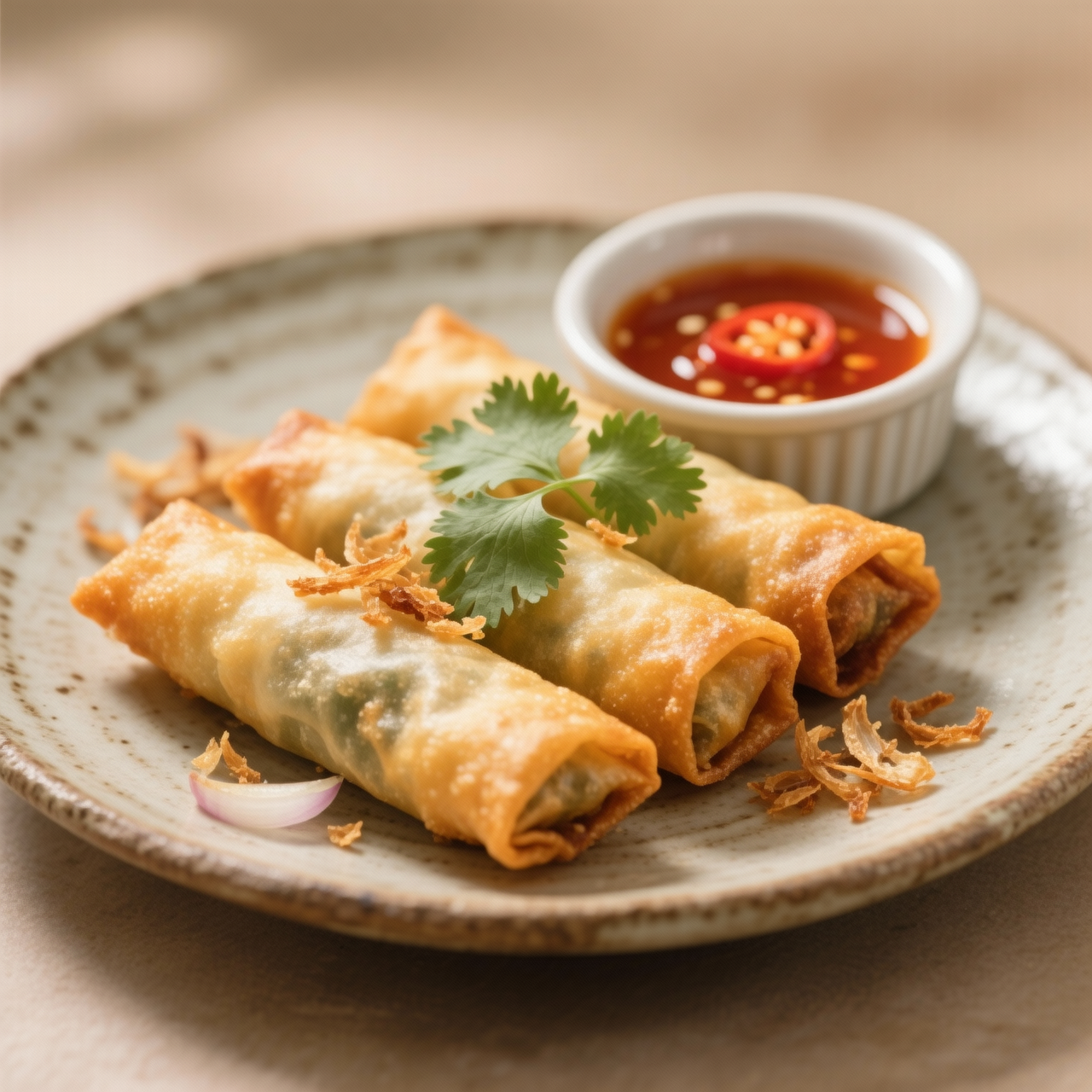
Lumpia (Spring Rolls)
Indonesian lumpia traces its roots to Semarang, where Hokkien immigrants adapted traditional Chinese spring rolls using local produce and warm spices. I champion this dish because it bridges culinary heritage and everyday snacking, but the supermarket aisle tells a thoroughly disappointing story. Those frozen multipacks typically run six to eight dollars and deliver exactly what you would expect from an industrial factory line: a dull, chemically stabilized wrapper stuffed with overcooked, flavorless mush and artificially held together by cheap gums and excessive sodium. Making it properly from scratch demands a bit of patience, but it is entirely within reach for any home cook. The filling relies on just finely shredded cabbage, carrots, minced pork or chicken, toasted shallots, fresh garlic, and a quiet pinch of white pepper. The true pitfall is never the folding technique itself, but rather trapped moisture. If you fail to thoroughly sweat and drain your vegetables, the escaping steam will inevitably rupture the delicate casing mid-fry, leaving behind a greasy, collapsed disappointment. Always keep your wrappers stacked beneath a lightly dampened kitchen towel to prevent cracking, and seal every single roll with a thin paste of flour and water instead of heavy egg wash. Once you commit to this honest method, you can effortlessly batch them out. I roll dozens at once, freeze them raw on parchment-lined trays, and bag them for later cravings. The reward is a properly crisp, deeply savory snack that actually tastes like real food, not a corporate compromise.
Nutrition
| Per serving | Calories | Protein | Carbs | Fat | Sat fat | Fibre | Sugar | Sodium |
|---|---|---|---|---|---|---|---|---|
| beginner | 360kcal | 19g | 38g | 14g | 3g | 4g | 4g | 580mg |
| intermediate | 380kcal | 16g | 32g | 20g | 4g | 3g | 5g | 520mg |
| expert | 445kcal | 18g | 36g | 25g | 5g | 3g | 5g | 610mg |
Per serving · Ava-estimated — a guide, not a clinical figure.
- 300 gground chicken— finely minced for uniform texture
- 200 ggreen cabbage— thinly shredded and excess moisture squeezed out
- 100 gcarrot— peeled and finely julienned
- 150 gbean sprout— rinsed and thoroughly dried
- 4 piecegarlic clove— minced
- 5 pieceshallot— finely diced
- 30 mlsweet soy sauce— kecap manis preferred for authentic sweetness
- 15 mloyster sauce
- 2 gwhite pepper— freshly ground
- 20 piecelumpia wrapper— thawed completely and kept covered with a damp towel
- 10 gcornstarch— mixed with 30 ml water to form sealing paste
- 1 Lvegetable oil— for deep frying
Store-bought lumpia often arrive frozen in boxes costing $8 to $12, packed with cheap extenders, excessive sodium, and stale wrappers that turn soggy instead of shattering. This beginner-friendly, completely from-scratch version strips away restaurant complexity while keeping every ingredient real and recognizable. You will hand-mince the vegetables and mix the filling with pantry staples, skipping the traditional mortar-and-pestle spice paste for a quicker, forgiving blend. The rolling technique is simplified into a straightforward envelope fold that tolerates minor unevenness without tearing. Watch your filling moisture closely: over-stuffed or overly wet rolls will burst in the oil. We keep the wrapper edges damp with just water, not egg wash, to maintain a light, crispy finish. Shallow-frying in a heavy pan replaces deep-frying for easier temperature control and less mess. If you plan to batch them, lay the finished rolls on a parchment-lined tray, freeze solid, then bag for direct-to-pan cooking later. The result is a transparent, golden crust with a savory, aromatic interior that proves scratch-made doesn’t require advanced knife skills or professional equipment—just patience and a steady hand.
Equipment
- Large mixing bowl— glass or stainless steel works best
- Heavy-bottomed skillet— 10-inch or larger for shallow frying
- Clean kitchen towel— lightly dampened to cover wrappers
- Instant-read thermometer(optional)— helps monitor oil temperature
Method
- 1
Combine ground chicken, finely shredded cabbage, grated carrot, minced garlic, minced shallots, salt, black pepper, and a teaspoon of sugar in a large mixing bowl.
Use a fork to distribute the seasonings evenly without overworking the meat.
mixing~ 3 min - 2
Let the mixture rest for ten minutes to release excess moisture, then drain any pooled liquid thoroughly.
Skipping this step will cause steam pockets and wrapper tears.
resting~ 10 minTricky bit - 3
Place one wrapper on a clean work surface with a corner pointing toward you and spoon two tablespoons of filling near the bottom edge.
Keep the portion consistent so rolls cook evenly.
portioning~ 1 min - 4
Fold the bottom corner tightly over the filling, tuck both side corners inward, and roll upward while sealing the top edge with a fingertip of water.
Press gently but firmly to eliminate trapped air.
envelope folding~ 1 minTricky bit - 5
Repeat the folding process with the remaining filling and keep the completed rolls covered under a lightly damp towel.
Work quickly to prevent the wrappers from drying and cracking.
batching~ 6 min - 6
Heat one inch of neutral cooking oil in a heavy-bottomed pan over medium-high heat until it reaches three hundred fifty degrees Fahrenheit.
A bread crumb dropped in should sizzle immediately.
temperature monitoring~ 4 min - 7
Fry the rolls seam-side down until deeply golden and crisp on all sides, turning carefully with tongs.
Do not overcrowd the pan, which drops the oil temperature and makes them greasy.
shallow frying~ 8 minTricky bit - 8
Transfer the finished spring rolls to a wire rack to drain excess oil before serving or freezing raw for later use.
Freeze raw rolls on a baking sheet first, then bag to prevent sticking.
draining~ 2 min
Cooking from frozen
Thaw completely in the refrigerator overnight, then re-crisp at 375°F in an oven or air fryer until piping hot and crunchy.
Storage times are a guide — always use your judgement and store food safely.