
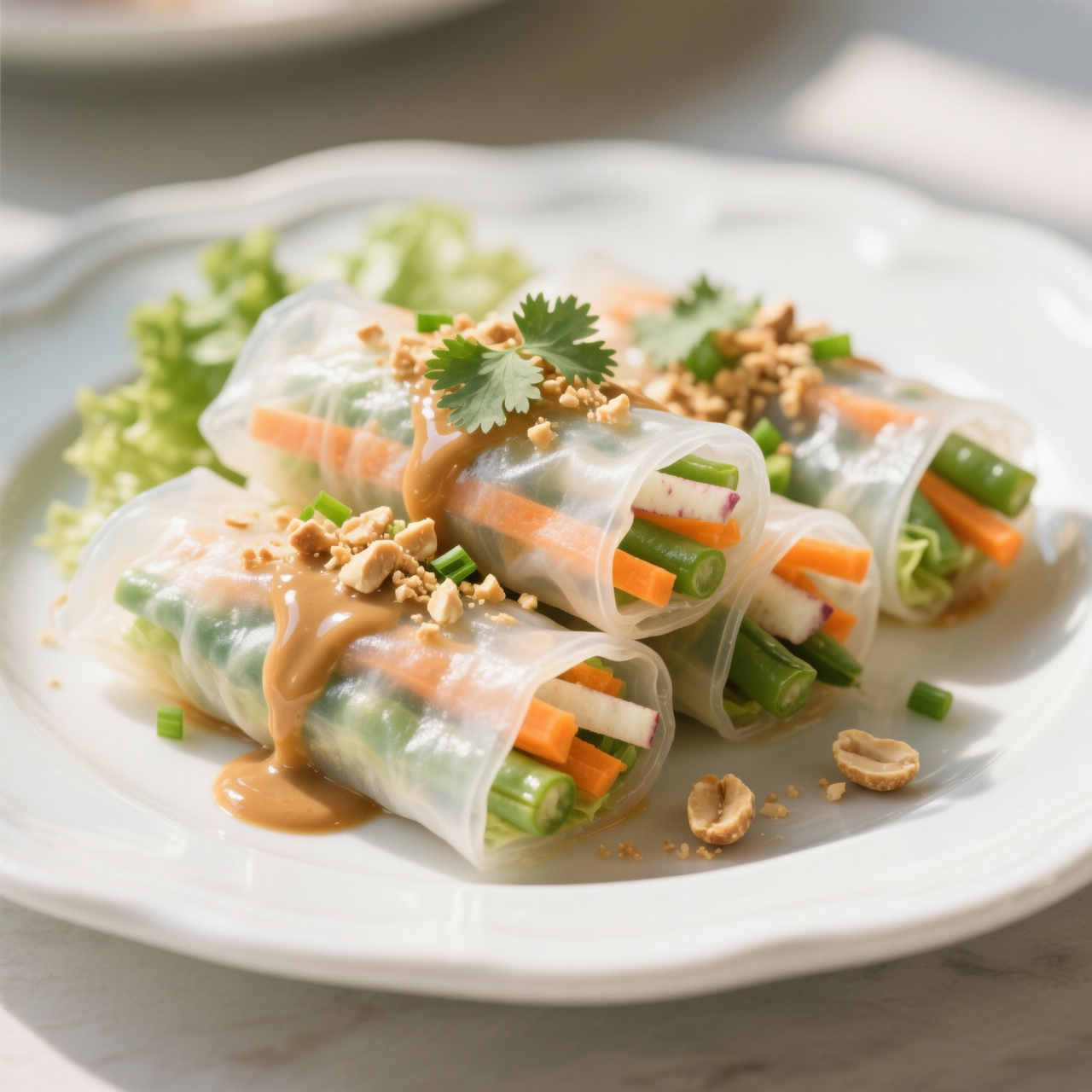
Lumpiang Sariwa (Fresh)
I’ve always believed that the magic of Filipino cooking lies in its ability to elevate humble, everyday vegetables into something deeply comforting yet refreshingly light. When I first learned to make lumpiang sariwa, I was struck by how it defies the heavy, fried expectations of most spring rolls. It’s a quiet celebration of texture and balance, born from Chinese migrant influences but thoroughly claimed by Filipino home kitchens. You’ll often find frozen, pre-assembled kits or instant dipping sauces in supermarkets, usually priced around eight to ten dollars, but they sacrifice everything that makes this dish special. The commercial wrappers are stabilized with preservatives and turn gummy, the fillings sit in their own moisture, and the sauces are just cloying sugar syrups thickened with cornstarch and artificial flavors. When you commit to the entirely from-scratch method, you’re rewarded with delicate, hand-poured crepes and a crisp, aromatic vegetable medley that actually tastes of the earth. The pitfalls are real, though. Many cooks rush the filling, leaving excess liquid that turns the crepes into a damp mess, or they fill them too greedily and watch the delicate skins split during assembly. I always tell people to let your jicama, carrots, and green beans cool completely before rolling, and to keep your homemade dipping sauce balanced—sweet, slightly tangy, and just viscous enough to coat without drowning. It’s a mindful, entirely unprocessed process, but one that transforms a simple snack into something genuinely alive.
Nutrition
| Per serving | Calories | Protein | Carbs | Fat | Sat fat | Fibre | Sugar | Sodium |
|---|---|---|---|---|---|---|---|---|
| beginner | 245kcal | 9g | 38g | 6g | 1g | 4g | 11g | 520mg |
| intermediate | 340kcal | 9g | 46g | 12g | 2g | 5g | 11g | 540mg |
| expert | 415kcal | 14g | 64g | 13g | 2g | 8g | 21g | 390mg |
Per serving · Ava-estimated — a guide, not a clinical figure.
- 12 sheetslumpia wrapper— Store-bought fresh crepes or homemade wheat flour wrappers
- 300 gjicama— Peeled and julienned into thin matchsticks
- 150 gcarrot— Peeled and julienned
- 100 ggreen bean— Trimmed ends and thinly sliced on a bias
- 100 gcabbage— Core removed and finely shredded
- 20 ggarlic— Minced
- 80 gonion— Finely diced
- 6 leaveslettuce leaf— Large butter or iceberg leaves, washed and thoroughly dried
- 30 gpeanut— Dry roasted and coarsely crushed
- 30 mlcooking oil— Neutral oil for sautéing the filling vegetables
Shop-bought fresh spring rolls often cost upwards of $8 for a small pack, relying on thick, gummy rice wrappers and a cloying, preservative-heavy peanut sauce that masks underripe, canned vegetables. This beginner-friendly approach strips away the intimidation factor while staying strictly from-scratch. You will learn to mix a simple flour-and-water batter to cook your own thin, pliable wrappers in a dry pan, avoiding the brittle texture of store-bought alternatives. The filling uses quick-sautéed jicama, cabbage, carrots, and firm tofu, seasoned with a bright, homemade soy-vinegar reduction rather than relying on jarred dipping sauces. Watch closely for wrapper thickness; aim for a crepe-like consistency so the rolls stay tender instead of tearing when folded. Keep your sautéed filling completely cool before assembling to prevent steam from making the wrappers soggy. Roll tightly but gently, folding the sides inward like a burrito to secure the crisp-tender vegetables. This version prioritizes clear, forgiving steps and visual cues so you can confidently produce a light, balanced snack that actually tastes fresh, saving money and avoiding hidden additives without sacrificing traditional Filipino flavor.
Equipment
- Non-stick skillet— essential for cooking thin, pliable wrappers without tearing
- Large mixing bowl— for whisking wrapper batter and tossing filling
- Wok or wide sauté pan— high sides help toss vegetables evenly
Method
- 1
Whisk all-purpose flour, cold water, and a pinch of salt into a smooth, thin batter.
Strain through a fine mesh sieve if any lumps form.
whisking~ 2 min - 2
Pour a small ladle of batter into a warm non-stick pan and immediately tilt it to coat the bottom evenly.
Remove from heat the moment the surface looks dry and matte.
crepe-making~ 3 minTricky bit - 3
Sauté cubed firm tofu and minced garlic in neutral oil until the tofu develops a light golden crust.
Pat the tofu dry before cooking to prevent splattering.
searing~ 3 min - 4
Add shredded cabbage, julienned carrots, and diced jicama, tossing continuously until the vegetables soften but retain a crisp bite.
Do not overcook or the filling will release too much moisture.
quick-sauté~ 4 min - 5
Simmer soy sauce, rice vinegar, brown sugar, and a cornstarch-water mixture until the sauce thickens into a glossy glaze.
Taste and adjust the sweet-sour balance before removing from heat.
reduction~ 5 min - 6
Place a spoonful of cooled filling onto each cooled wrapper, fold in the sides, and roll firmly away from you.
Moisten the top edge with a dab of water to seal the roll completely.
rolling~ 8 minTricky bit
Storage times are a guide — always use your judgement and store food safely.