
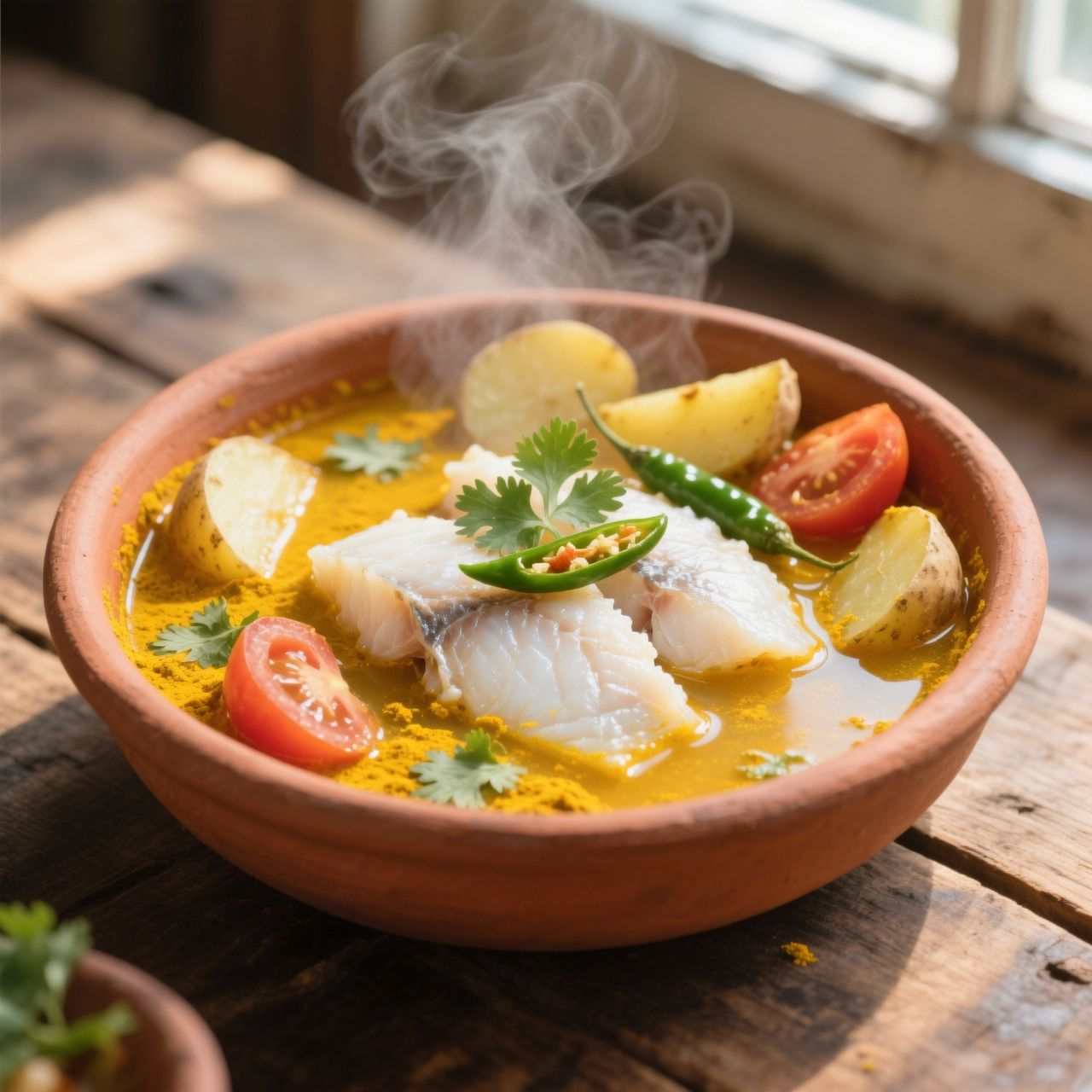
Macher Jhol
When I first learned to make Macher Jhol, I quickly realized it wasn’t just about simmering fish in a spiced broth; it was an exercise in patience, memory, and restraint. Born in the river-delta heartland of Bengal, this humble fish stew emerged from a culinary tradition where nothing is wasted and every ingredient must earn its place in the pot. For generations, Bengali families have relied on Macher Jhol to transform seasonal catches into nourishing, everyday meals that anchor the table. It matters to me because it captures the quiet elegance of regional cooking—no heavy gravies, no overwhelming spices, just a delicate balance of turmeric, cumin, and the natural sweetness of tomatoes and onions. Yet, it’s deceptively simple, and that’s where most cooks stumble. I’ve seen people drown the fish in too much water, turning it into a thin, flavorless soup, or overcook it until the flesh disintegrates. The biggest pitfall, though, is rushing the tempering. You must let the whole spices bloom in hot mustard oil until they crackle and perfume the kitchen, then gently fold in the fried fish without breaking it. Another common mistake is skipping the resting time; the jhol needs those quiet minutes to marry its flavors before it’s ladled over steaming rice. When done right, it’s not just dinner. It’s a liquid archive of monsoon rains, riverbanks, and the steady hands of Bengali home cooks who taught me that simplicity, when respected, becomes profound.
Nutrition
| Per serving | Calories | Protein | Carbs | Fat | Sat fat | Fibre | Sugar | Sodium |
|---|---|---|---|---|---|---|---|---|
| beginner | 350kcal | 31g | 20g | 16g | 2g | 4g | 4g | 1100mg |
| intermediate | 350kcal | 31g | 20g | 16g | 2g | 4g | 4g | 1100mg |
| expert | 350kcal | 31g | 20g | 16g | 2g | 4g | 4g | 1100mg |
Per serving · Ava-estimated — a guide, not a clinical figure.
- 600 gwhite fish fillet— skinless, firm-fleshed variety
- 250 gyellow potato— peeled and quartered
- 150 gyellow onion— finely diced
- 200 gripe tomato— chopped
- 60 mlcold-pressed mustard oil— unrefined
- 10 gground turmeric
- 5 gground cumin
- 5 gground coriander
- 3 gkashmiri chili powder
- 20 gfresh ginger— grated
- 15 gfresh garlic— minced
- 20 ggreen chili— slit lengthwise
- 10 gkosher salt
- 800 mlfiltered water
- 15 gfresh cilantro— chopped
This version prioritizes confidence and consistency over traditional technique. You will use a pre-mixed spice blend to eliminate the guesswork of balancing individual powders, allowing you to focus entirely on timing and heat management. The goal here is to avoid overcooking the fish while still building a layered, aromatic base. Watch the oil carefully when it first heats; it must shimmer but never smoke to the point of burning. When adding the potatoes, ensure they are cut uniformly so they soften at the same rate. The broth should be kept at a gentle simmer, never a rolling boil, to prevent the delicate fillets from breaking apart. If your pre-mixed paste contains wheat flour as a thickener, the gravy will naturally cling, but resist stirring too aggressively once the fish is submerged. Let the residual heat finish the cooking. This approach guarantees a reliable, flavorful result on your first attempt, proving that you do not need decades of kitchen experience to honor a classic.
Equipment
- Heavy-bottomed skillet— non-stick is acceptable for this level
- Silicone spatula— flexible edge for gentle stirring
- Measuring spoons— for accurate spice ratios
- Chef knife— sharp blade for clean vegetable cuts
Method
- 1
Pour mustard oil into a heavy-bottomed pan over medium heat.
Wait for visible shimmer.
warming~ 1 min - 2
Add diced onions and cook until translucent.
Do not rush this step.
sweating~ 3 min - 3
Stir in your chosen spice paste until fragrant and well incorporated.
Keep moving to prevent scorching.
blooming~ 2 minTricky bit - 4
Add potatoes, chopped tomatoes, and water, then bring to a gentle simmer.
Cover loosely.
braising~ 10 min - 5
Nestle the fish fillets into the broth along with the slit green chilies.
Avoid stacking pieces.
poaching~ 7 minTricky bit - 6
Remove from heat and scatter fresh cilantro over the top.
Rest for two minutes before serving.
finishing~ 1 min