
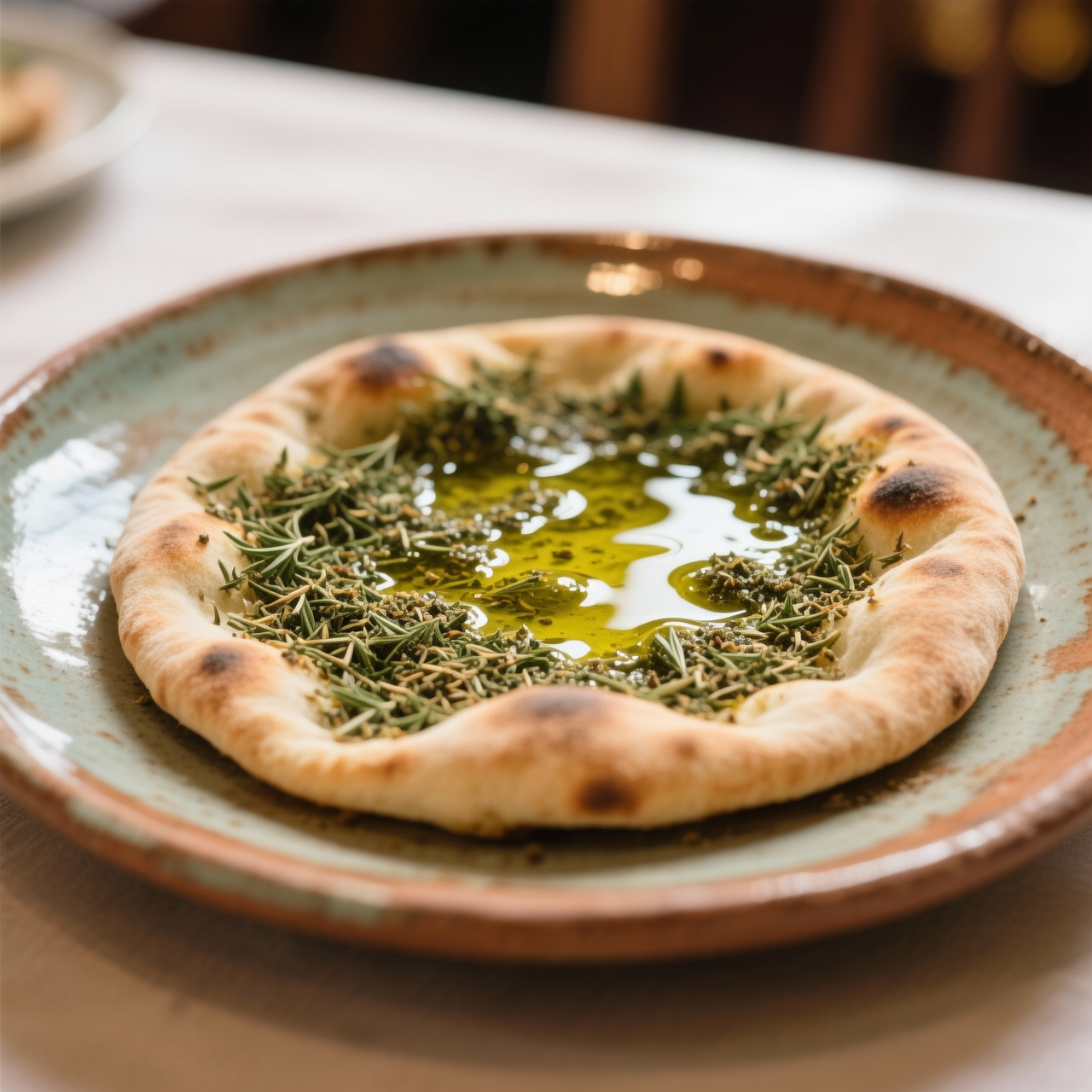
Manakish za'atar
I’ve watched too many home bakers surrender to the supermarket freezer aisle, grabbing those cardboard-stiff, pre-baked za’atar flatbreads that cost nearly four pounds for a pack of two and taste like nothing but dried oregano, cheap rapeseed oil, and sodium citrate. That’s why I always return to the Levantine tradition of manakish, a breakfast ritual that belongs to the hands, not the heat-and-serve microwave. Born in the mountain villages of Lebanon, this is not merely a snack; it is a morning anchor, a tear-and-share bread that carries the scent of wild thyme, toasted sesame, sumac, and olive oil straight from the hearth. When you make it from scratch, you control the fermentation, the crumb, and the exact balance of herbs that turns a simple dough into something deeply aromatic. The pitfalls are almost always impatience: rolling the dough too thick so the topping sinks and steams, skipping the oil emulsion that binds the za’atar to the surface, or baking it cold straight from the fridge without letting the yeast relax. I’ve learned the hard way that the best results come from portioning, topping generously, and freezing them raw on a tray before transferring to bags. When you pull them straight into a hot oven from frozen, the dough puffs while the herbs toast, giving you that crisp, blistered crust without any of the gummy, preservative-laden compromise of the shop-bought versions. It’s a quiet victory, one that costs pennies per piece and feeds a whole household.
Nutrition
| Per serving | Calories | Protein | Carbs | Fat | Sat fat | Fibre | Sugar | Sodium |
|---|---|---|---|---|---|---|---|---|
| beginner | 340kcal | 8g | 48g | 12g | 2g | 4g | 1g | 420mg |
| intermediate | 315kcal | 8g | 45g | 12g | 2g | 3g | 1g | 390mg |
| expert | 380kcal | 11g | 54g | 14g | 2g | 5g | 1g | 460mg |
Per serving · Ava-estimated — a guide, not a clinical figure.
- 500 gBread flour— sifted
- 320 mlWater— lukewarm
- 7 gInstant yeast
- 10 gFine sea salt
- 10 gGranulated sugar
- 130 mlExtra virgin olive oil— divided between dough and topping
- 80 gZa'atar blend— traditional Lebanese thyme, sumac, and sesame mix
- 20 gSesame seed(optional)— toasted
This beginner-friendly method strips away the intimidation of traditional flatbread making while keeping every ingredient entirely from scratch. Instead of relying on lengthy proofing or complex kneading, we use a quick, high-hydration dough that rests briefly for a relaxed, forgiving texture. You will simply whisk the flour, instant yeast, and salt, then fold in warm water and olive oil until a shaggy ball forms. A five-minute rest replaces intensive kneading, and the dough is divided, rolled, and topped immediately. Watch for the dough’s relaxed elasticity; if it springs back too quickly, let it rest for two more minutes before continuing. The za’atar topping is a straightforward dry blend of wild thyme, toasted sesame, sumac, and salt brushed with olive oil—no store-bought pastes or packet mixes required. Compare this to supermarket flatbreads that often cost over three dollars each, rely on preservatives and refined dough conditioners, and arrive stale within days. By making them yourself, you spend pennies per piece, control exactly what goes on your table, and capture the authentic, fragrant crunch that commercial versions simply cannot replicate.
Equipment
- Large mixing bowl— A wide rim makes folding and resting easier
- Rolling pin— Standard wooden or silicone works
- Baking sheet— Heavy gauge prevents warping
- Pastry brush(optional)— Silicone bristles clean up quickly
Method
- 1
Whisk together flour, salt, and instant yeast, then gradually stir in warm water and olive oil until a shaggy dough forms.
Water should feel comfortably warm to the wrist, not hot.
hydration~ 2 min - 2
Cover the bowl and let the dough rest undisturbed in a warm spot.
This short rest replaces kneading and relaxes the gluten network.
bench rest~ 5 min - 3
Divide the rested dough into four equal pieces, lightly flour your surface, and roll each into a thin oval.
Roll from the center outward and rotate frequently to prevent sticking.
rolling~ 4 minTricky bit - 4
Transfer the rolled ovals to a prepared baking sheet and brush the surface lightly with olive oil before sprinkling the za'atar blend evenly.
Press the herbs gently into the dough with your palm so they adhere during baking.
adhesion~ 3 min - 5
Bake in a preheated oven until the edges are crisp and the center is golden.
Rotate the pan halfway through to ensure even browning and prevent hot spots.
baking~ 12 minTricky bit
Cooking from frozen
Bake directly from frozen at 200°C for 12–15 minutes until the crust is blistered and golden.
Storage times are a guide — always use your judgement and store food safely.