
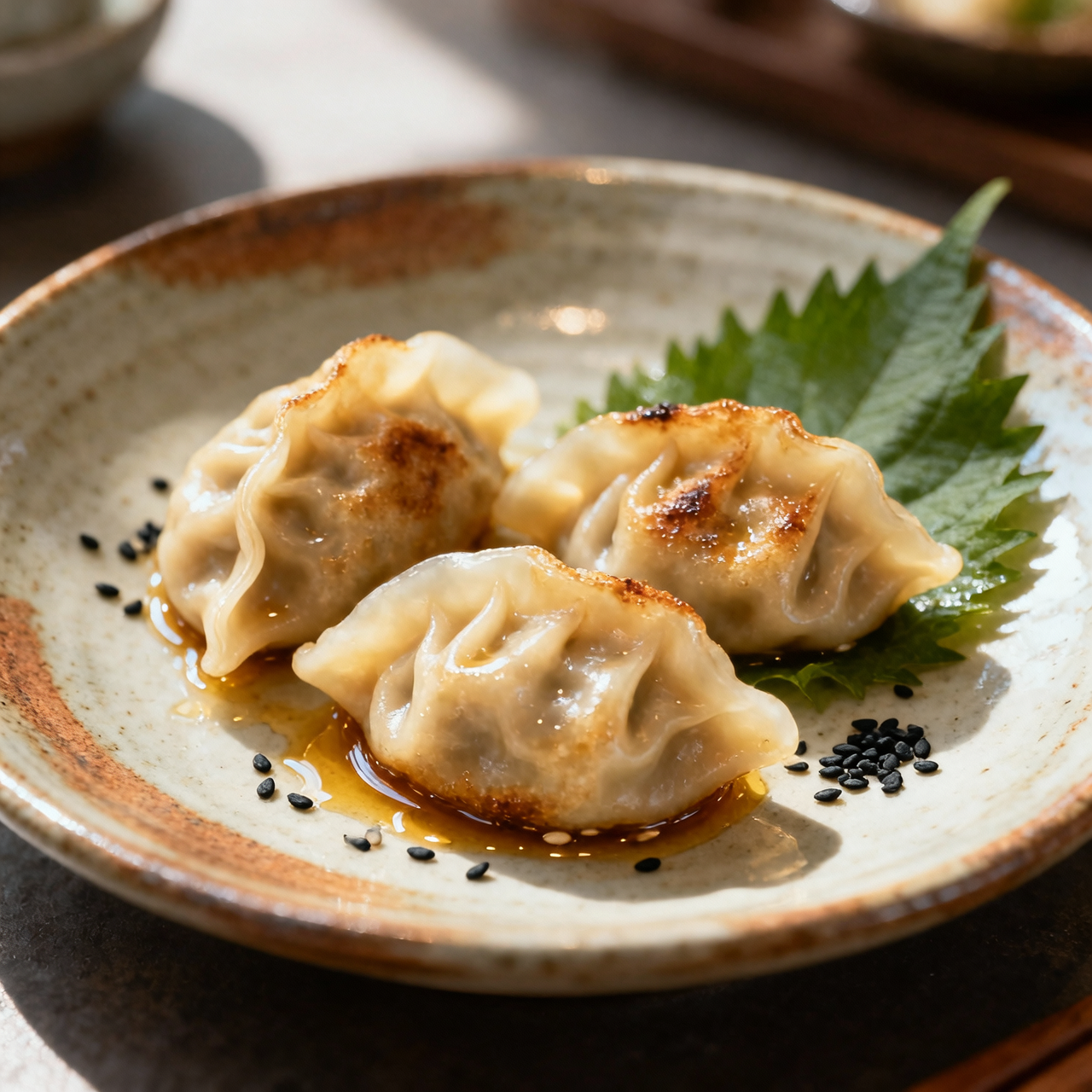
Mandu (Korean Dumplings)
I’ve always believed that mandu, Korea’s beloved pork-filled dumplings, were meant to be made by hand, not pulled from a frost-bitten supermarket freezer bag. Historically, these little parcels traveled along the Silk Road, evolving from Mongolian mantu into a distinctly Korean comfort food that anchors everything from family holiday tables to quick weeknight broths. Yet today, most of us default to those glossy plastic packages that run about ten dollars for twenty pale, uniform discs. What you get inside is usually a gummy, heavily preserved meat paste masked by excessive salt, wrapped in a dough skin that turns rubbery the moment it hits boiling water. Making mandu from scratch isn’t just about cost; it’s about reclaiming texture, balance, and the quiet satisfaction of folding your own food. The magic lies in the ratio: finely minced pork shoulder folded with crushed garlic, grated ginger, toasted sesame oil, and a generous handful of napa cabbage that’s been salted and squeezed until it’s barely damp. The most common pitfall I see is skipping that squeeze. Too much cabbage moisture will steam the filling instead of browning it, turning your carefully crafted dumplings into soggy, leaking casualties. Another frequent mistake is overworking the dough or sealing them too thickly, which guarantees a gummy bite. When you embrace the proper fold, you unlock a true batch hero. I always line my baking sheets with parchment, pack them in tight rows, freeze them solid, and then transfer them to heavy-duty bags. From there, they boil, pan-fry, or steam straight from frozen, delivering that bright, savory punch that processed versions simply cannot replicate.
Nutrition
| Per serving | Calories | Protein | Carbs | Fat | Sat fat | Fibre | Sugar | Sodium |
|---|---|---|---|---|---|---|---|---|
| beginner | 360kcal | 18g | 30g | 15g | 5g | 2g | 3g | 480mg |
| intermediate | 365kcal | 20g | 35g | 15g | 5g | 2g | 3g | 740mg |
| expert | 560kcal | 30g | 68g | 16g | 5g | 4g | 3g | 620mg |
Per serving · Ava-estimated — a guide, not a clinical figure.
- 450 gGround pork— Use a blend of lean and fatty cuts for optimal juiciness and flavor
- 300 gNapa cabbage— Finely chopped and salted for 15 minutes to draw out excess moisture
- 150 gFirm tofu— Pressed thoroughly and crumbled to lighten the filling texture
- 4 stalkScallion— Thinly sliced, utilizing both white and green sections
- 6 cloveGarlic— Finely minced or grated to distribute evenly without overpowering
- 10 gFresh ginger— Peeled and microplaned for maximum aromatic release
- 30 mlSoy sauce— Standard Korean or Japanese variety for balanced umami
- 15 mlSesame oil— Toasted variety to enhance the nutty base notes
- 10 gSugar— White granulated to subtly round out the savory profile
- 40 pieceDumpling wrapper— Store-bought or homemade rounds kept covered with a damp towel to prevent drying
Store-bought mandu typically costs eight to twelve dollars for a dozen, yet relies on high-sodium preservatives, stale dough skins, and dry, uneven fillings. This beginner version strips away the intimidation of traditional pleating while keeping every ingredient whole and recognizable. You will mix a simple, juicy pork-and-vegetable filling using fresh aromatics minced by hand, avoiding any jarred pastes or pre-seasoned blends. The folding technique uses a straightforward half-moon press-and-seal method that guarantees a tight edge without requiring advanced dexterity. A single pan-steam finish cooks the dumplings evenly, giving you a crisp bottom and tender wrapper every time. The real advantage here is batch-friendly workflow: once you master the basic seal, you can line up dozens on a parchment sheet, freeze them solid, and store them for up to three months. Watch the moisture level in your cabbage; squeezing it thoroughly is the single most important step to prevent soggy wrappers or split seams. Keep your filling chilled until assembly so the fat stays firm and easy to handle. With just one bowl, a damp cloth, and a lidded skillet, you will confidently build a freezer stash that outperforms any grocery aisle alternative.
Equipment
- Large mixing bowl— for combining filling ingredients
- Lidded non-stick skillet— 28-30 cm ideal for batch steaming
- Baking sheet— lined with parchment for freezing
Method
- 1
Finely chop napa cabbage, sprinkle with one teaspoon of salt, let rest ten minutes, then squeeze dry in a clean kitchen towel.
Removing excess water prevents soggy wrappers.
dehydrating~ 10 minTricky bit - 2
Combine ground pork, chopped scallions, minced garlic, grated ginger, soy sauce, sesame oil, and black pepper in a large bowl.
Mix until the fat begins to bind the vegetables.
binding~ 4 min - 3
Place one heaping tablespoon of filling in the center of a wrapper, brush the edge with water, fold into a half-moon, and press firmly to seal.
Keep a damp cloth over unused wrappers to prevent drying.
crimping~ 15 min - 4
Heat neutral oil in a large skillet over medium, place dumplings flat-side down until golden, pour in a quarter cup of water, cover tightly, and steam for six minutes.
Do not lift the lid during steaming to maintain consistent heat.
pan-steaming~ 8 minTricky bit - 5
Transfer uncooked sealed dumplings to a parchment-lined tray, freeze uncovered until solid, then bag for long-term storage.
Cook directly from frozen by adding two extra minutes of steam.
flash freezing~ 5 min
Cooking from frozen
Steam or pan-fry straight from frozen with a splash of water until the wrapper is tender and the filling is piping hot.
Storage times are a guide — always use your judgement and store food safely.