
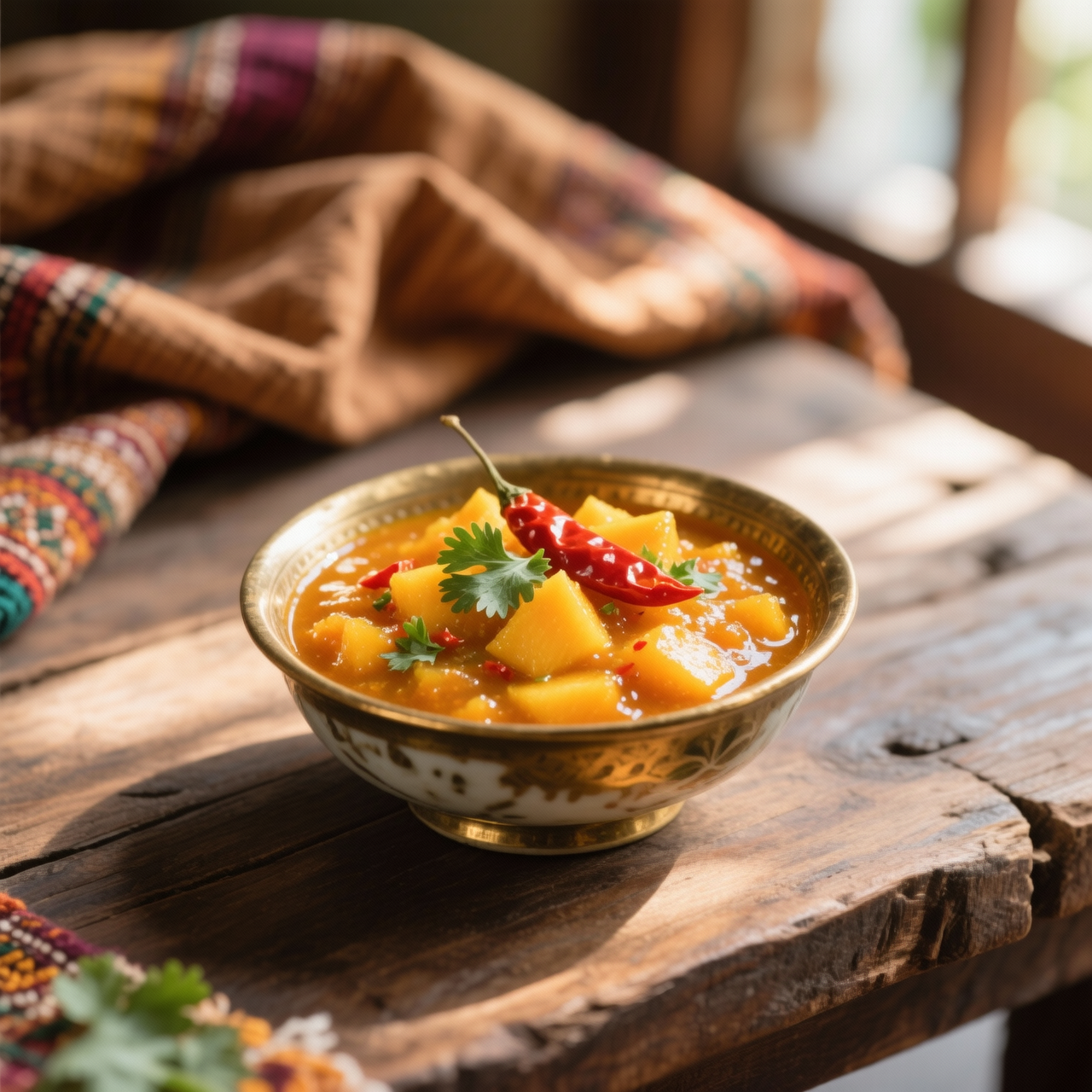
Mango Chutney
I have always believed that a true pantry staple is born from patience and preservation, and mango chutney stands as one of my absolute favorites in that regard. Its roots stretch deep into the Indian subcontinent, where the ancient practice of balancing sweet, sour, and spicy flavors with raw or semi-ripe fruit was elevated into a delicate culinary art form. For generations, home cooks have relied on this condiment to cut through rich, heavy meals, acting as both a digestive aid and a vibrant counterpoint to everyday dishes. What makes it so profoundly important to me is how it transforms a fleeting seasonal fruit into something that sustains us through the colder months. Yet, despite its apparent simplicity, it is remarkably easy to misstep. The most common pitfall is rushing the simmer; mangoes contain natural pectin and moisture that need gentle, sustained heat to break down properly without scorching the sugars. If you boil it aggressively, the fruit turns mushy and the spices lose their aromatic complexity, leaving behind a flat, one-dimensional jam. Another frequent mistake is skimping on acid. Vinegar or tamarind isn’t just for tang—it is the essential preservative that ensures your batch remains safe and vibrant. Always taste your mixture before the final reduction, adjusting salt and heat incrementally rather than dumping everything in at once. When done correctly, the chutney should cling to the spoon, offering a glossy, jewel-toned finish that speaks to careful attention. I urge you to treat the simmering pot as a meditation rather than a chore, stirring slowly and listening for the quiet bubble that signals readiness.
Nutrition
| Per serving | Calories | Protein | Carbs | Fat | Sat fat | Fibre | Sugar | Sodium |
|---|---|---|---|---|---|---|---|---|
| beginner | 175kcal | 1g | 41g | 4g | 1g | 2g | 32g | 210mg |
| intermediate | 260kcal | 1g | 62g | 2g | 0g | 2g | 56g | 12mg |
| expert | 285kcal | 2g | 66g | 5g | 1g | 3g | 52g | 380mg |
Per serving · Ava-estimated — a guide, not a clinical figure.
- 600 gmango— peeled and diced, use firm ripe fruit
- 150 gsugar— white, coconut, or jaggery
- 60 mlvinegar— apple cider or malt vinegar
- 15 gginger— fresh, peeled and finely grated
- 10 ggarlic— fresh cloves, minced
- 2 gred chili— dried flakes or fresh, finely chopped
- 5 gmustard seed— black or brown
- 5 gsalt— fine sea salt
- 30 mlmustard oil— or neutral vegetable oil
- 30 graisin(optional)— golden or regular
This beginner-friendly approach removes the guesswork by swapping labor-intensive spice grinding for a high-quality, ready-made curry paste and pre-chopped mango or frozen puree. The goal is a confident first attempt without overwhelming your kitchen with unfamiliar techniques or hard-to-find whole spices. We focus on gentle simmering and steady stirring to coax out the natural sweetness while keeping the vinegar bright and balanced. Watch the heat closely: a medium-low flame prevents scorching the sugars, which can turn the chutney bitter in minutes. You will know it is ready when the mixture thickens enough to coat the back of a spoon and pulls away cleanly from the pan edges. Because we skip the traditional toasting and grinding, the texture will be slightly smoother but deeply flavorful. This shortcut version still delivers authentic sweet-tangy-spicy notes perfect for pairing with samosas, grilled tofu, or cheese boards. Once cooled, ladle it straight into sterilized glass jars. The high sugar and acid content acts as a natural preservative, meaning your batch will keep safely in the refrigerator for several weeks. Take your time, trust the visual cues, and enjoy the process.
Equipment
- Heavy-bottomed pan— non-stick or stainless steel works well for gentle simmering
- Glass storage jars— sterilize before filling to ensure long shelf life
- Silicone spatula(optional)— prevents scratching the pan while stirring
Method
- 1
Heat oil in a heavy pan over medium-low heat and stir in the jarred spice paste until fragrant.
Keep the flame gentle to avoid burning the sugars in the paste.
blooming~ 2 min - 2
Add diced mango, sugar, and vinegar, then stir until the sugar fully dissolves.
Scrape the bottom of the pan constantly to prevent sticking.
dissolving~ 3 min - 3
Simmer the mixture uncovered, stirring occasionally, until it thickens and coats the back of a spoon.
Lower the heat if the edges start to bubble too vigorously.
reducing~ 15 minTricky bit - 4
Remove the pan from the heat and let the chutney cool completely before transferring to clean jars.
Sterilize jars in boiling water to extend shelf life.
cooling~ 20 min
Cooking from frozen
Thaw overnight in the refrigerator, then whisk thoroughly to restore its glossy emulsion before serving.
Storage times are a guide — always use your judgement and store food safely.