
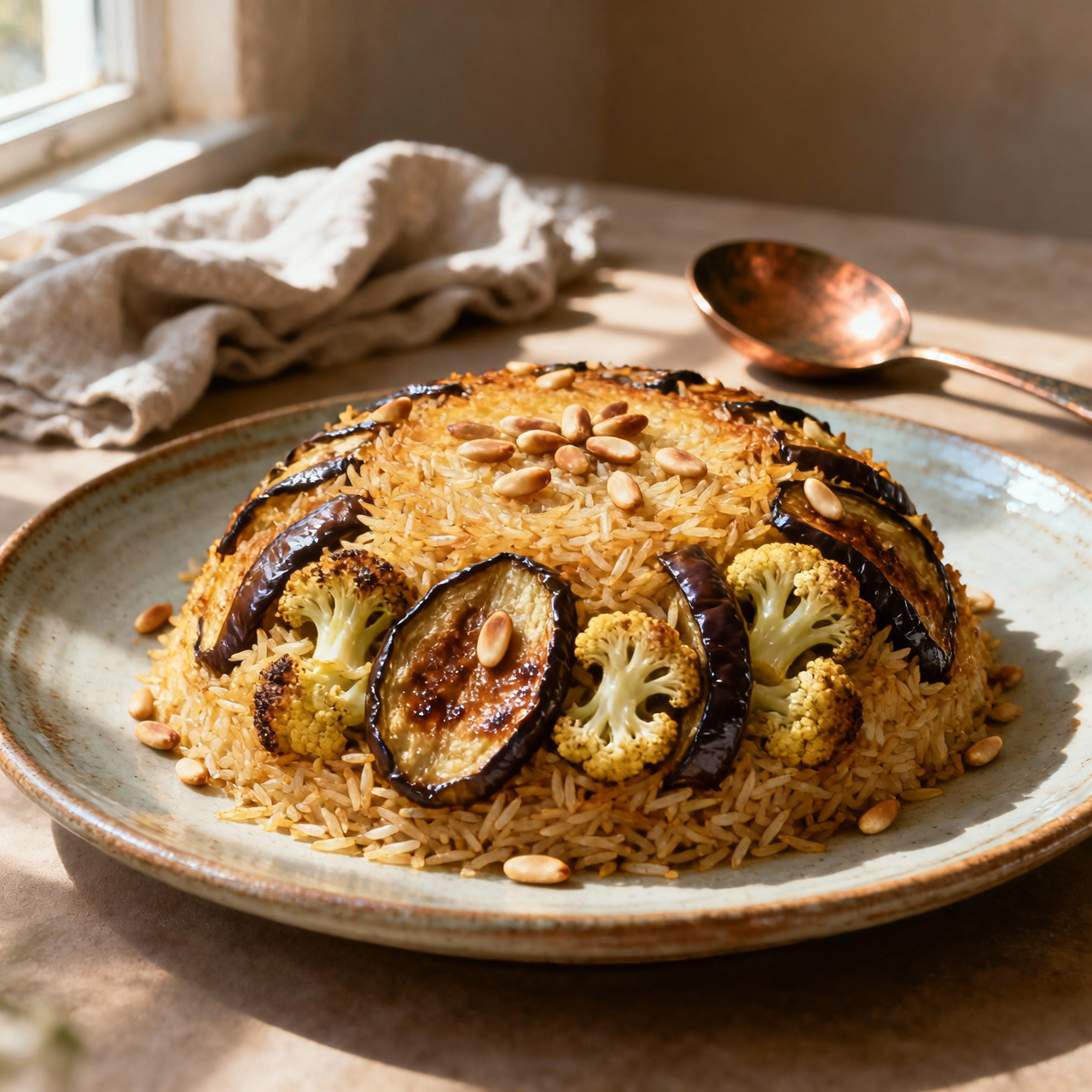
Maqluba
When I first learned to make maqluba in my grandmother's Beirut kitchen, I quickly understood why its name means upside-down. It is not just a cooking technique but a profound lesson in patience, trust, and the quiet anticipation of a perfect reveal. Born in the Levant, this dish has always been a centerpiece of communal gatherings, weaving together toasted rice, tender meat, and caramelized vegetables into a single, cohesive narrative of the land. What makes it so deeply meaningful to me is the way it demands presence. You cannot rush the layering, and you certainly cannot peek. I have watched countless well-meaning cooks falter at the final step, flipping the pot too eagerly or packing the rice too tightly, only to watch their careful architecture collapse into a soggy mess. The most common pitfall lies in neglecting the rice-to-broth ratio or skipping the crucial resting period after cooking. Let it breathe. Allow the steam to redistribute so every grain holds its shape and every slice of eggplant retains its delicate structure. When you finally slide that heavy serving platter over the pot, close your eyes, take a steadying breath, and invert it with decisive confidence. That moment of silence before you lift the pot is where the magic lives. Maqluba is more than sustenance; it is a testament to the Levantine belief that the best things in life require careful construction and the courage to let go. I make it to honor those who taught me, and I share it so you can experience that exact, breathtaking lift.
Nutrition
| Per serving | Calories | Protein | Carbs | Fat | Sat fat | Fibre | Sugar | Sodium |
|---|---|---|---|---|---|---|---|---|
| beginner | 720kcal | 30g | 72g | 34g | 7g | 6g | 7g | 1300mg |
| intermediate | 720kcal | 30g | 72g | 34g | 7g | 6g | 7g | 1300mg |
| expert | 720kcal | 30g | 72g | 34g | 7g | 6g | 7g | 1300mg |
Per serving · Ava-estimated — a guide, not a clinical figure.
- 600 gbone-in chicken thighs— skin on
- 300 gbasmati rice— long-grain
- 300 geggplant— firm
- 250 gcauliflower— cut into florets
- 150 gyellow onion— medium
- 18 ggarlic cloves— fresh
- 60 mlextra virgin olive oil— cold-pressed
- 600 mlchicken stock— low-sodium
- 10 gwhole allspice berries— dried
- 6 ggreen cardamom pods— whole
- 5 gcinnamon stick— whole
- 4 gcumin seeds— dried
- 4 gcoriander seeds— dried
- 2 gwhole cloves— dried
- 10 gkosher salt— coarse grind
- 30 gpine nuts— raw
- 15 gflat-leaf parsley— fresh
- 120 mlplain yogurt(optional)— full-fat
This version prioritizes confidence over tradition, replacing complex spice preparation with straightforward layering and forgiving timing. You will use a single heavy pot for both browning and steaming, which simplifies cleanup and reduces active monitoring. The key to success here is managing moisture: rinse the rice thoroughly to remove excess starch, and rely on pre-warmed stock to jumpstart the cooking process without shocking the grains. I recommend using a non-stick or well-seasoned heavy-bottomed pot to guarantee a clean release during the final inversion. Watch the oil temperature when frying the vegetables; if it is too cool, the eggplant will absorb it like a sponge instead of crisping. If your rice feels too wet after the resting period, simply uncover it and let it sit for a few extra minutes to evaporate. This approach strips away the intimidation of flipping the pot while preserving the essential structure and comforting flavors of the dish. You are building a reliable framework that will hold together on the first try, giving you the foundation to experiment later.
Equipment
- Heavy-bottomed pot— non-stick is acceptable for the first attempt
- Fine mesh strainer— for rinsing rice
- Wide serving platter— must be larger than pot diameter
Method
- 1
Rinse basmati rice under cold water until clear.
Drain completely to avoid excess water.
rinsing~ 1 min - 2
Season chicken thighs generously with salt and place them skin-side down in a pot with half the oil.
Listen for a steady sizzle.
searing~ 5 min - 3
Remove chicken and fry the eggplant and cauliflower in the remaining oil until golden.
Do not overcrowd the pan.
shallow frying~ 7 min - 4
Saute the sliced onion and minced garlic until soft and fragrant.
Keep heat medium to prevent burning.
sweating~ 3 min - 5
Layer the fried vegetables, browned chicken, and rinsed rice into the pot.
Press gently to eliminate air pockets.
layering~ 2 minTricky bit - 6
Add warm stock and the whole spices directly into the pot, ensuring rice is submerged.
Liquid should barely cover the top grain.
simmering~ 1 min - 7
Cover tightly and cook on low heat for twenty-five minutes without lifting the lid.
Steam builds pressure to set the crust.
steaming~ 25 minTricky bit - 8
Let the pot rest off heat for ten minutes before inverting onto a platter.
Do not rush the structural set.
resting~ 10 minTricky bit