
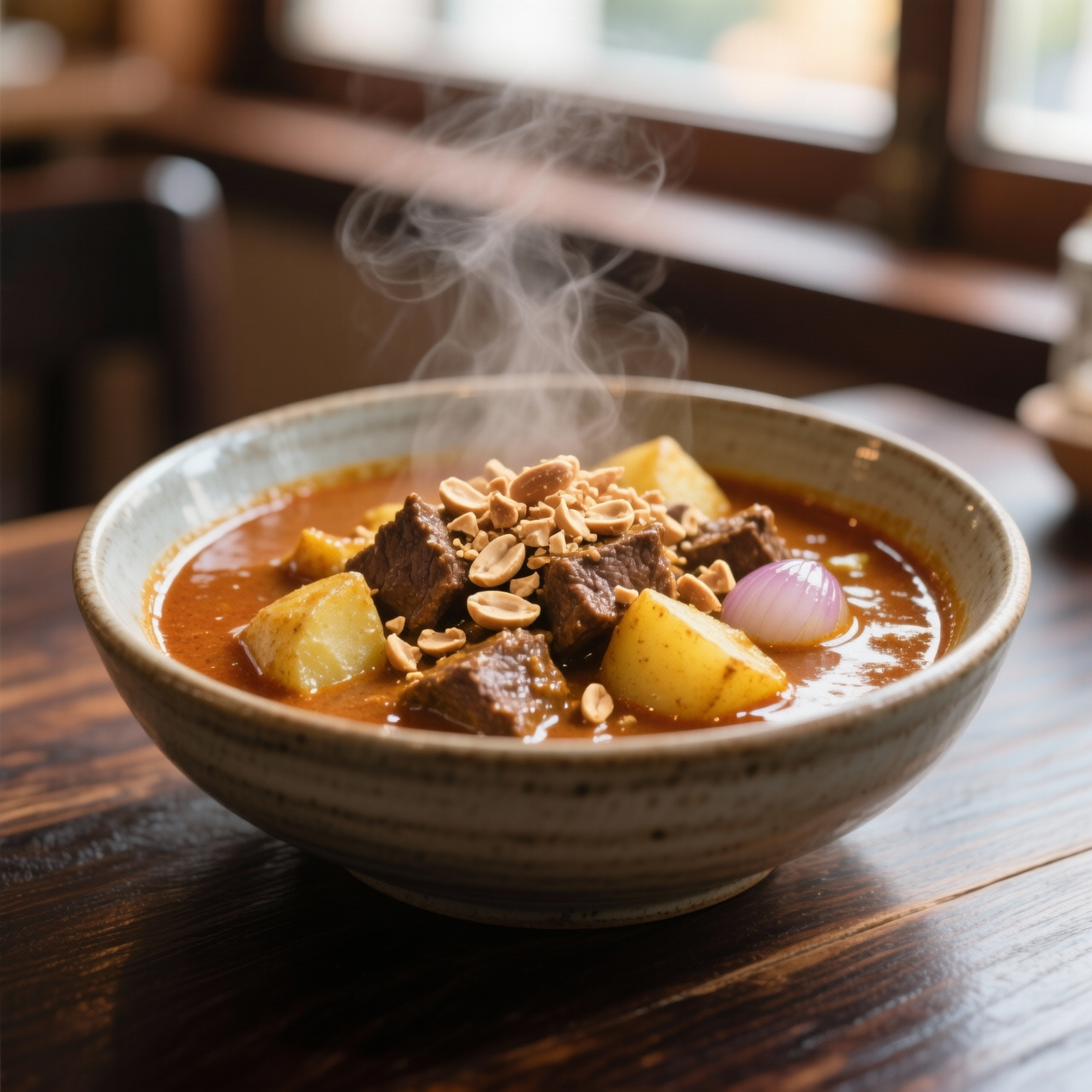
Massaman Curry
When I first encountered Massaman curry, I was immediately struck by how it defies the typical expectations of Thai cuisine. Unlike the sharp, herbaceous profiles of green or red curries, this dish carries a deep, warming resonance that speaks directly to centuries of cross-cultural exchange along the ancient maritime trade routes. Its roots trace back to Persian and Malay traders who brought their spice traditions to the Ayutthaya kingdom, where local cooks seamlessly wove them into the Thai culinary tapestry using native ingredients like galangal, lemongrass, and tamarind. To me, Massaman is more than just a curry; it is a living archive of diplomacy and adaptation, proving that food can bridge vast geographical and cultural divides without losing its soul. The reason I care so deeply about preparing it correctly lies in its delicate balance. Too often, I see this masterpiece reduced to a heavy, one-note stew because cooks rush the foundational steps or lean too heavily on pre-made pastes that lack the necessary depth. The most common pitfall is failing to properly toast the dry spices and fry the curry paste in rich coconut cream until the oils separate. Without that crucial step, I lose the aromatic complexity that defines the dish. Another frequent misstep is underestimating the slow braise. I always emphasize that Massaman demands patience, allowing tough cuts of meat to surrender to the gentle simmer so they absorb the sweet, sour, and savory layers of palm sugar, fish sauce, and roasted peanuts. When I honor the process, the result is profoundly comforting.
Nutrition
| Per serving | Calories | Protein | Carbs | Fat | Sat fat | Fibre | Sugar | Sodium |
|---|---|---|---|---|---|---|---|---|
| beginner | 1050kcal | 36g | 54g | 82g | 46g | 9g | 19g | 780mg |
| intermediate | 1050kcal | 36g | 54g | 82g | 46g | 9g | 19g | 780mg |
| expert | 1050kcal | 36g | 54g | 82g | 46g | 9g | 19g | 780mg |
Per serving · Ava-estimated — a guide, not a clinical figure.
- 30 gdried long red chili— seeds removed for milder heat
- 10 gcoriander seed— whole, not ground
- 5 gcumin seed— whole
- 3 gcinnamon stick— Ceylon variety preferred
- 2 ggreen cardamom pod— lightly cracked
- 1 gwhole clove— fresh and fragrant
- 40 glemongrass stalk— tough outer layers removed
- 30 ggalangal root— fresh, not dried
- 60 gshallot— peeled
- 30 ggarlic clove— peeled
- 15 gshrimp paste— fermented
- 500 gbeef chuck— cut into 2-inch cubes
- 800 gcoconut milk— full-fat, unsweetened
- 300 gyellow potato— peeled and quartered
- 150 gwhite onion— cut into wedges
- 80 groasted peanut— unsalted
- 20 gtamarind paste— concentrated
- 40 gpalm sugar— grated or chopped
- 30 gfish sauce— anchovy-based
- 20 gcooking oil— neutral high-heat oil
This version prioritizes accessibility without sacrificing the soul of the dish. You will rely on a high-quality commercial Massaman curry paste to bypass the hours of spice preparation, allowing you to focus entirely on building layers of flavor and achieving the perfect texture. The critical moment here is the initial frying of the paste. Do not rush this step. Heat your oil gently and stir constantly until the mixture darkens and releases a rich, fragrant aroma, signaling that the raw flavors have cooked off. Add your coconut milk slowly, whisking continuously to prevent lumps from forming, and maintain a low simmer rather than a rolling boil. Watch for the oil to separate and pool around the edges of the pan; this visual cue confirms the curry has reached its foundational stage. When adding your protein and potatoes, keep the lid on and resist the urge to stir too frequently, which can break down the vegetables prematurely. Taste the broth carefully before finishing, as commercial pastes vary wildly in salt and sugar content. Adjust the balance with your fish sauce, palm sugar, and tamarind until the profile rounds out. This approach guarantees a reliable, deeply comforting result on your very first attempt.
Equipment
- Heavy-bottomed pan— non-stick is perfectly acceptable
- Wooden spatula— heat-resistant
Method
- 1
Heat the cooking oil over medium heat and add the commercial curry paste.
Stir constantly to prevent scorching.
blooming~ 2 min - 2
Pour in half of the coconut milk and whisk vigorously until smooth.
The mixture should thicken slightly.
tempering~ 3 min - 3
Add the beef cubes and remaining coconut milk to the pan.
Bring to a gentle bubble, not a boil.
simmering~ 5 min - 4
Stir in the potatoes and white onion, then cover the pan.
Cook until the meat is fork-tender.
braising~ 20 min - 5
Dissolve the palm sugar, fish sauce, and tamarind paste into the simmering broth.
Adjust ratios to taste before serving.
balancing~ 3 minTricky bit