
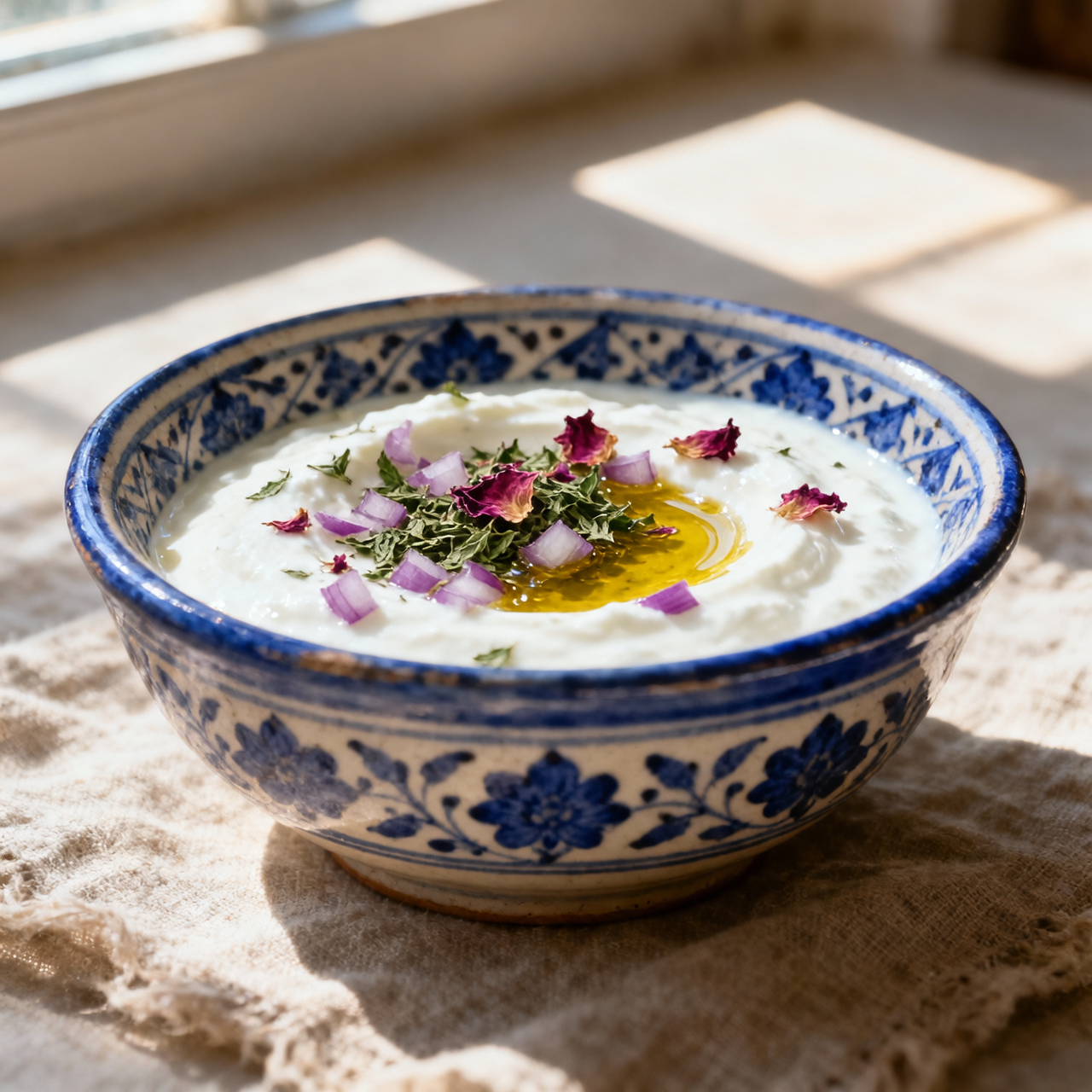
Mast-o-musir (shallot yogurt)
I first encountered mast-o-musir in a sunlit courtyard in Kashan, where it sat beside a clay oven, waiting to catch the drippings of sizzling koobideh. This ancient Persian condiment is deceptively simple: just yogurt and wild shallots, yet it carries centuries of foraging wisdom. The magic lies in the enzymatic marriage between the dairy’s lactic acid and the alliums’ sharp sulfur compounds. When done right, the raw bite dissolves into a floral, savory sweetness that cuts through the richness of grilled meats. A great version relies on patience, not complexity. You must drain your yogurt thoroughly, otherwise the dip will weep and lose its luxurious body. You must let the shallots macerate, because rushing this step leaves an aggressive, pungent finish that overwhelms the palate. The most common pitfall I see is treating it like a quick garnish rather than a resting sauce. The shallots need time to soften and mellow, ideally chilling for several hours or overnight. Traditionalists will tell you to source the rare musir bulbs from the Zagros mountains, but even common shallots will sing if you respect the resting period. I always finish it with a drizzle of cold-pressed oil and a whisper of dried mint to bridge the earthy and the bright. This dip is the quiet anchor of a Persian table. It doesn’t demand attention; it simply makes everything else taste more like itself. Master the ratio of fat to acid, trust the cold, and you will understand why it has survived empires.
Nutrition
| Per serving | Calories | Protein | Carbs | Fat | Sat fat | Fibre | Sugar | Sodium |
|---|---|---|---|---|---|---|---|---|
| beginner | 135kcal | 5g | 9g | 8g | 4g | 1g | 5g | 320mg |
| intermediate | 135kcal | 5g | 9g | 8g | 4g | 1g | 5g | 320mg |
| expert | 140kcal | 5g | 8g | 9g | 4g | 1g | 4g | 300mg |
Per serving · Ava-estimated — a guide, not a clinical figure.
- 150 gshallot— fresh or rehydrated dried wild shallots
- 500 gfull-fat plain yogurt— strained Greek or labneh-style
- 10 gdried mint— crumbled
- 15 gextra-virgin olive oil— for finishing
- 4 gfine sea salt— adjust to taste
- 1 gfreshly ground black pepper— optional
- 2 gdried rose petals(optional)— crushed for garnish
This version prioritizes accessibility and confidence over tradition. Instead of wrestling with fresh bulbs and precise knife work, you will use pre-minced jarred shallot paste or rehydrated dried shallot flakes, both widely available in specialty markets. The primary goal here is learning how the ingredients interact without the pressure of technical prep. I recommend draining the jarred paste through a fine sieve to remove excess brine, which can otherwise water down your yogurt and mute the flavor. Once combined, the mixture will seem aggressively sharp. Do not panic. The lactic acid in the yogurt is actively working to neutralize the raw allium bite. Your job is simply to fold everything gently, cover the bowl tightly, and let the refrigerator do the heavy lifting. Taste it after one hour, then again after three. You will notice the texture smoothing and the flavor rounding out. Watch for separation; if whey pools at the surface, simply stir it back in or pour it off before serving. This approach guarantees a reliable, crowd-pleasing result in minutes, making it ideal for weeknight dinners or first-time hosts. It strips away the intimidation factor while preserving the essential Persian balance of tangy, creamy, and earthy notes.
Equipment
- fine mesh strainer— stainless steel preferred
- mixing bowl— glass or ceramic
- rubber spatula— heat resistant
Method
- 1
Drain the jarred shallot paste through a fine mesh strainer to remove excess brine.
Press gently with the back of a spoon to avoid bruising.
draining~ 2 min - 2
Whisk the yogurt vigorously until completely smooth and visibly aerated.
Cold yogurt whips easier than room temperature.
whisking~ 1 min - 3
Fold the drained shallots into the yogurt using a gentle upward motion.
Do not stir aggressively to preserve the airy texture.
folding~ 2 min - 4
Cover the bowl tightly and refrigerate for at least one hour before serving.
Allow the acids to mellow the allium sharpness.
resting~ 60 min
Storage times are a guide — always use your judgement and store food safely.