
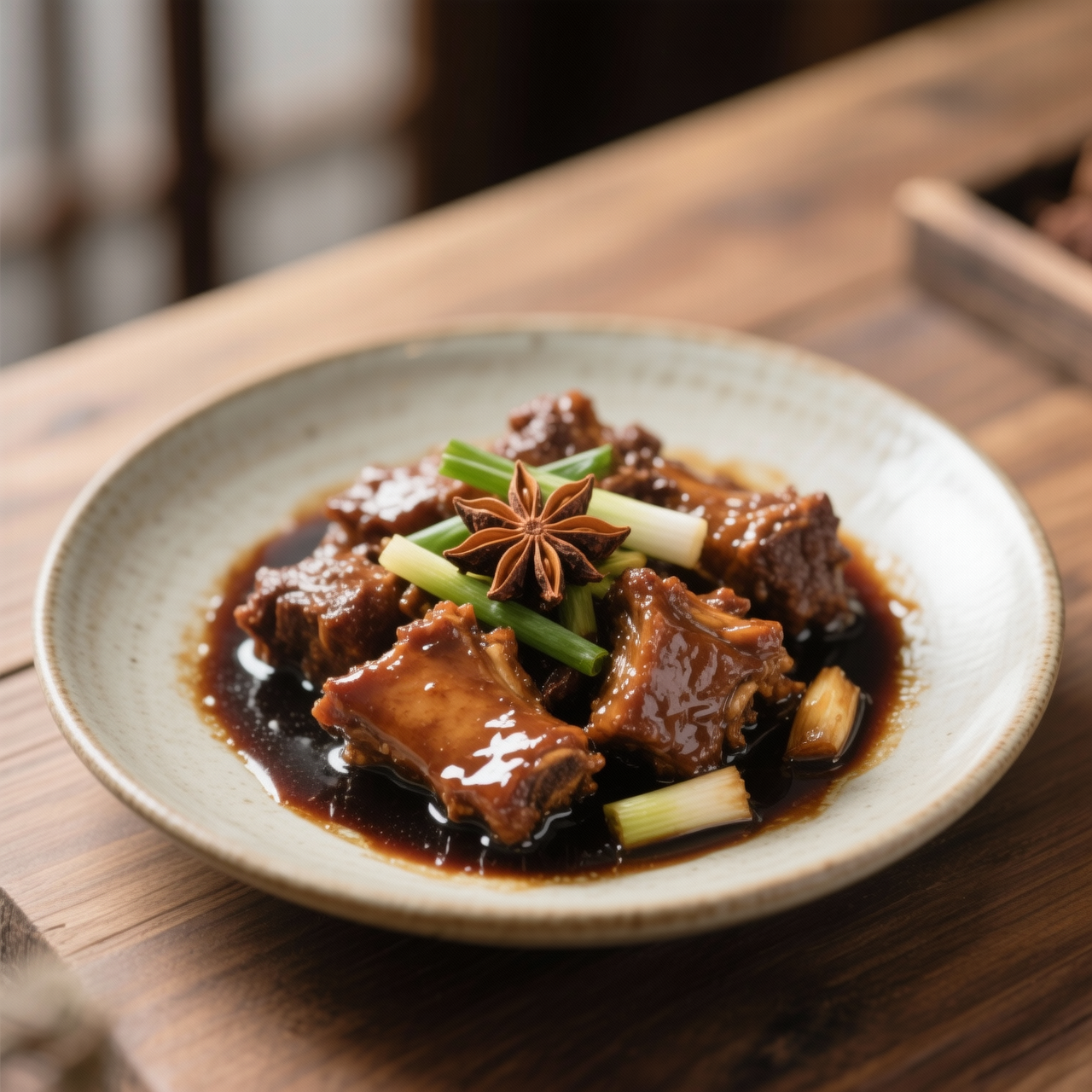
Master Stock (Lu Shui)
When I first learned about master stock, I was struck by its quiet rebellion against the modern obsession with freshness. Born in the bustling kitchens of southern China, particularly Canton, this brine—known as lu shui—was never meant to be a single-use condiment. It is a living archive, a dark, fragrant reservoir of star anise, cinnamon, rock sugar, soy, and the slow-rendered essences of countless braised meats, eggs, and tofu. I keep mine in a heavy pot on the back shelf of my fridge, treating it like a culinary heirloom. What makes it so vital isn’t just its profound, layered umami, but the way it teaches patience. Every time you simmer it, you’re not just cooking; you’re stewarding a lineage. Yet, so many home cooks abandon it after one batch. The most common pitfall is neglect. Master stock demands respect: it must be brought to a vigorous boil every few days to kill off unwanted microbes, skimmed of excess fat, and carefully topped up with fresh water, soy, and aromatics to replace what evaporates. Another mistake is skipping the blanching step for your ingredients before they touch the brine, which clouds the stock and accelerates spoilage. If you rush it or let it sit cold for weeks without intervention, it turns sour or slimy. But if you tend to it properly, it rewards you with a depth no quick reduction can mimic. It’s a practice of continuity in a disposable world, and once you taste the difference a well-tended brine makes, you’ll understand why I guard mine like a secret.
Nutrition
| Per serving | Calories | Protein | Carbs | Fat | Sat fat | Fibre | Sugar | Sodium |
|---|---|---|---|---|---|---|---|---|
| beginner | 48kcal | 2g | 9g | 1g | 0g | 0g | 7g | 1650mg |
| intermediate | 52kcal | 2g | 7g | 0g | 0g | 0g | 6g | 1080mg |
| expert | 145kcal | 4g | 26g | 1g | 0g | 0g | 21g | 2200mg |
Per serving · Ava-estimated — a guide, not a clinical figure.
- 500 mllight soy sauce— Provides primary saltiness and umami
- 150 mldark soy sauce— Adds deep color and caramel notes
- 200 mlShaoxing wine— Traditional Chinese cooking wine for depth
- 80 gyellow rock sugar— Crushed slightly for faster dissolution
- 50 gginger— Thickly sliced and lightly smashed
- 40 gscallion— White parts only, bruised to release flavor
- 5 piecestar anise— Whole pods, rinse before use
- 10 gcinnamon stick— Cassia bark preferred for authentic flavor
- 8 gSichuan peppercorn(optional)— Lightly toasted to enhance aroma
- 1000 mlwater— Filtered or spring water recommended
This beginner-friendly approach strips away the intimidating traditional techniques of Chinese master stock, replacing them with reliable shortcuts that guarantee a rich, balanced flavor on your very first try. Instead of toasting whole spices and grinding them by hand, you’ll use a high-quality jarred five-spice powder and pre-measured soy sauce. We skip the complex initial blanching and rely on a gentle, steady simmer to coax out deep savory notes without turning the broth bitter. Watch your heat closely: a rolling boil will cloud the liquid and make it overly sharp, while a quiet bubble keeps it clear and mellow. You’ll also learn the essential beginner habit of skimming any surface foam early on, which ensures your stock stays clean-tasting for future reuse. Once cooled, simply strain it through a fine sieve, store it in a clean glass jar, and let it rest in the fridge before freezing portions. Don’t worry about perfection; master stock is designed to improve over time, so your first batch will only get better as you reuse it for braising eggs, tofu, or meats. Trust the process, keep it low and slow, and you’ll build a flavorful kitchen staple with zero guesswork.
Equipment
- Medium heavy-bottomed pot— stainless steel or enamel-coated works best for even heating
- Fine-mesh strainer— essential for catching spices before storage
- Heat-safe glass jars— use wide-mouth for easy cooling and freezing
Method
- 1
Pour the water, light soy sauce, dark soy sauce, rice wine, and rock sugar into your pot.
Don't worry about dissolving the sugar yet; it will melt naturally during the simmer.
combining~ 1 min - 2
Add the ginger slices, scallion knots, star anise, cinnamon stick, and five-spice powder.
Lightly bruise the ginger with the flat of your knife to release more aromatic oils.
bruising~ 2 min - 3
Bring the mixture to a gentle boil over medium-high heat, then immediately reduce to low for a quiet simmer.
A few tiny bubbles should break the surface; if it boils vigorously, turn it down right away.
simmering~ 3 minTricky bit - 4
Skim off any grey foam that rises to the top, then simmer uncovered for twenty minutes before turning off the heat.
Skimming keeps the flavor clean and prevents bitterness from trapped impurities.
skimming~ 20 min - 5
Strain the hot liquid through a fine-mesh sieve into a clean container, discarding the solids, and let it cool completely before refrigerating or freezing.
Cool it uncovered to prevent condensation, then seal tightly for long-term storage.
straining~ 5 min
Cooking from frozen
Thaw overnight in the refrigerator, bring to a rolling boil for ten minutes to sterilize, then refresh with fresh soy and a pinch of rock sugar.
Storage times are a guide — always use your judgement and store food safely.