
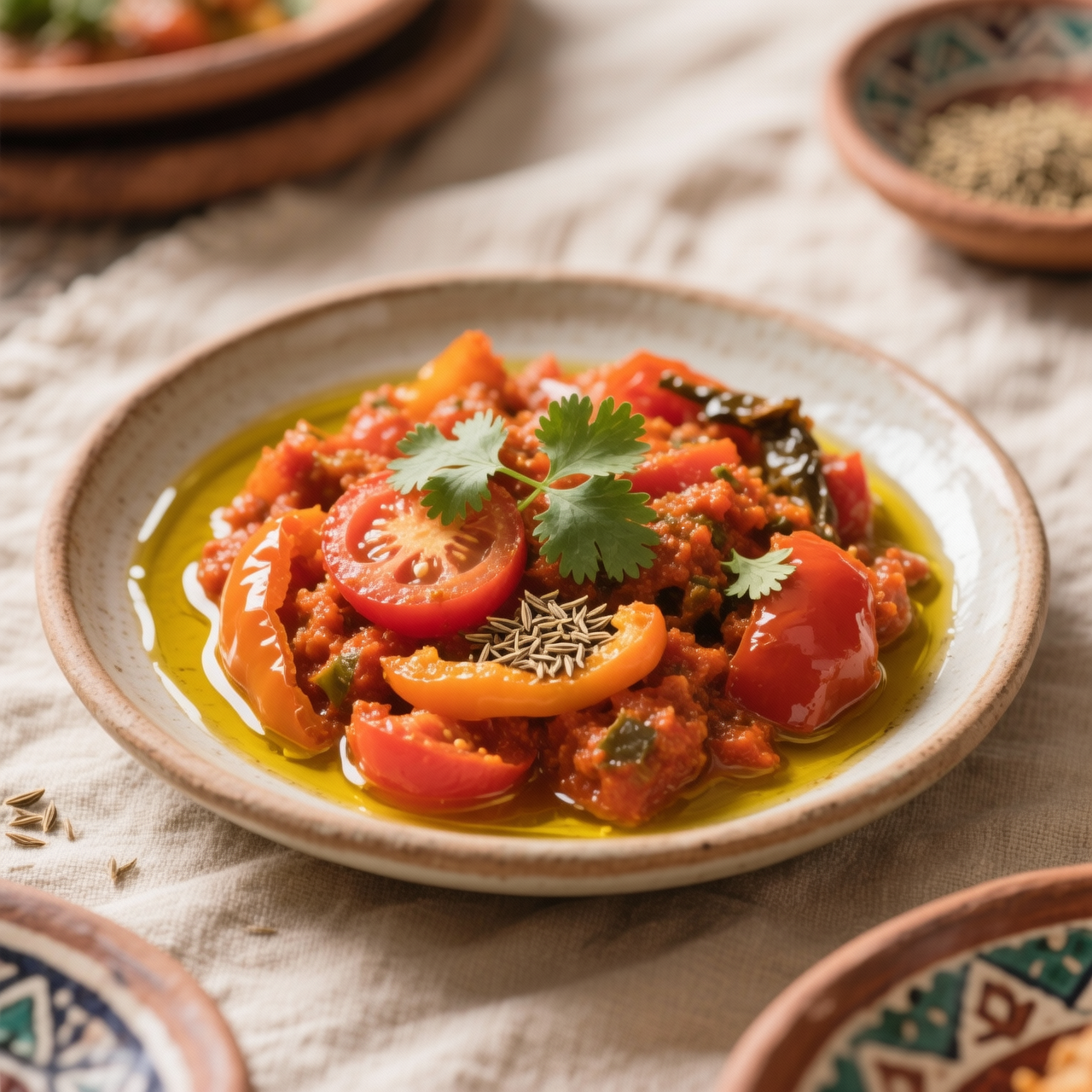
Matbucha
When I first encountered matbucha in a Marrakech kitchen, I quickly understood why it’s called the Moroccan cook’s quiet triumph. This slow-simmered tomato and roasted-pepper relish isn’t just a condiment; it’s an edible archive of summer, born from Sephardic and Maghrebi traditions that learned to coax sweetness and depth from humble garden staples. What makes it so vital to Moroccan home cooking is its sheer versatility—spooned over couscous, folded into scrambled eggs, or served simply with crusty bread and olives, it carries the weight of centuries of preservation wisdom. The magic lies entirely in patience. I’ve seen too many home cooks rush the process, expecting a bright, chunky salsa in under an hour, only to end up with a watery, acidic mess that lacks that signature jammy richness. The biggest mistake is skipping the slow reduction. Tomatoes must be salted early to draw out excess moisture, then coaxed over low heat until the oil begins to separate and pool like liquid rubies on the surface. Peeling the roasted peppers is non-negotiable if you want a silky texture, and garlic should be added late so it doesn’t turn bitter. When you finally taste a properly made batch, the layers of sweet, smoky, and gently spiced notes reveal themselves slowly. It’s a reminder that the best Moroccan flavors aren’t forced; they’re gently coaxed into being, one quiet simmer at a time.
Nutrition
| Per serving | Calories | Protein | Carbs | Fat | Sat fat | Fibre | Sugar | Sodium |
|---|---|---|---|---|---|---|---|---|
| beginner | 125kcal | 2g | 15g | 11g | 2g | 4g | 8g | 380mg |
| intermediate | 205kcal | 3g | 18g | 13g | 2g | 5g | 10g | 320mg |
| expert | 175kcal | 3g | 14g | 12g | 2g | 4g | 9g | 260mg |
Per serving · Ava-estimated — a guide, not a clinical figure.
- 500 gTomato— ripe, peeled and finely chopped
- 200 gBell pepper— roasted, peeled, seeded, and chopped
- 60 mlOlive oil— extra virgin
- 15 gGarlic— finely minced
- 5 gSweet paprika
- 2 gGround cumin
- 5 gSalt— to taste
- 1 gCayenne pepper(optional)— adjust to heat preference
This beginner-friendly approach to matbucha relies on reliable pantry staples like jarred roasted red peppers, canned crushed tomatoes, and pre-made tomato paste to eliminate tedious roasting and blending steps. By skipping the raw prep, you bypass the risk of blistering peppers incorrectly or struggling with tough skins, making your first attempt virtually foolproof. The key to success here is patience during the simmer. Once your aromatics and spices are softened, you will combine everything in a heavy pan and let it bubble gently over low heat. Do not rush this stage or crank the burner to high, as the natural sugars in the tomatoes and peppers will scorch easily if left unattended. Stir occasionally with a wooden spoon, scraping the bottom to prevent sticking. Watch closely for the moment the thick, bright red sauce begins to glisten and the olive oil naturally separates to the surface; this visual cue confirms that excess water has evaporated and the flavors have fully married. Serve warm with crusty bread or chill it for a vibrant dip.
Equipment
- Heavy-bottomed saucepan— non-stick or enameled cast iron works best for slow simmering
- Wooden spoon— for gentle scraping without scratching the pan
- Measuring cups— standard dry and liquid sets
Method
- 1
Drain the jarred roasted peppers and pat them dry with paper towels, then roughly chop them into bite-sized pieces.
Removing excess brine prevents a watery sauce.
chopping~ 1 min - 2
Heat olive oil in your heavy-bottomed pan over medium heat, then add diced onions and minced garlic.
Cook until translucent and fragrant, about 3 minutes.
sweating~ 3 min - 3
Sprinkle smoked paprika, cumin, and chili flakes into the pan, stirring constantly until the spices darken slightly and become fragrant.
Keep the heat moderate to avoid burning the paprika.
blooming~ 1 minTricky bit - 4
Stir in the jarred tomato paste, canned crushed tomatoes, and chopped roasted peppers, mixing thoroughly to break up any lumps.
Scrape the bottom of the pan to incorporate any browned bits.
combining~ 1 min - 5
Reduce the heat to low and let the mixture simmer uncovered, stirring every few minutes until it thickens and oil pools on the surface.
This slow reduction concentrates the sweet and smoky flavors.
reduction~ 20 minTricky bit - 6
Remove the pan from the heat, stir in a splash of olive oil and a pinch of salt, then taste and adjust seasoning as needed.
Let it cool slightly before transferring to a serving bowl.
seasoning~ 2 min
Cooking from frozen
Thaw in the refrigerator overnight, then reheat gently in a saucepan with a splash of water or olive oil to restore its loose, jammy consistency.
Storage times are a guide — always use your judgement and store food safely.