
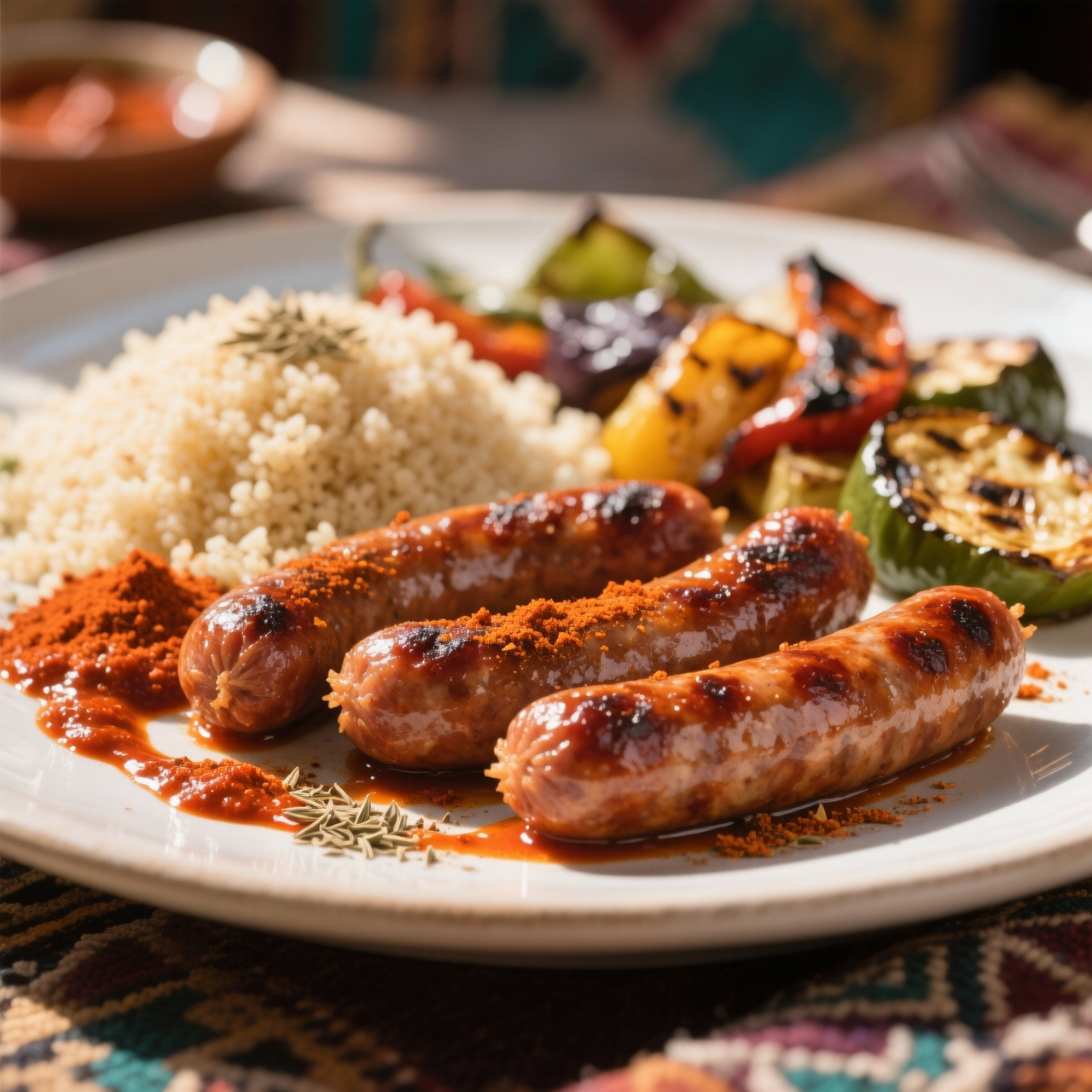
Merguez sausages
I first understood the true heartbeat of North African street food when I stopped buying those pale, rubbery merguez links from the supermarket freezer aisle. You can easily spend six or seven pounds on a plastic-wrapped pack of the mass-produced stuff, yet they taste like little more than heavily salted beef paste masked by synthetic smoke flavoring and a suspiciously uniform red dye. Making them from scratch is a quiet rebellion against that industrial shortcut. Historically rooted in the Maghreb and deeply woven into Moroccan home cooking, these spiced sausages were born from necessity and resourcefulness, transforming humble cuts of beef and lamb into something vibrantly aromatic. What matters most here isn’t the casing or the fancy grinder; it’s the balance of harissa, garlic, cumin, coriander, and a touch of smoked paprika that sings when it hits the pan. The most common pitfall I see is overworking the meat until it turns pasty and dense, or drowning the spice blend in cheap chili powder that lacks depth. Keep your hands cold, mix gently just until the spices are evenly distributed, and let the fat stay distinct. You don’t need a commercial stuffer or a mountain of gear—clean hands, patience, and quality meat will give you links that actually snap and bloom with flavor. Once you taste how the garlic and cumin caramelize against the rendered fat, you’ll never look at a supermarket tube of processed meat the same way again. It’s a batch hero, meant to be made in bulk, frozen, and pulled out whenever you want something deeply satisfying.
Nutrition
| Per serving | Calories | Protein | Carbs | Fat | Sat fat | Fibre | Sugar | Sodium |
|---|---|---|---|---|---|---|---|---|
| beginner | 420kcal | 28g | 2g | 34g | 13g | 1g | 1g | 580mg |
| intermediate | 380kcal | 28g | 2g | 28g | 10g | 1g | 1g | 580mg |
| expert | 490kcal | 33g | 2g | 38g | 13g | 0g | 1g | 820mg |
Per serving · Ava-estimated — a guide, not a clinical figure.
- 1000 gground beef— 80/20 fat ratio preferred for moisture
- 60 gharissa paste— Use mild or hot based on preference
- 15 ggarlic— Peeled and finely minced
- 10 gground cumin— Toasted whole seeds yield best aroma
- 15 gsmoked paprika— Spanish or Hungarian variety works well
- 8 gground coriander— Freshly ground recommended
- 5 gcayenne pepper(optional)— Adjust for desired spice level
- 18 gkosher salt— Dissolves evenly during mixing
- 3 gblack pepper— Freshly cracked
- 30 mlolive oil— Extra virgin adds richness
- 3 msausage casing— Sheep or hog casing, soaked before stuffing
Shop-bought merguez often costs nearly double what it takes to make at home, yet hides behind excessive fillers, preservatives, and bland, one-dimensional spice blends that pale under the grill. This beginner-friendly approach strips away the intimidation of traditional sausage making while strictly honoring the unprocessed rule: you will build the signature North African heat and earthy depth from scratch using pantry staples, avoiding all pre-mixed pastes or packet shortcuts. The key difference here is technique over equipment. Instead of wrestling with a sausage stuffer and hog casings, you will hand-shatter the meat with your fingers for a tender crumb, then form rustic, thick patties that deliver the exact same flavor experience as traditional links. Pay close attention to keeping your meat and hands thoroughly chilled before mixing; this prevents the fat from melting prematurely, which is the single biggest cause of dry, crumbling results. Once combined, let the mixture rest in the fridge to allow the cumin, coriander, and harissa components to fully hydrate and marry. You will know it is ready when the mixture holds its shape firmly without feeling sticky or dense.
Equipment
- Large mixing bowl— metal conducts cold best
- Heavy skillet or cast iron pan— retains heat for proper browning
- Spice grinder or mortar— essential for fresh flavor release
Method
- 1
Toast whole cumin and coriander seeds in a dry pan until fragrant, then grind them into a fine powder.
Watch closely so they do not burn.
toasting~ 2 min - 2
Mix the ground spices with minced garlic, smoked paprika, salt, and olive oil to form a thick paste.
The oil helps distribute the fat-soluble flavors.
macerating~ 1 min - 3
Add the cold ground beef to the spice paste and gently fold everything together with your hands until just combined.
Overworking will make the final texture tough.
folding~ 3 min - 4
Cover the bowl and refrigerate the seasoned meat for thirty minutes to let the flavors absorb and the fat firm up.
Chilling is non-negotiable for successful shaping.
chilling~ 30 min - 5
Divide the chilled mixture into eight equal portions and press each one into a thick, finger-length sausage shape.
Wet your hands slightly to prevent sticking.
shaping~ 5 min - 6
Cook the shaped sausages in a hot skillet for four minutes per side until deeply browned and cooked through.
Do not move them until a crust forms naturally.
searing~ 8 minTricky bit
Cooking from frozen
Cook directly from frozen over medium-low heat, turning frequently until browned and cooked through.
Storage times are a guide — always use your judgement and store food safely.