
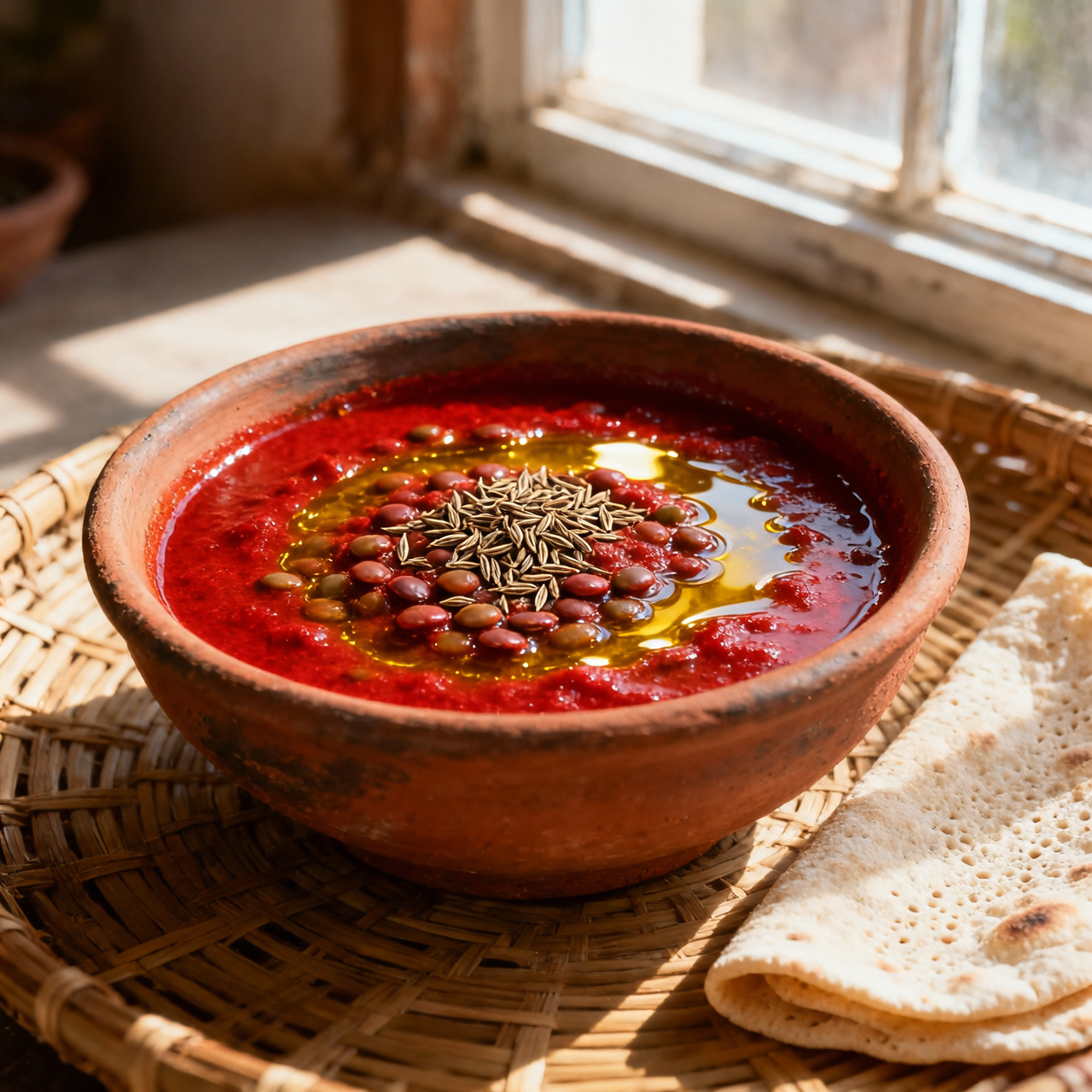
Misir Wat
I’ve always found a quiet comfort in the way Ethiopian cooking transforms humble legumes into something deeply resonant, and Misir Wat stands as the perfect testament to that alchemy. Born in the highlands of East Africa, this vibrant red lentil stew has long been a cornerstone of Ethiopian tables, traditionally simmered in homes across Addis Ababa and beyond. For me, it’s more than just a dish; it’s a meditation on patience and spice. The foundation relies heavily on berbere, that complex, fiery blend of chilies, garlic, ginger, fenugreek, and sacred basil, which carries centuries of trade route history in every spoonful. What makes this recipe truly matter, especially today, is how effortlessly it aligns with plant-based traditions without sacrificing depth or soul. Yet, so many cooks stumble when they rush the aromatics. The most common pitfall I see is skipping the slow, careful frying of the onions until they melt into a rich, golden paste. That step isn’t optional; it’s where the wat develops its signature silkiness and caramelized backbone. Another frequent misstep is adding the lentils too early or boiling them aggressively, which turns them mushy and strips away their delicate texture. I’ve learned to treat the simmer like a slow conversation, letting the spices bloom in oil first, then coaxing the lentils to soften gently. When done right, Misir Wat becomes a deeply nourishing, vegan masterpiece that clings to warm injera and leaves you quietly grateful for the simplicity of beans, spice, and time.
Nutrition
| Per serving | Calories | Protein | Carbs | Fat | Sat fat | Fibre | Sugar | Sodium |
|---|---|---|---|---|---|---|---|---|
| beginner | 408kcal | 19g | 52g | 15g | 2g | 11g | 5g | 1250mg |
| intermediate | 408kcal | 19g | 52g | 15g | 2g | 11g | 5g | 1250mg |
| expert | 408kcal | 19g | 52g | 15g | 2g | 11g | 5g | 1250mg |
Per serving · Ava-estimated — a guide, not a clinical figure.
- 250 gred lentil— split, rinsed thoroughly
- 200 gyellow onion— finely minced
- 4 clovegarlic clove— crushed into a paste
- 20 gfresh ginger— peeled and grated
- 45 gberbere spice blend— high-quality, earthy and citrus-forward
- 30 gtomato paste— double-concentrated preferred
- 60 mlneutral vegetable oil— high smoke point
- 1000 mlwater— room temperature
- 12 gfine sea salt— adjust to taste
- 0.5 piecelemon— juiced, for finishing
This version removes the intimidation factor by leaning on reliable shortcuts without sacrificing the dish’s soul. You will use a trusted jarred berbere and pre-minced aromatics, which dramatically cuts prep time while delivering that signature Ethiopian warmth. The key here is strict temperature control. Commercial blends often scorch faster than loose spices, so maintain medium-low heat and stir constantly until the raw garlic scent vanishes and the oil turns fragrant. Do not rush the onion stage; let it soften completely before adding the spices, or the base will turn bitter. The steps are highly linear, so you never need to multitask. Watch the lentils closely once the liquid is added. They break down quickly and can become gummy if boiled aggressively. Maintain a gentle simmer and stir occasionally to prevent sticking. When the stew thickens enough to coat a spoon, remove it from the heat. Finish with a bright squeeze of lemon to cut the richness and lift the heavy spice notes. This streamlined approach guarantees a confident, comforting first attempt every single time.
Equipment
- Heavy-bottomed pot— non-stick works well for beginners
- Wooden spoon— flat-edged for scraping
Method
- 1
Heat half the oil in your pot over medium heat until shimmering.
Do not use high heat.
warming~ 1 min - 2
Add the minced onion and cook until soft and translucent.
Stir every two minutes.
sweating~ 5 minTricky bit - 3
Push onions aside and add remaining oil, tomato paste, garlic, and ginger.
Cook until raw smell disappears.
blooming~ 2 minTricky bit - 4
Sprinkle in the berbere and stir constantly for one minute.
Watch for darkening edges.
toasting~ 1 minTricky bit - 5
Pour in rinsed lentils and water, then bring the mixture to a gentle boil.
Cover loosely.
simmering~ 4 min - 6
Reduce heat to low and simmer uncovered until lentils break down.
Stir occasionally.
reduction~ 15 min - 7
Remove from heat and fold in salt and lemon juice.
Taste before adding more.
seasoning~ 1 min