
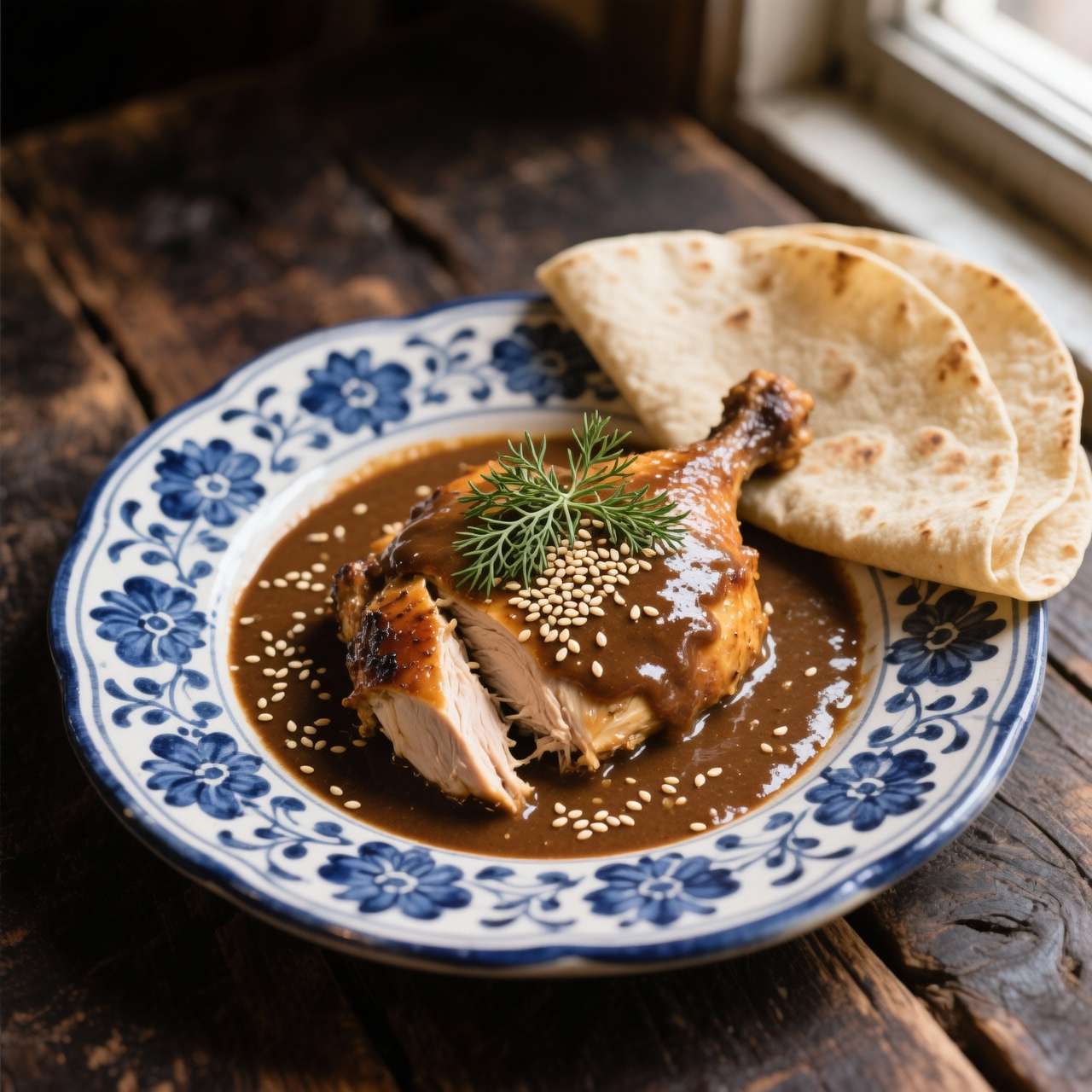
Mole Poblano
When I first approached Mole Poblano, I thought it was just a sauce, but it quickly revealed itself as a living archive of Mexican history. Born in the convents of colonial Puebla, it represents a profound alchemy where indigenous chiles and cacao met Old World spices like cinnamon, cloves, and almonds. To me, this dish matters because it embodies the very essence of cultural resilience and synthesis. It refuses to be simplified, demanding patience, reverence, and a willingness to listen to the ingredients as they transform. Yet, I have seen too many cooks rush through it, treating it like a quick weeknight fix rather than a ceremonial craft. The most common pitfalls stem from impatience and imbalance. Burning the chiles during the toasting phase introduces a bitter, acrid note that no amount of sweetening can mask. Skipping the careful frying of the ground paste in lard or oil prevents the deep Maillard reactions that give mole its signature complexity. Another frequent misstep is over-relying on chocolate for sweetness, forgetting that the true sweetness should emerge slowly from toasted nuts, dried fruits, and the careful caramelization of onions and garlic. When I make it, I measure progress by aroma, not the clock. The sauce must simmer until it coats the back of a spoon like dark velvet, balancing heat, earth, sweetness, and spice in a delicate, harmonious tension. Mole is never truly finished until it rests, allowing those fractured flavors to marry into something greater than the sum of its parts.
Nutrition
| Per serving | Calories | Protein | Carbs | Fat | Sat fat | Fibre | Sugar | Sodium |
|---|---|---|---|---|---|---|---|---|
| beginner | 570kcal | 14g | 58g | 36g | 10g | 16g | 23g | 1200mg |
| intermediate | 570kcal | 14g | 58g | 36g | 10g | 16g | 23g | 1200mg |
| expert | 570kcal | 14g | 58g | 36g | 10g | 16g | 23g | 1200mg |
Per serving · Ava-estimated — a guide, not a clinical figure.
- 500 mlChicken stock— low sodium preferred
- 60 gDried mulato chile— stems and seeds removed
- 60 gDried ancho chile— stems and seeds removed
- 40 gDried pasilla chile— stems and seeds removed
- 150 gWhite onion— quartered
- 20 gGarlic clove— peeled
- 100 gRoma tomato— halved
- 100 gRipe plantain— peeled and sliced
- 50 gCorn tortilla— stale preferred
- 30 gRaw almond— skin-on
- 30 gRaw peanut— shelled
- 40 gSesame seed— divided for garnish and sauce
- 80 gMexican chocolate tablet— traditional brand with cinnamon
- 5 gCinnamon stick— Ceylon preferred
- 3 gWhole clove— freshly dried
- 5 gBlack peppercorn— whole
- 60 mlPork lard— or neutral vegetable oil
- 10 gFine sea salt— to taste
This path removes the intimidation factor without sacrificing the soul of the dish. Instead of individually toasting and grinding dozens of chilies, nuts, and spices, you will rely on a high-quality store-bought mole paste as your flavor foundation. The goal here is mastering the technique of building depth around that shortcut. You will focus on properly sautéing the fresh aromatics, gently warming the paste to unlock its dormant oils, and carefully balancing the sweetness with the provided chocolate. Watch closely for scorching; jarred pastes contain sugars that caramelize rapidly. Keep your heat at medium-low and stir constantly. Do not rush the simmering phase, as this is where the sauce transitions from flat to complex. Strain it thoroughly to remove any fibrous chunks, then finish with a splash of stock to reach a glossy, coating consistency. This approach guarantees a deeply satisfying, restaurant-adjacent result on a busy weeknight, building your confidence for more traditional attempts later.
Equipment
- Heavy-bottomed pot— stainless steel or enamel works best
- Fine-mesh strainer— essential for smooth texture
- Wooden spoon— for constant stirring
Method
- 1
Toast the corn tortilla and sliced plantain in a dry skillet until golden and fragrant.
Keep heat medium to prevent burning the natural sugars.
toasting~ 2 min - 2
Sauté the onion, garlic, and tomato in oil until completely softened.
Sweat them slowly without browning.
sweating~ 3 min - 3
Combine the sautéed vegetables with the jarred mole paste and chicken stock in a heavy pot.
Stir constantly to prevent sticking.
tempering~ 5 min - 4
Simmer the mixture gently over low heat until it thickens noticeably.
Stir frequently to avoid scorching the bottom.
reduction~ 15 minTricky bit - 5
Whisk in the chocolate tablet until fully melted and completely incorporated.
Remove from direct heat if the sauce bubbles too vigorously.
emulsifying~ 2 minTricky bit - 6
Pass the sauce through a fine-mesh strainer and adjust the salt.
Press firmly with a ladle to extract all liquid.
straining~ 1 min