
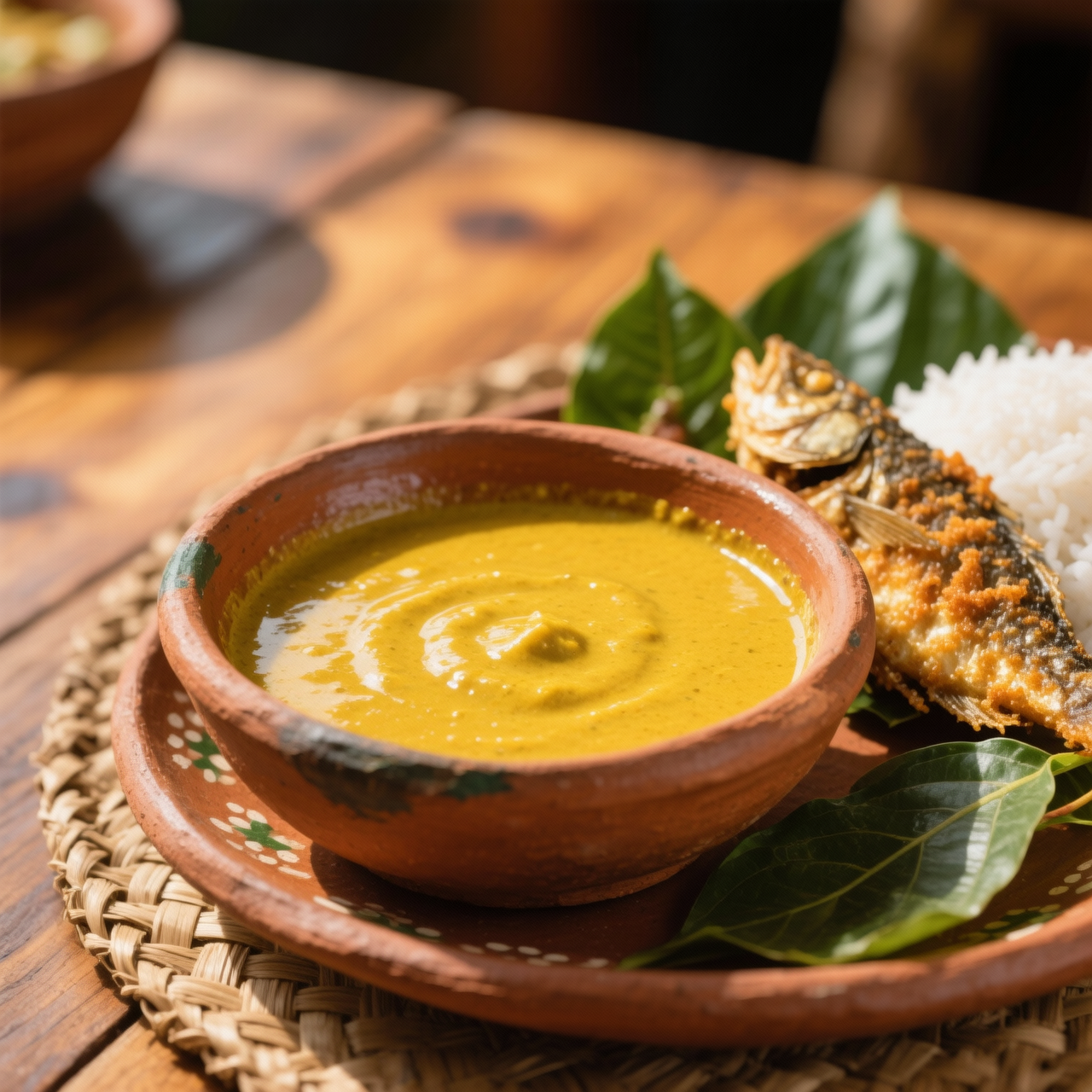
Molho de Tucupi
As Ava, I look at Molho de Tucupi and see the very soul of the Amazonian kitchen. This isn't just a sauce; it is a triumph of indigenous knowledge and survival. Extracted from wild manioc, or cassava, the raw juice is inherently toxic, containing lethal levels of cyanogenic glycosides. The brilliance of our Amazonian ancestors was discovering that through pressing, fermenting, and prolonged boiling, this poison transforms into a deeply savory, umami-rich, and slightly tangy golden broth. It matters because it is the foundational liquid of Pará's cuisine, inextricably linked to dishes like pato no tucupi and tacacá. When I work with tucupi, I am honoring a millennia-old tradition of turning danger into nourishment. The most common pitfall I see when people attempt to use or prepare it outside the Amazon is underestimating the boiling time or misunderstanding its flavor profile. If you are boiling the raw extract yourself, skimping on the boiling time is not just a culinary mistake; it is a fatal one, as the heat is required to evaporate the hydrocyanic acid. Even when buying commercially prepared, safe tucupi, a frequent error is treating it like a simple vinegar or soy sauce. It needs to be simmered with garlic, chicory, and salt to awaken its complex, earthy notes. It shouldn't be rushed. Let it reduce slightly, let the aromatics infuse, and respect the time it takes to achieve that perfect, dark, aromatic depth that makes this sauce an irreplaceable treasure of Brazilian gastronomy.
Nutrition
| Per serving | Calories | Protein | Carbs | Fat | Sat fat | Fibre | Sugar | Sodium |
|---|---|---|---|---|---|---|---|---|
| beginner | 45kcal | 1g | 8g | 1g | 0g | 1g | 2g | 850mg |
| intermediate | 45kcal | 1g | 8g | 2g | 0g | 1g | 1g | 850mg |
| expert | 35kcal | 1g | 7g | 0g | 0g | 0g | 1g | 850mg |
Per serving · Ava-estimated — a guide, not a clinical figure.
- 500 mltucupi— fermented wild-cassava broth
- 15 ggarlic— peeled and crushed
- 15 gjambu leaf— fresh and washed
- 5 gsalt— adjust to taste
This beginner-friendly approach uses store-bought, pasteurized tucupi, eliminating the days-long process of extracting and fermenting wild cassava juice while guaranteeing safety from natural toxins. Your goal is a confident first attempt at balancing the broth's earthy, tangy profile with fresh aromatics. Because the base is pre-made, focus entirely on the technique of building flavor. Watch the heat carefully once the tucupi reaches a boil; it should simmer gently to meld the ingredients without reducing too quickly. Pay special attention when adding the chicória (culantro) at the end, as its delicate, pungent oils will turn bitter if overcooked. This shortcut method delivers an authentic Amazonian taste profile with minimal fuss, perfect for drizzling over tacacá or roasted vegetables. Allow the sauce to rest off the heat, as the flavors will continue to deepen and harmonize as it cools slightly, ensuring a vibrant and complex finish to your very first Amazonian culinary adventure, making this beloved regional sauce an accessible and rewarding addition to your everyday cooking repertoire.
Equipment
- Heavy-bottomed pan— non-stick or stainless steel works perfectly
- Chef's knife and cutting board— ensure your knife is sharp for the chicória
Method
- 1
Finely mince the garlic cloves and roughly chop the fresh chicória leaves, keeping the tender leaves and tougher stems separated.
Chicória is also known as culantro or long coriander; do not substitute with regular cilantro if possible.
prep~ 5 min - 2
Heat a small splash of oil in the pan over medium heat and sauté the minced garlic until just fragrant.
Do not let the garlic brown or it will introduce a bitter taste to the delicate broth.
sweating~ 2 min - 3
Pour the jarred tucupi into the pan and add the sliced chili pepper along with the reserved chicória stems.
Use a wooden spoon to gently scrape up any flavorful bits from the bottom of the pan.
deglazing~ 1 min - 4
Bring the liquid to a rolling boil, then immediately reduce the heat to low and let it simmer gently.
Maintain a bare simmer to prevent the broth from reducing too rapidly and becoming overly salty.
simmering~ 20 minTricky bit - 5
Stir in the reserved tender chicória leaves during the final five minutes of cooking to preserve their bright flavor.
The residual heat will continue to wilt the leaves perfectly after you turn off the stove.
finishing~ 5 min - 6
Taste the sauce, adjust the salt if necessary, and remove from heat to rest before serving.
Tucupi is naturally quite salty, so always taste before adding any extra salt.
seasoning~ 5 min
Cooking from frozen
Thaw overnight in the refrigerator and reheat gently in a saucepan until simmering.
Storage times are a guide — always use your judgement and store food safely.