
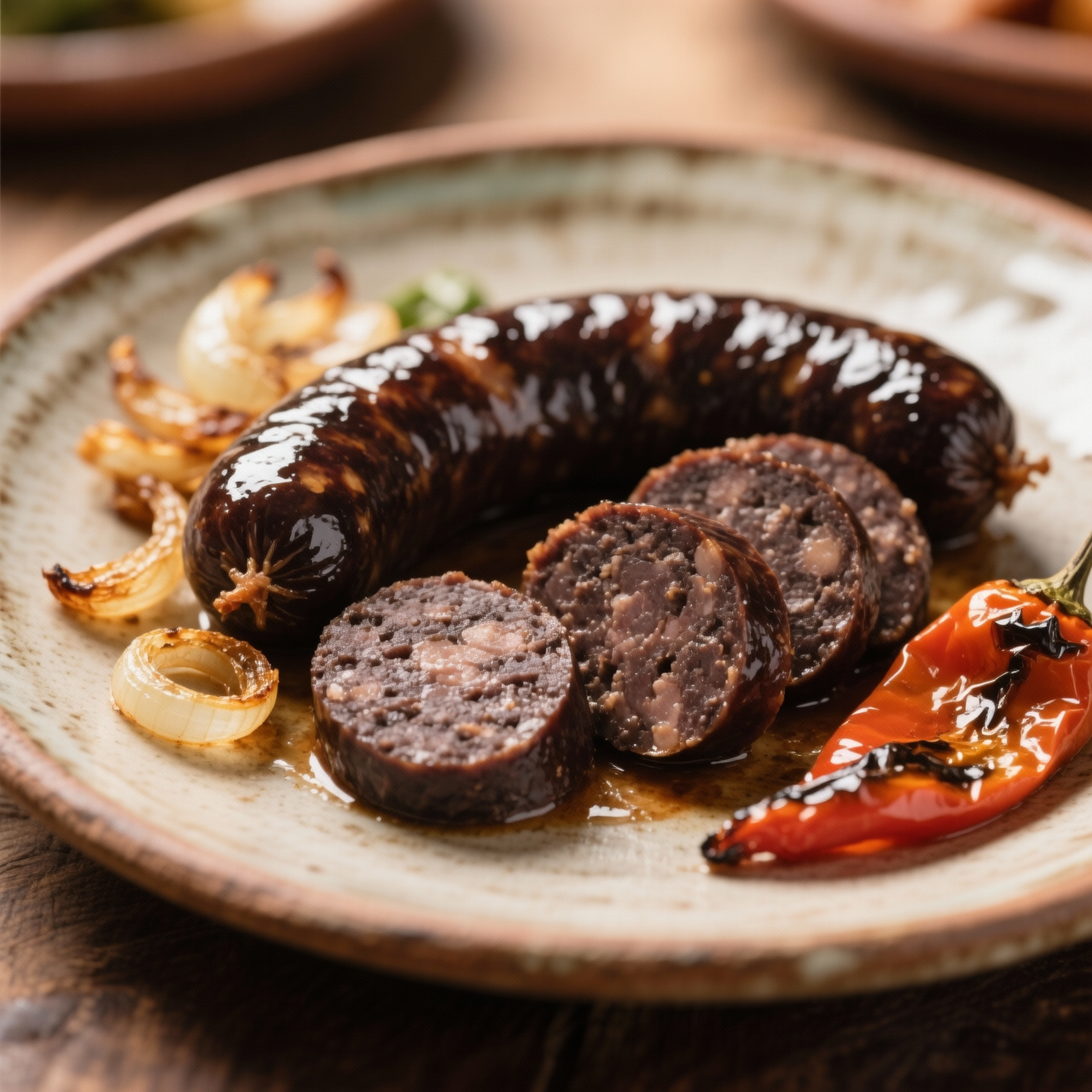
Morcilla (blood sausage)
I have always believed that morcilla is the quiet heartbeat of Spanish charcuterie, born from centuries of rural frugality and a refusal to waste a drop of the pig’s harvest. When you walk past the deli counters in Spain, you will see vacuum-packed rings priced at a few euros, but those commercial shortcuts are almost always padded with cheap rice extenders, chemical stabilizers, and muted spice blends that mask rather than celebrate the blood. Making it from scratch restores its true character: a clean, iron-rich depth, properly toasted cumin, sweet paprika, and the subtle sweetness of slowly caramelized onions. The process demands respect, not perfection. Your first hurdle will be the blood itself, which must be kept cold, stirred constantly with vinegar to stop it from setting too early, and gently heated to exactly seventy degrees so it coagulates into a tender, sliceable crumb rather than a rubbery block. The second trap is overstuffing the natural casings; pack them loosely, prick any trapped air bubbles, and simmer them low and slow so the skins never split under sudden heat. Once you master that rhythm, you are rewarded with something profoundly honest and deeply savory, the kind of ingredient that elevates simple beans or rustic bread into a complete meal. I treat every batch as a small act of preservation, linking modern kitchens to the same stone hearths that shaped Iberian foodways. When I finally slice into my own rings, the dark, fragrant interior proves that taking the time to do it properly, with nothing hidden and nothing rushed, is the only way I truly honor this ancient craft.
Nutrition
| Per serving | Calories | Protein | Carbs | Fat | Sat fat | Fibre | Sugar | Sodium |
|---|---|---|---|---|---|---|---|---|
| beginner | 385kcal | 19g | 23g | 24g | 9g | 1g | 1g | 740mg |
| intermediate | 480kcal | 20g | 38g | 28g | 10g | 2g | 5g | 720mg |
| expert | 385kcal | 22g | 19g | 25g | 9g | 1g | 3g | 740mg |
Per serving · Ava-estimated — a guide, not a clinical figure.
- 1000 mlfresh pork blood— strained and kept chilled until use
- 300 gpork back fat— cut into uniform 3mm dice
- 250 gshort-grain rice— rinsed until water runs clear
- 200 gyellow onion— finely diced
- 15 gsweet smoked paprika— pimentón dulce
- 12 gcoarse sea salt
- 5 gblack pepper— freshly cracked
- 3 gdried oregano
- 4 clovesgarlic— minced
- 30 mlextra virgin olive oil— for sweating onions
- 3 mnatural hog casing— soaked in lukewarm water and flushed clean
Shop-bought morcilla often relies on industrial fillers, excessive stabilizers, and tough synthetic casings to extend shelf life, typically costing €4–6 per kilogram while delivering a mealy, overly salty bite. This beginner version strips away the intimidation factor without sacrificing authenticity or the unprocessed rule. Instead of complex commercial stuffing equipment, you will use a simple wide-mouth funnel or a sturdy piping bag to gently push the seasoned blood-and-rice mixture into pre-soaked natural casings. The key difference here is a forgiving, low-temperature poach rather than a rolling boil, which prevents the casings from splitting. Watch your thermometer closely: the liquid must barely shimmer. Tie the filled casings into uniform rings using kitchen twine, leaving small gaps so they cook evenly. Once firm, shock them in ice water to halt cooking and set the texture. This method guarantees a tender, sliceable sausage that freezes beautifully in individual rings, ready to pan-fry straight from the freezer whenever you crave authentic Spanish flavor.
Equipment
- Heavy-bottomed pan— non-stick is fine here
- Wide-mouth funnel or piping bag— plastic or stainless steel
- Kitchen thermometer(optional)— digital probe preferred
- Kitchen twine— cotton, food-safe
Method
- 1
Soak and flush natural casings in cool water until pliable and translucent.
Discard any sections that feel brittle or have holes.
flushing~ 5 min - 2
Sweat diced fatback, chopped onion, and minced garlic in a heavy pan until soft and translucent.
Keep heat low to avoid browning the fat.
sweating~ 7 min - 3
Whisk cooled fat-onion mixture into fresh pork blood with rinsed rice, smoked paprika, and salt.
Temperature must stay below 35°C to prevent curdling.
tempering~ 4 minTricky bit - 4
Thread one casing end over a wide funnel and gently push the filling through, stopping every few inches to tie a ring with twine.
Avoid packing too tightly; the rice will expand during cooking.
linking~ 8 minTricky bit - 5
Lower the rings into barely simmering water and cook until the casings feel firm to the touch.
Maintain a gentle bubble; boiling will split the links.
poaching~ 18 min - 6
Transfer cooked sausages to an ice bath to stop the cooking process and set the texture.
Pat completely dry before bagging for the freezer.
shocking~ 3 min
Cooking from frozen
Thaw overnight in the fridge, then gently pan-fry or bake until the casing crisps.
Storage times are a guide — always use your judgement and store food safely.