
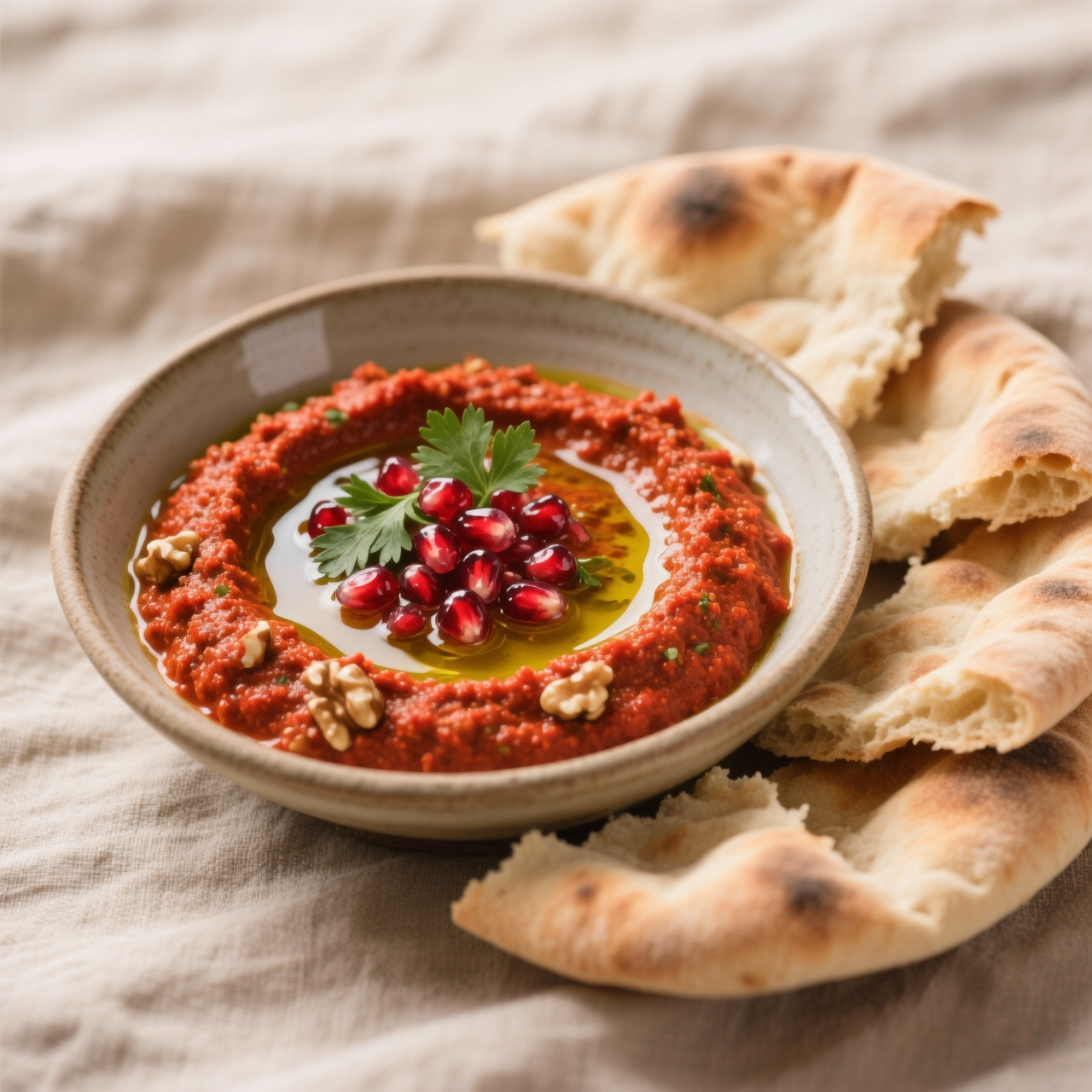
Muhammara
When I first learned to blend roasted bell peppers with toasted walnuts, I quickly realized that muhammara is less about the ingredients and more about the patience required to coax out their hidden depths. Born in the bustling kitchens of Aleppo and carried across borders by generations of Levantine cooks, this dip has always been a testament to resourcefulness and bold flavor. It matters because it transforms humble, charred vegetables and earthy nuts into something vibrant, balancing sweet, smoky, and tangy notes in a way that feels almost alchemical. Yet, I see so many home cooks rush the process or drown the mixture in oil, missing the point entirely. The biggest pitfall is failing to properly roast your peppers until their skins blister and blacken; without that deep caramelization, you are left with a bland, watery puree. Another common mistake is skipping the toast on the walnuts, which leaves them bitter and dulls their natural richness. I always remind myself to drain the roasted peppers thoroughly and let the mixture rest. The flavors need time to marry, and the texture benefits from a gentle pulse rather than an aggressive blend that turns it into baby food. When you get it right, muhammara becomes a versatile centerpiece, thick enough to scoop with warm pita yet smooth enough to spread across roasted vegetables or fold into grain bowls. It is a quiet reminder that great cooking often begins with fire, patience, and a willingness to let the ingredients speak for themselves.
Nutrition
| Per serving | Calories | Protein | Carbs | Fat | Sat fat | Fibre | Sugar | Sodium |
|---|---|---|---|---|---|---|---|---|
| beginner | 215kcal | 5g | 15g | 15g | 2g | 3g | 9g | 340mg |
| intermediate | 240kcal | 5g | 14g | 19g | 2g | 3g | 7g | 160mg |
| expert | 210kcal | 6g | 13g | 16g | 2g | 3g | 6g | 280mg |
Per serving · Ava-estimated — a guide, not a clinical figure.
- 400 gRed bell pepper— Roasted until charred, then peeled and deseeded
- 150 gWalnut— Lightly toasted
- 30 gBread crumb— Plain or panko
- 45 mlExtra virgin olive oil
- 30 mlLemon juice— Freshly squeezed
- 2 cloveGarlic clove— Peeled
- 3 gGround cumin
- 10 gAleppo pepper— Substitute with sweet paprika and a pinch of cayenne if unavailable
- 20 mlPomegranate molasses— Unsweetened variety preferred
- 3 gSalt— Adjust to taste
This beginner-friendly version skips the traditional open-flame roasting and tedious seed removal by relying on high-quality jarred roasted red peppers. The focus here is on texture control and balancing bold flavors without guesswork. Because jarred peppers release a lot of brine, the most critical step is thoroughly draining and patting them completely dry before they touch the food processor; skipping this will turn your dip into a thin, watery soup. You will use a standard food processor to quickly combine the peppers with walnuts, breadcrumbs, and pomegranate molasses. Watch for the moment the mixture shifts from chunky to a cohesive, spreadable paste, and immediately stop processing to preserve the rustic character of the dish. Taste aggressively at the halfway mark, adjusting lemon juice for brightness, molasses for depth, and Aleppo pepper for gentle heat. Chill the finished dip for at least twenty minutes to let the flavors meld before serving with warm pita or fresh vegetables. This approach guarantees a confident, restaurant-worthy result on your very first try with minimal prep time and zero specialized equipment.
Equipment
- Food processor— 3-cup capacity or larger works best
- Fine-mesh strainer— essential for removing excess brine
- Paper towels— use multiple sheets to absorb moisture
Method
- 1
Drain the jarred roasted red peppers in a strainer, then lay them flat on paper towels and press firmly to remove all excess liquid.
Wet peppers will make the final dip runny and unspreadable.
wringing~ 2 minTricky bit - 2
Add the dried peppers, walnuts, breadcrumbs, olive oil, pomegranate molasses, minced garlic, cumin, Aleppo pepper, salt, and lemon juice to the food processor bowl.
Layering wet ingredients over dry helps the blades engage evenly.
loading~ 1 min - 3
Pulse the mixture in three-second bursts, pausing to scrape down the sides, until a thick, slightly coarse paste forms.
Stop immediately once combined to avoid breaking the emulsion into oily sludge.
pulsing~ 2 minTricky bit - 4
Taste a small spoonful and adjust seasoning, adding more lemon for acidity, molasses for sweetness, or a pinch of salt to brighten the flavors.
Flavors will intensify and mellow slightly as the dip rests.
balancing~ 1 min - 5
Transfer the dip to a serving bowl, cover tightly, and refrigerate until thoroughly chilled before drizzling with extra olive oil.
Resting allows the breadcrumbs to absorb excess moisture and the flavors to meld.
resting~ 20 min
Cooking from frozen
Thaw overnight in the refrigerator, stir vigorously to recombine the oils, and refresh with a squeeze of lemon before serving.
Storage times are a guide — always use your judgement and store food safely.