
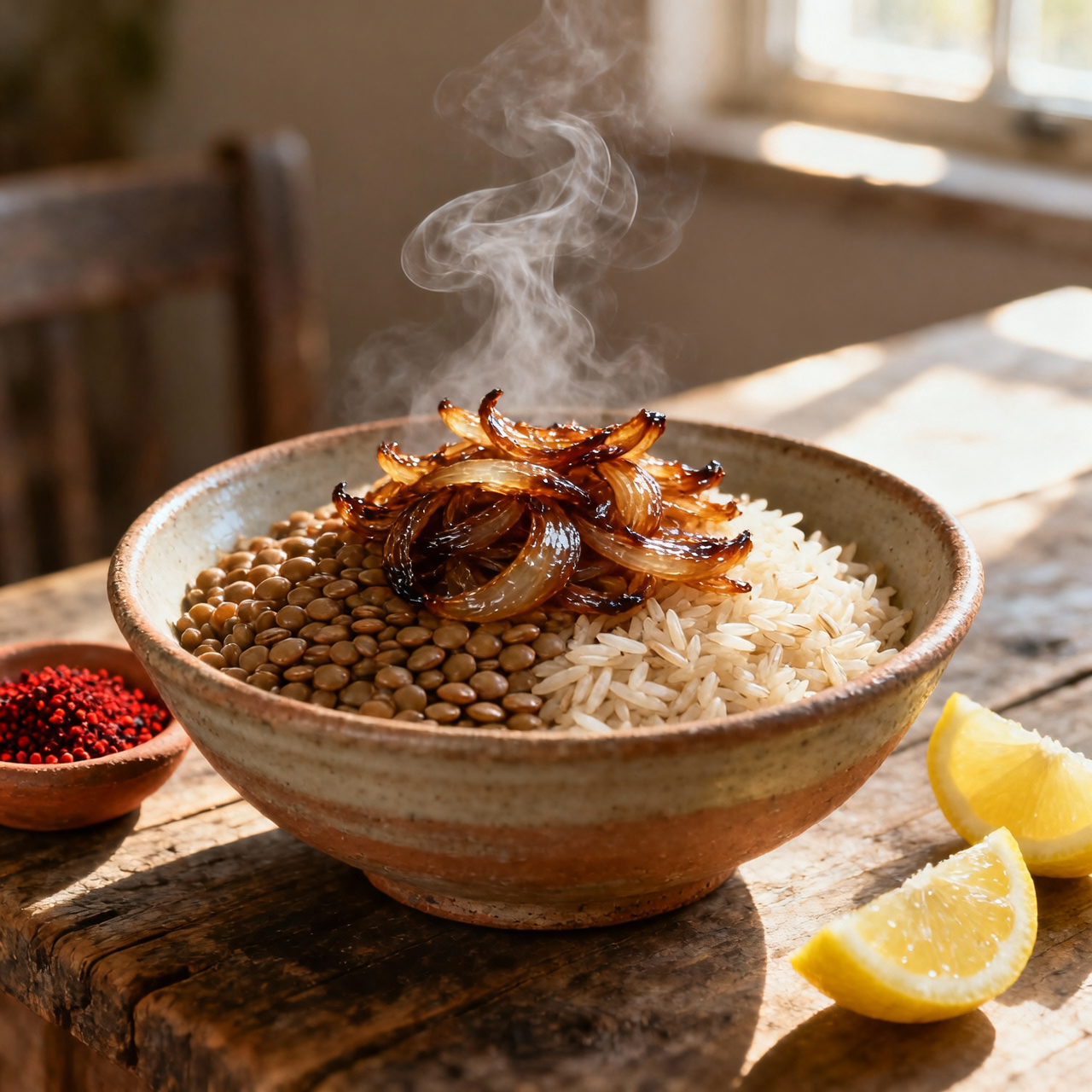
Mujadara
I’ve always believed that true comfort food doesn’t need a long ingredient list to command respect, and mujadara proves that point with quiet confidence. Born from the humble kitchens of the Levant, this dish of lentils, rice, and deeply caramelized onions has sustained generations through lean seasons and festive gatherings alike. When I first learned to make it, I thought it was just peasant fare, but I quickly realized it’s a masterclass in patience and balance. The magic lies in coaxing the onions past golden into a rich, jammy brown without burning them, while ensuring the lentils and rice cook to distinct but harmonious textures. Too often, I see home cooks rush the onions, settling for a pale sauté that leaves the dish tasting flat, or they boil everything together until it collapses into a mushy, indistinct porridge. The secret is treating each component with reverence: toasting the rice, simmering the lentils separately, and letting the onions take their time in the pan until they surrender their natural sugars. What makes mujadara so deeply meaningful to me isn’t just its vegan simplicity, but how it transforms scarcity into abundance. A few pantry staples become a dish that feels both ancient and intimately personal, best served with a sharp squeeze of lemon and a side of crisp salad to cut through the earthy richness. When you get it right, every bite tastes like history, resilience, and home.
Nutrition
| Per serving | Calories | Protein | Carbs | Fat | Sat fat | Fibre | Sugar | Sodium |
|---|---|---|---|---|---|---|---|---|
| beginner | 550kcal | 17g | 75g | 20g | 3g | 9g | 8g | 1500mg |
| intermediate | 550kcal | 17g | 75g | 20g | 3g | 9g | 8g | 1500mg |
| expert | 550kcal | 17g | 75g | 20g | 3g | 9g | 8g | 1500mg |
Per serving · Ava-estimated — a guide, not a clinical figure.
- 200 gbrown lentils— rinsed and picked over
- 150 glong-grain white rice— unwashed to preserve surface starch
- 450 gyellow onion— thinly sliced lengthwise
- 80 mlextra virgin olive oil— divided for frying and finishing
- 10 gcumin— whole seeds preferred
- 5 gallspice— whole berries preferred
- 3 gcinnamon— one stick or ground
- 12 gfine sea salt— adjust to taste
- 800 mlvegetable broth— low-sodium preferred
- 1 unitfresh lemon— for juice and serving
This pathway is designed for your very first attempt, prioritizing confidence over tradition. We bypass the time-intensive spice grinding and slow onion caramelization by leveraging a high-quality jarred spice and onion base that mirrors our core ingredient list. The goal here is to understand the hydration ratios and resting phase without managing multiple simultaneous stovetop tasks. Watch the pot closely during the final simmer, as the pre-mixed base thickens faster than raw spices. Keep your heat strictly at medium-low once the liquid reaches a gentle bubble to prevent scorching the bottom layer. Do not lift the lid until the resting timer finishes; the trapped steam is what finishes the rice and lentils evenly. This version teaches you the foundational rhythm of the dish—hydrate, simmer, rest, and fold—while removing the anxiety of precise spice balancing. It is entirely forgiving and delivers a deeply comforting, familiar result in under an hour. Perfect for busy weeknights when you still want the soulful warmth of a traditional Levantine staple without the extra prep overhead.
Equipment
- Medium saucepan with tight lid— non-stick coating is acceptable here
- Wooden spoon— heat resistant handle
- Fine mesh sieve— for rinsing lentils
Method
- 1
Rinse the lentils thoroughly under cold running water.
discard any floating debris or stones.
rinsing~ 1 min - 2
Heat half the olive oil in a heavy saucepan over medium heat.
shimmering surface indicates readiness.
heating~ 2 min - 3
Add the jarred spice and onion base to the oil and stir constantly.
warm until fragrant, about two minutes.
blooming~ 2 min - 4
Pour in the broth and bring to a rolling boil.
watch for rapid bubbling at the surface.
boiling~ 5 min - 5
Reduce heat to low, add the rice and lentils, and cover tightly.
do not stir after adding grains.
simmering~ 15 minTricky bit - 6
Remove from heat and let the covered pot rest undisturbed.
residual steam completes the cooking.
resting~ 10 min - 7
Drizzle remaining oil and lemon juice over the top before fluffing gently.
use a fork to preserve grain structure.
folding~ 1 min