
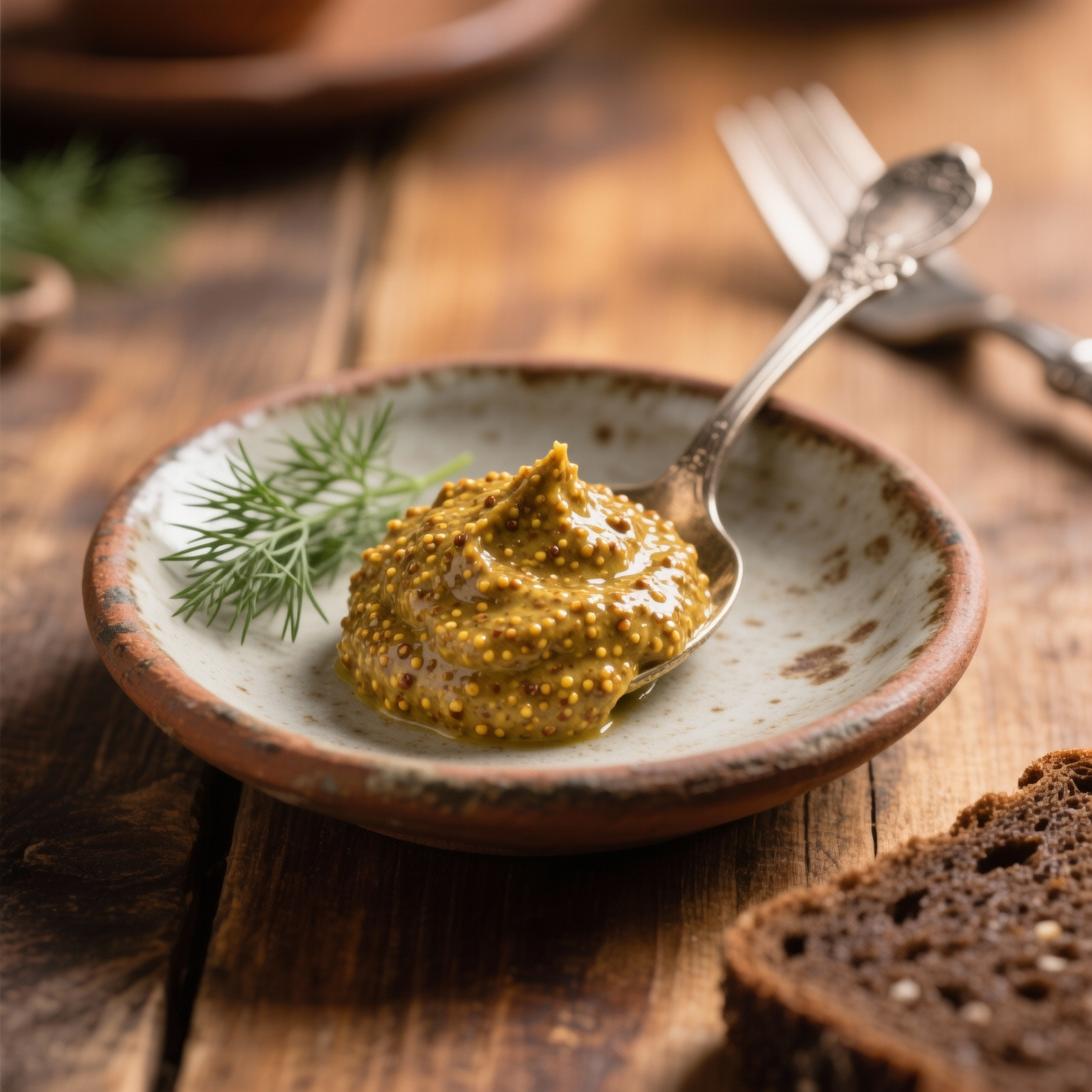
Musztarda sarepska
As I delve into the rich tapestry of Polish condiments, musztarda sarepska holds a special place in my heart. This isn't your gentle, pale yellow table mustard; it is a robust, dark brown powerhouse with a sharp, sinus-clearing heat that awakens the palate. The name sarepska traces back to the biblical city of Sarepta, historically invoked in European culinary nomenclature to denote mustards made from dark, pungent mustard seeds rather than the milder yellow varieties. In Poland, this style of brown mustard became a beloved staple, traditionally served alongside rich meats, cold cuts, and hearty sausages, cutting through the fat with its fiery bite. Making it from scratch is a labor of love that connects us to generations of Polish home cooks who understood that true flavor requires patience. The most common pitfall I see when attempting this classic is rushing the curing process. Mustard seeds need time to rehydrate and their enzymes need to react with the liquid to develop that signature sharpness. If you use boiling water, you will kill the myrosinase enzyme, resulting in a bland, bitter paste rather than a fiery condiment. Another mistake is skimping on the resting time; this mustard needs at least a few days in the fridge to mellow slightly and let the complex spice notes marry with the pungent seeds. When you get it right, the result is a deeply satisfying, vegan-friendly masterpiece that elevates any traditional Polish feast.
Nutrition
| Per serving | Calories | Protein | Carbs | Fat | Sat fat | Fibre | Sugar | Sodium |
|---|---|---|---|---|---|---|---|---|
| beginner | 60kcal | 3g | 8g | 2g | 0g | 2g | 4g | 450mg |
| intermediate | 80kcal | 3g | 6g | 4g | 1g | 2g | 3g | 300mg |
| expert | 45kcal | 3g | 3g | 3g | 0g | 2g | 0g | 150mg |
Per serving · Ava-estimated — a guide, not a clinical figure.
- 150 gbrown mustard seed— whole seeds
- 200 mlwater— room temperature
- 100 mlapple cider vinegar— 6% acidity
- 50 mlrapeseed oil— refined
- 10 gsalt— fine
- 15 gsugar— white granulated
- 5 gallspice berry— whole
- 2 gclove— whole
- 1 pcscinnamon stick— approximately 5g
This beginner version of Musztarda sarepska skips the labor-intensive grinding of whole mustard seeds by using a high-quality jarred brown mustard paste as your base. This shortcut guarantees a smooth, consistent texture and reliable heat without the need for a spice grinder or mortar and pestle. What you'll focus on instead is the crucial blooming and mellowing process. You'll gently warm the paste with water, vinegar, and warm spices like allspice and cloves to develop that classic, sharp, yet balanced Polish flavor profile. Watch the heat carefully; you want to warm the mixture to meld the flavors, not boil it, which can dull the mustard's signature bite. Keep stirring to prevent the paste from scorching on the bottom of the pan. Once combined and slightly thickened, it needs time to rest in the fridge. This resting period is non-negotiable, as it allows the harsh raw vinegar edge to mellow and the deep, earthy notes of the brown mustard to fully bloom. It's an accessible, foolproof way to achieve authentic Polish mustard flavor at home.
Equipment
- Heavy-bottomed pan— non-stick or stainless steel
- Whisk— for smooth blending
- Sterilized glass jars— with tight-fitting lids for storage
Method
- 1
Combine the jarred brown mustard paste, water, and apple cider vinegar in a heavy-bottomed pan.
Ensure the paste is fully dissolved into the liquid before heating.
mixing~ 2 min - 2
Add the salt, sugar, crushed allspice berries, and a pinch of ground cloves to the pan.
Wrap whole spices in a tea infuser for easy removal later.
seasoning~ 1 min - 3
Place the pan over medium-low heat and whisk continuously until the mixture is smooth and just beginning to steam.
Do not let it boil, or the mustard will lose its sharp bite.
blooming~ 5 minTricky bit - 4
Remove from heat, discard the whole spices, and let the mustard cool to room temperature.
The mixture will thicken significantly as it cools.
cooling~ 20 min - 5
Transfer the cooled mustard to sterilized glass jars, seal tightly, and refrigerate for at least 24 hours before serving.
This resting time is essential for the flavors to meld and mellow.
resting~ 1440 min
Storage times are a guide — always use your judgement and store food safely.