
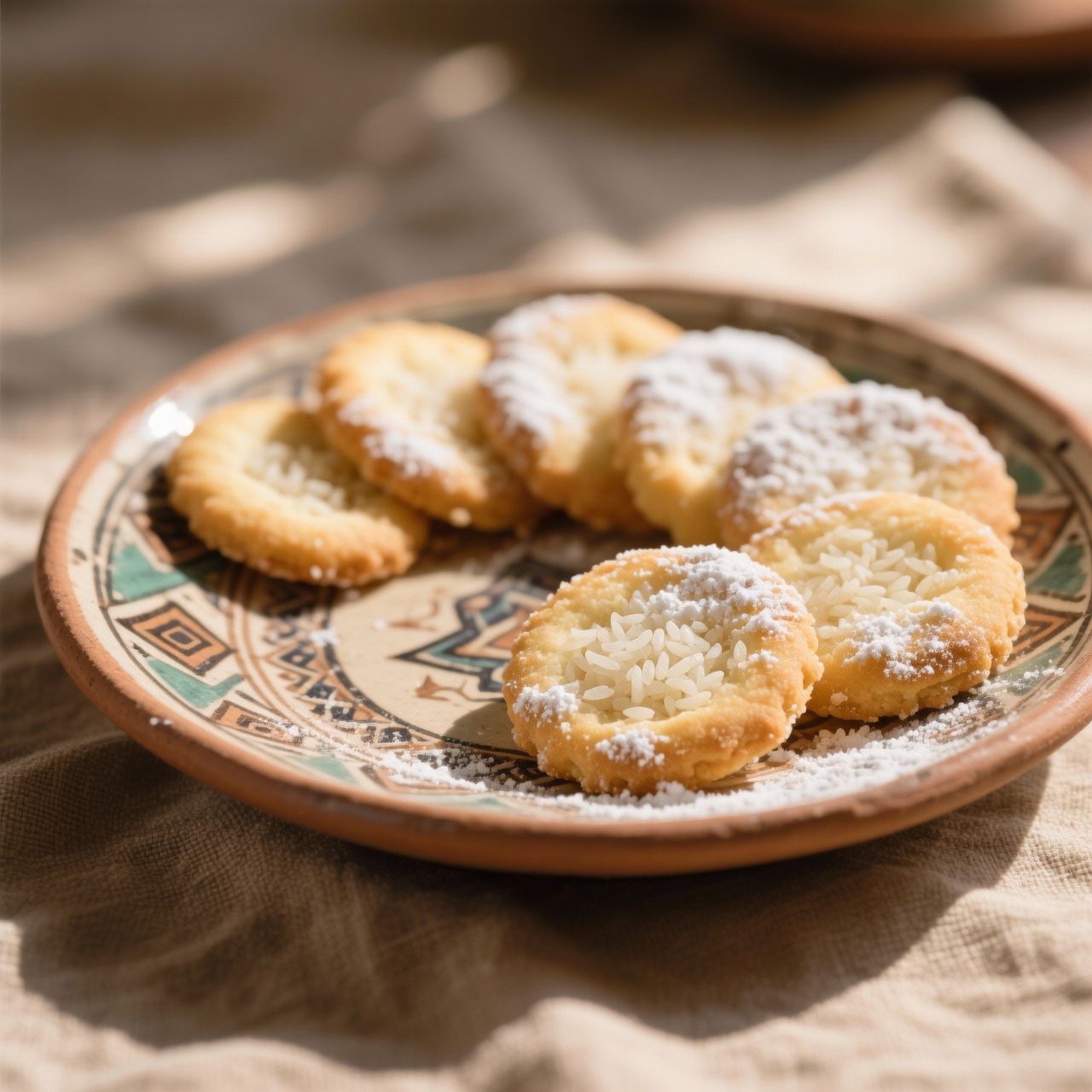
Nan-e berenji (rice cookies)
I first encountered nan-e berenji in a sun-drenched Tehran bakery, watching a master baker press delicate, snow-white rounds into a traditional wooden mould. These cardamom-scented rice flour cookies are the quiet heartbeat of Persian hospitality, traditionally served alongside bitter coffee during Norouz and afternoon visits. They matter because they represent a slow, deliberate kind of sweetness that modern packaged biscuits simply erase. When you buy the commercial version, you are paying nearly four pounds for a plastic-wrapped stack of stale, overly sweet discs held together by hydrogenated fats, artificial vanilla, and preservatives that leave a waxy aftertaste on the tongue. Making them from scratch restores the ethereal melt-in-your-mouth texture and the floral warmth of freshly ground cardamom seeds. The process is deceptively simple, which is exactly why so many home bakers stumble. The most common pitfall is overworking the dough or using modern wheat-based all-purpose flour instead of pure, finely milled rice flour, which instantly turns these delicate wafers into tough crackers. Another frequent mistake is rushing the resting period; the dough must sit for several hours so the rice flour fully hydrates and the butter can crystallise properly before rolling. I always recommend chilling the dough twice—once before shaping and once right before baking—to preserve those signature hairline cracks that bloom in the oven. If you resist the urge to swap in margarine or skip the rosewater soak, you will be rewarded with a cookie that shatters at the slightest touch, carrying centuries of Persian tea culture into your own kitchen.
Nutrition
| Per serving | Calories | Protein | Carbs | Fat | Sat fat | Fibre | Sugar | Sodium |
|---|---|---|---|---|---|---|---|---|
| beginner | 145kcal | 1g | 19g | 7g | 5g | 0g | 13g | 35mg |
| intermediate | 415kcal | 3g | 51g | 18g | 2g | 1g | 26g | 12mg |
| expert | 78kcal | 1g | 12g | 3g | 2g | 0g | 8g | 3mg |
Per serving · Ava-estimated — a guide, not a clinical figure.
- 200 grice flour— sifted twice
- 100 gpowdered sugar— sifted
- 80 gghee— softened to room temperature
- 30 mlrose water
- 2 gground cardamom— freshly ground from whole seeds
- 15 gpistachio(optional)— finely chopped for garnish
This beginner version focuses on an approachable, hands-on technique while maintaining a strict from-scratch standard. Store-bought rice biscuits typically rely on hydrogenated vegetable oils, artificial cardamom flavoring, and hidden sodium to extend shelf life, resulting in a waxy texture and flat taste. Making them at home costs less than half as much and yields a clean, floral crumb that melts cleanly on the tongue. The primary difference here is the forgiving mixing method: we soften the butter fully and use a simple hand-whisking approach rather than precise pastry blending, which keeps the dough pliable for easy shaping. Because rice flour contains no gluten, overworking the dough will not make it tough, but under-hydrating it will cause cracking during rolling. Watch closely for a smooth, slightly tacky consistency that holds together when pressed. Maintain a low oven temperature to preserve the traditional pale ivory color, and transfer the dough to a cool surface if it warms up. Bake just until the edges firm, then cool completely to achieve the signature crisp snap.
Equipment
- Mixing bowl— medium size works best
- Rubber spatula— for gentle folding
- Baking sheet— line with parchment
- Cooling rack— essential for crisp texture
Method
- 1
Preheat the oven to 150°C (300°F) and line two baking sheets with parchment paper.
Low heat preserves the traditional pale ivory finish.
preheating~ 5 min - 2
Whisk the softened butter and powdered sugar together until pale, fluffy, and completely smooth.
Press against the bowl sides to eliminate any remaining sugar crystals.
creaming~ 2 min - 3
Stir in the rose water, ground cardamom, and a pinch of fine salt until evenly distributed.
Freshly ground cardamom delivers a brighter, more complex aroma.
emulsifying~ 1 min - 4
Gently fold in the rice flour using a spatula until a cohesive, slightly tacky dough forms.
Stop mixing once the flour disappears to prevent crumbling during baking.
dry-incorporation~ 2 min - 5
Drop tablespoon-sized portions onto the prepared sheets, flatten slightly with a fork, and space them evenly apart.
The dough spreads minimally, so precise spacing is not critical.
portioning~ 5 min - 6
Bake until the edges are just firm and the centers remain pale, then transfer to a wire rack to cool completely.
The cookies will crisp up fully only after cooling to room temperature.
baking~ 18 minTricky bit
Cooking from frozen
Thaw uncovered at room temperature for thirty minutes to preserve their signature snap.
Storage times are a guide — always use your judgement and store food safely.