
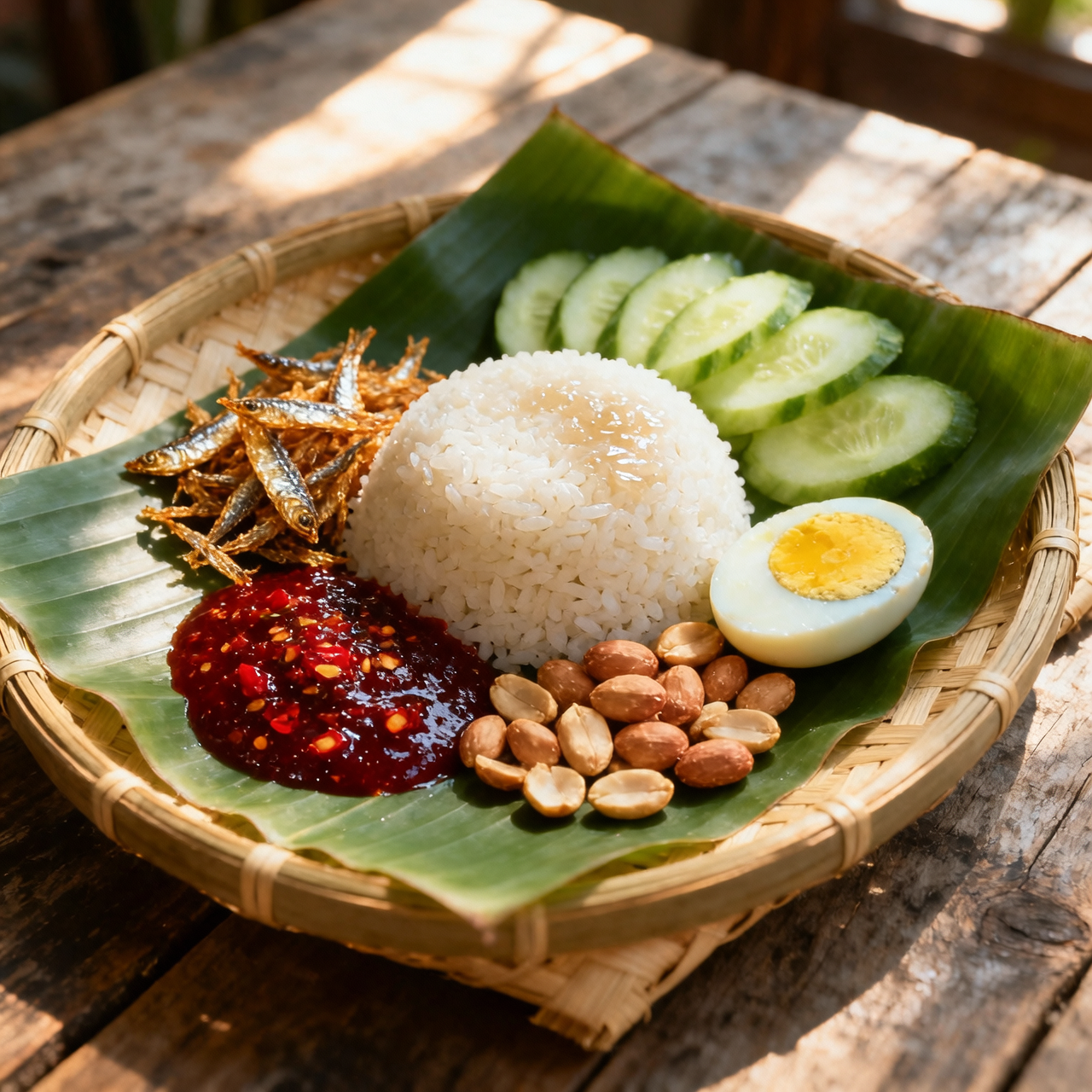
Nasi Lemak
I’ve always believed that nasi lemak is less a recipe and more a morning ritual woven into Malaysia’s cultural fabric. Born from the simple necessity of stretching coconut rice with humble accompaniments, it evolved from a modest breakfast for plantation workers into the nation’s unofficial culinary emblem. When I first learned to prepare it, I quickly realized that getting it right isn’t about complexity, it is about patience and balance. The coconut milk must be gently infused into the rice without scorching, the pandan leaves need to release their fragrance slowly, and the grains must steam until each one stands distinct yet tender. Too many cooks rush the soaking step or drown the rice in liquid, leaving behind a heavy, gluey mess instead of that signature fragrant fluffiness. I’ve also watched sambal get ruined by excessive sugar or undercooked anchovies that turn soggy rather than crisp. The magic lies in restraint: toasting peanuts until golden, frying ikan bilis until they shatter, and letting the chili paste simmer until the oil separates and coats the spoon like a glossy promise. This dish matters because it carries memory in every bite. It is the smell of waking up to a bustling kopitiam, the shared plate at roadside stalls, the quiet comfort of a home-cooked morning. When you honor its roots and respect the technique, nasi lemak becomes more than food, it becomes a quiet celebration of Malaysian resilience and the art of starting the day right.
Nutrition
| Per serving | Calories | Protein | Carbs | Fat | Sat fat | Fibre | Sugar | Sodium |
|---|---|---|---|---|---|---|---|---|
| beginner | 975kcal | 25g | 82g | 64g | 27g | 6g | 11g | 780mg |
| intermediate | 975kcal | 25g | 82g | 64g | 27g | 6g | 11g | 780mg |
| expert | 975kcal | 25g | 82g | 64g | 27g | 6g | 11g | 780mg |
Per serving · Ava-estimated — a guide, not a clinical figure.
- 300 gJasmine rice— rinsed until water runs clear
- 400 mlCoconut milk— full-fat, unsweetened
- 300 mlWater— for steaming rice
- 4 leavesPandan leaf— tied in a knot
- 10 gFresh ginger— peeled
- 5 gSalt— fine sea salt
- 50 gDried chili— soaked in hot water until pliable
- 100 gShallot— peeled
- 20 gGarlic— peeled
- 10 gBelacan— toasted briefly until fragrant
- 15 gTamarind paste— mixed with 2 tbsp warm water
- 20 gPalm sugar— shaved or finely chopped
- 50 gDried anchovy— rinsed and patted completely dry
- 50 gRaw peanut— skin-on preferred
- 4 wholeEgg— for hard-boiling
- 1 mediumCucumber— thinly sliced
- 100 mlVegetable oil— neutral oil with high smoke point
This version prioritizes accessibility without sacrificing the soul of the dish. By leveraging a high-quality jarred sambal base and a reliable rice cooker, you eliminate the most technically demanding elements while preserving the essential flavor architecture. Your primary focus shifts to moisture control and timing. Coconut milk can easily scorch if left unattended, so monitor the rice cooker’s cycle closely and avoid lifting the lid during the resting phase. When warming your shortcut paste, keep the heat strictly at medium-low to prevent the sugars from caramelizing too quickly, which creates a bitter aftertaste. Fry the anchovies and peanuts in separate, shallow batches to guarantee even crisping, and always dry them thoroughly before they hit the oil. Hard-boiling the eggs requires precise timing to achieve a fully set yolk without the telltale grey ring. Finally, fluff the rice gently to release trapped steam before plating. This approach guarantees a deeply satisfying, restaurant-adjacent result on your very first attempt, building the foundational confidence needed to explore more traditional techniques later.
Equipment
- Rice cooker— standard model with keep-warm function
- Non-stick skillet— 10-inch diameter for easy stirring
- Small saucepan— for boiling eggs
Method
- 1
Rinse the jasmine rice under cold water until it runs clear, then drain completely.
Stop once water is translucent, not cloudy.
rinsing~ 3 min - 2
Combine the rinsed rice, coconut milk, water, pandan leaves, and salt in a rice cooker, then press the cook button.
Do not open the lid until the cycle finishes.
absorption cooking~ 20 min - 3
Heat half the vegetable oil in a non-stick skillet over medium heat, then gently warm the jarred chili paste with the tamarind water and palm sugar for eight minutes.
Stir continuously to prevent sticking.
simmering~ 8 minTricky bit - 4
Add the dried anchovies and peanuts to the remaining hot oil, frying until golden and crisp, then drain on paper towels.
Listen for a sharp sizzle, not a dull hiss.
shallow frying~ 5 minTricky bit - 5
Place the eggs in a small pot of boiling water, cook for exactly ten minutes, then transfer them to an ice bath before peeling.
Start timing only once water returns to a rolling boil.
hard boiling~ 10 min - 6
Slice the cucumber into thin diagonal pieces, fluff the cooked rice, and arrange all components on a serving platter.
Serve immediately while rice is still warm.
plating~ 3 min