
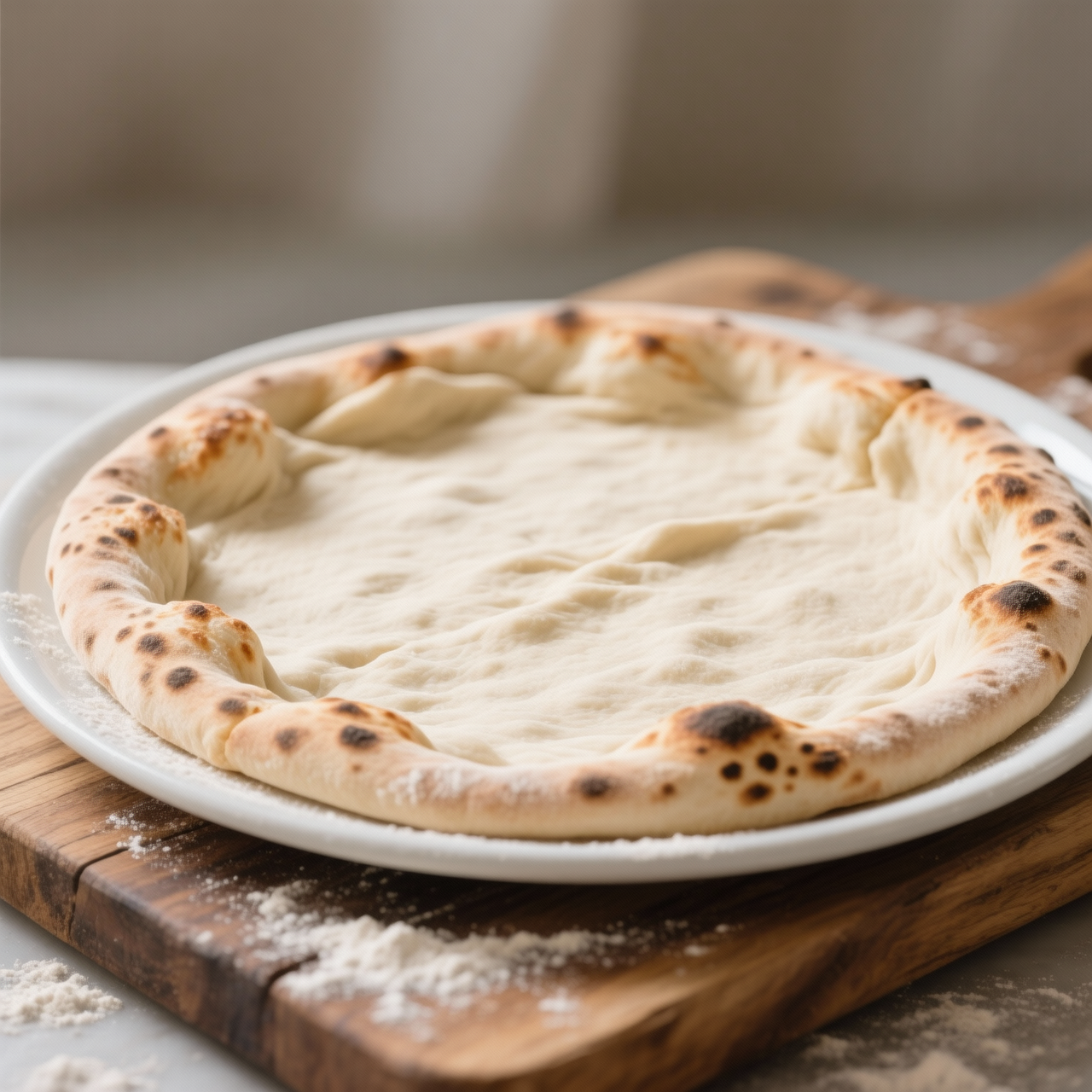
Neapolitan pizza dough
When I first learned to shape Neapolitan dough in a cramped kitchen, I quickly understood why this humble combination of flour, water, salt, and yeast became the foundation of Italian culinary pride. Originating in eighteenth-century Naples as street food for the working class, it evolved into a globally revered craft that rewards patience over shortcuts. I always tell my readers that true Neapolitan crusts aren’t baked; they’re fermented. That slow, cool rise develops complex organic acids and a delicate, airy cornicione that simply cannot be rushed. The most common pitfall I see is treating the dough like a machine part rather than a living culture. People overwork it, use the wrong flour, or skip the long proof, ending up with dense, bread-like slabs instead of the signature leopard-spotted, tender crust. You’ll find pre-made dough balls or par-baked bases in supermarkets for three or four pounds, but those are fundamentally compromised. They rely on dough conditioners, refined oils, and chemical leaveners that strip away the nuanced sour notes and create a stiff, cardboard texture once baked. By making this from scratch, you reclaim the process. It’s entirely plant-based, requiring just four recognizable ingredients, and yields a crust that shatters softly while staying pillowy inside. Since this recipe scales beautifully, I highly recommend dividing it into individual balls, letting them proof properly, and then freezing them raw. When you’re ready, just thaw them slowly in the fridge overnight and stretch them out for a quick, restaurant-quality bake. That batch-hero approach means you always have authentic pizza on standby without sacrificing an ounce of flavor or texture.
Nutrition
| Per serving | Calories | Protein | Carbs | Fat | Sat fat | Fibre | Sugar | Sodium |
|---|---|---|---|---|---|---|---|---|
| beginner | 840kcal | 25g | 172g | 3g | 0g | 6g | 1g | 980mg |
| intermediate | 385kcal | 11g | 72g | 4g | 1g | 3g | 1g | 590mg |
| expert | 520kcal | 13g | 105g | 2g | 0g | 4g | 0g | 980mg |
Per serving · Ava-estimated — a guide, not a clinical figure.
- 600 gTipo 00 flour— Sifted before use
- 360 mlWater— Filtered and at room temperature
- 3 gActive dry yeast— Instant yeast may be substituted
- 18 gFine sea salt
Store-bought pizza bases cost around £3 each and rely on dough conditioners, excess sodium, and par-baking that leaves the crust tough and flavourless. This beginner-friendly version uses only four whole ingredients—strong bread flour, lukewarm water, instant yeast, and fine sea salt—to create a genuinely soft, chewy base without any packet mixes or jarred shortcuts. The method skips complex autolyse stages and long cold ferments in favour of a single, forgiving room-temperature rise that fits into a standard weeknight schedule. You will mix by hand in one bowl, relying on a gentle stretch-and-fold technique to build structure without needing a stand mixer or precise kneading timing. Watch the dough’s texture closely; it should feel tacky but not sticky, and it must double in size before shaping to ensure proper gas retention. If the dough resists stretching, let it rest covered for ten minutes to relax the gluten. The key to success here is keeping your workspace lightly floured and handling the dough minimally once shaped. You will end up with a light, airy cornicione that rivals a pizzeria, ready to freeze for future quick meals.
Equipment
- Digital kitchen scale— essential for accurate hydration ratios
- Large mixing bowl— glass or ceramic holds heat well
- Bench scraper(optional)— prevents tearing during portioning
- Heavy baking sheet or pizza stone— must be fully preheated
Method
- 1
Weigh 500g strong bread flour, 325g lukewarm water, 3g instant yeast, and 10g fine sea salt using a digital scale.
Water should feel comfortably warm to the touch, roughly 25°C.
scaling~ 1 min - 2
Combine the flour and water in a large bowl until no dry patches remain, then cover and rest for ten minutes.
This short hydration phase makes subsequent mixing significantly easier.
hydration~ 10 min - 3
Sprinkle the salt and yeast over the hydrated dough and fold the edges into the centre until fully incorporated.
Keep salt and yeast separated initially to protect yeast viability.
folding~ 3 min - 4
Cover the bowl tightly and let the dough rest at room temperature until doubled in size.
Approximately sixty minutes; a slow rise yields better flavour development.
bulk fermentation~ 60 minTricky bit - 5
Gently turn the dough onto a lightly floured surface and divide it into four equal portions.
Use a bench scraper to avoid tearing the developing gluten network.
portioning~ 2 minTricky bit - 6
Shape each portion into a tight ball, cover loosely, and bake on a preheated surface at maximum oven heat.
Position the rack in the top third of the oven for optimal char and oven spring.
oven spring~ 15 min
Cooking from frozen
Thaw raw dough balls overnight in the fridge, then bring to room temperature before stretching and baking.
Storage times are a guide — always use your judgement and store food safely.