
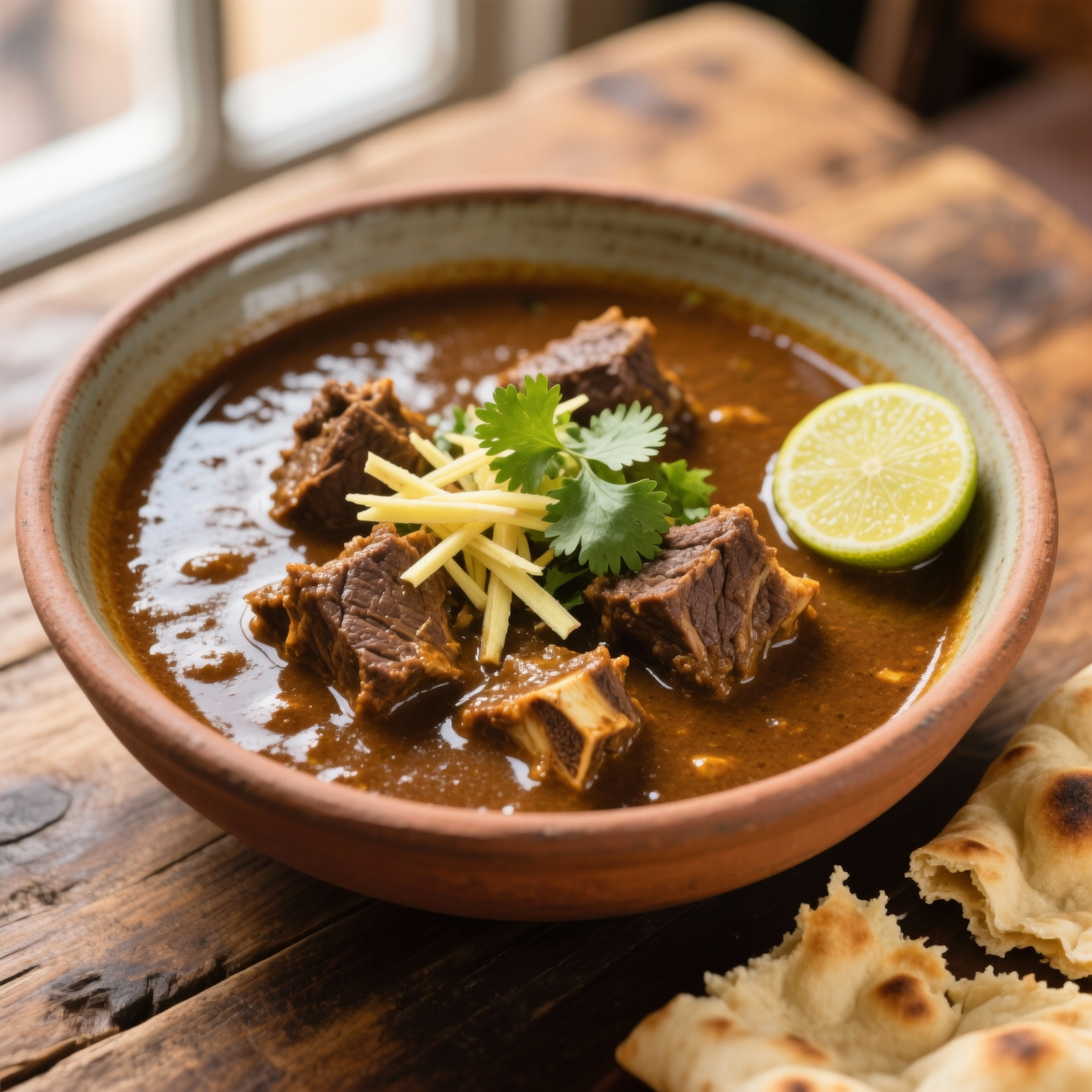
Nihari
I still remember the first time I truly understood why Nihari is called the dish of kings. Born in the royal kitchens of old Delhi, it was crafted for nawabs who needed a slow-cooked, deeply nourishing meal to sustain them through long morning hunts and court sessions. The name itself comes from the Arabic nahar, meaning morning, because it is traditionally simmered overnight and served at dawn. To me, this dish is not just about the melting beef or the fragrant spice paste; it is a living archive of South Asian culinary patience. When I make it, I am participating in a ritual that refuses to be rushed. The magic lies in the slow reduction of bone marrow, the careful toasting of whole spices, and the gradual thickening of the broth until it coats the back of a spoon like liquid silk. Yet, so many home cooks miss the point. The most common pitfall is rushing the process or using lean cuts of meat. Nihari demands collagen-rich shank or marrow bones, and it demands time. If you skip the overnight soak, or if you dump the spice blend in too early and let it scorch, you will end up with a bitter, disjointed stew rather than a harmonious, deeply layered gravy. Another mistake is neglecting the final tempering of ghee, ginger juliennes, and green chilies, which is not just a garnish but the awakening breath of the dish. I have learned that respecting the timeline is non-negotiable. You do not cook Nihari to check it off a list; you cook it to surrender to the rhythm of simmering, skimming, and waiting. That patience is exactly what makes it matter.
Nutrition
| Per serving | Calories | Protein | Carbs | Fat | Sat fat | Fibre | Sugar | Sodium |
|---|---|---|---|---|---|---|---|---|
| beginner | 1154kcal | 60g | 22g | 91g | 39g | 6g | 3g | 1606mg |
| intermediate | 1154kcal | 60g | 22g | 91g | 39g | 6g | 3g | 1606mg |
| expert | 1154kcal | 60g | 22g | 91g | 39g | 6g | 3g | 1606mg |
Per serving · Ava-estimated — a guide, not a clinical figure.
- 800 gbeef shank— bone-in, cut into large chunks
- 200 gbeef bone marrow— fresh or frozen, thawed
- 60 gghee— clarified butter
- 30 gwheat flour— fine white or whole wheat
- 40 gginger— fresh, peeled and grated
- 30 ggarlic— fresh cloves, peeled
- 3 pcsgreen chili— slit lengthwise
- 120 gplain yogurt— full-fat, whisked smooth
- 1500 mlwater— room temperature
- 15 gcoriander seed— whole, lightly toasted
- 10 gcumin seed— whole
- 10 gfennel seed— whole
- 8 gblack peppercorn— whole
- 4 pcsdried red chili— stems removed
- 5 gturmeric powder— ground
- 15 gsalt— fine sea salt
- 20 gcilantro— fresh leaves and tender stems
- 1 pcslemon— cut into wedges for serving
This version prioritizes accessibility without sacrificing the soul of the dish. You will rely on a high-quality, store-bought nihari spice paste and pre-minced aromatics to bypass the most time-intensive prep. The goal isn’t to cut corners recklessly, but to manage your attention where it matters most: controlling the simmer and mastering the final thickening. I have structured the steps to walk you through each phase, emphasizing visual and textural cues so you never guess when to adjust the heat. Watch closely when adding the wheat flour slurry; pouring it too quickly will create lumps, while rushing the simmer will leave the gravy thin. The jarred paste already contains salt and oil, so taste before seasoning further. Keep the pot partially covered to retain moisture, and let the dish rest for ten minutes before serving to allow the emulsion to stabilize. This approach guarantees a rich, cohesive stew on your very first try. Trust the process, lean on the prepared base, and focus on maintaining a gentle, steady bubble. You will quickly learn how the flavors deepen over time, giving you the confidence to explore more traditional methods later.
Equipment
- Heavy-bottomed pot— non-stick is acceptable for this level
- Whisk— silicone or metal
Method
- 1
Heat ghee in a heavy-bottomed pot over medium heat.
Ghee should shimmer, not smoke.
heating~ 1 min - 2
Add jarred nihari spice paste and stir constantly until fragrant.
About thirty seconds is enough to wake the oils.
blooming~ 1 min - 3
Pour in whisked yogurt and cook until the mixture thickens slightly.
Keep the whisk moving to prevent curdling.
emulsifying~ 2 minTricky bit - 4
Nestle the beef shank and bone marrow into the pot.
Arrange in a single layer for even heat distribution.
searing~ 3 min - 5
Add water, slit chilies, and salt, then bring to a gentle simmer.
Cover with a tight-fitting lid, leaving a small gap.
simmering~ 5 min - 6
Whisk wheat flour into a quarter cup of cold water until completely smooth.
No dry pockets should remain before pouring.
slurring~ 1 min - 7
Slowly stream the flour mixture into the bubbling stew while stirring.
Stir continuously for two minutes to activate the starch.
thickening~ 2 minTricky bit - 8
Remove from heat, cover fully, and let rest before serving.
Resting allows the collagen to fully relax.
resting~ 10 min