
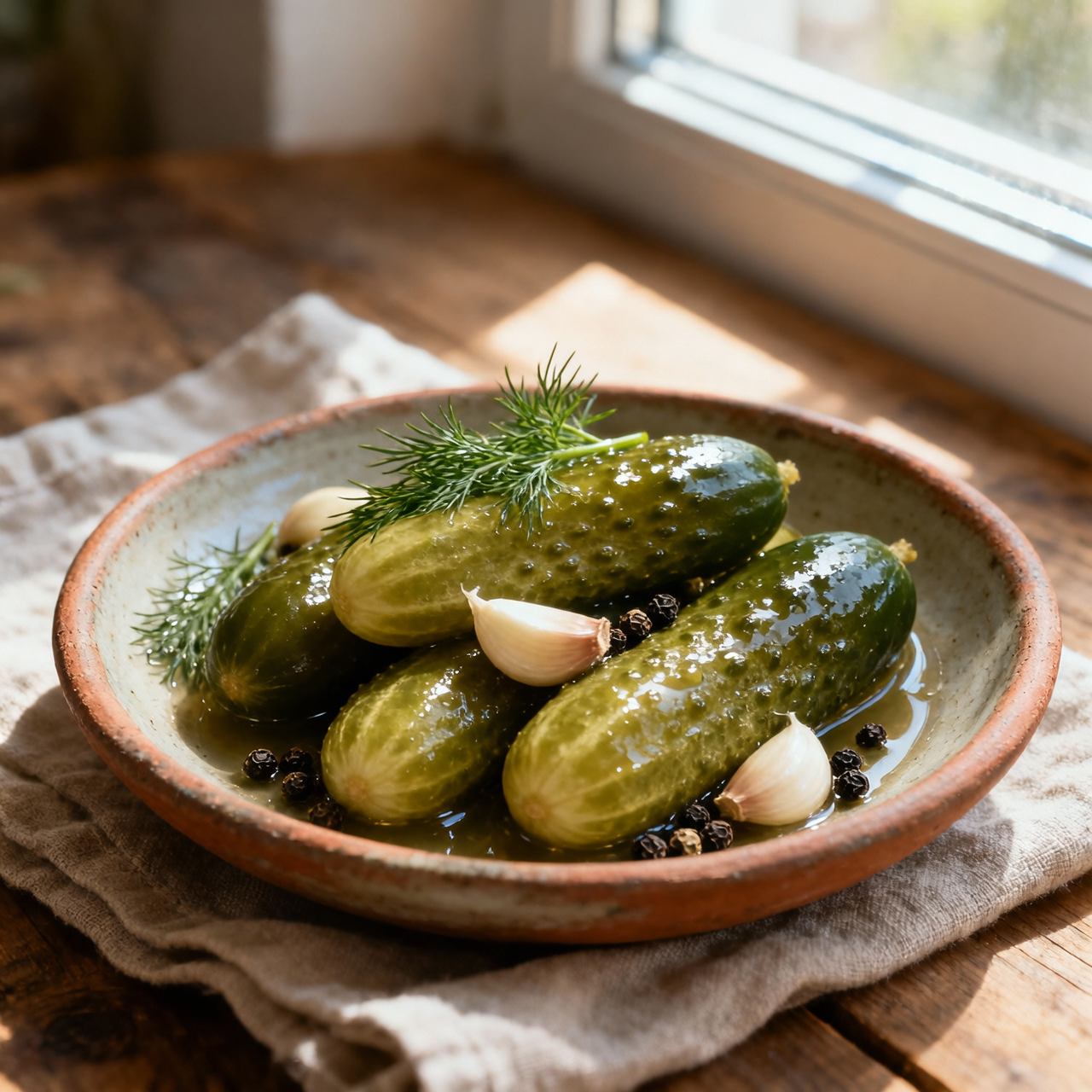
Ogórki kiszone (fermented cucumbers)
There is a profound magic in the humble ogórek kiszony, a cornerstone of Polish cuisine that transforms the fleeting bounty of late summer into a year-round treasure. As Ava, I often tell my kitchen friends that mastering this lacto-fermentation is less about cooking and more about patient collaboration with nature. Historically, before the advent of modern refrigeration, this method was essential for surviving the long, harsh Polish winters, ensuring a vital source of vitamins and probiotics when fresh produce was scarce. The beauty of ogórki kiszone lies in its radical simplicity: cucumbers, water, salt, dill, garlic, horseradish, and perhaps a few mustard seeds or oak leaves for tannins. Yet, this simplicity is exactly where common pitfalls lurk. The most frequent mistake I see is using chlorinated tap water or iodized salt, both of which can inhibit the beneficial Lactobacillus bacteria, leading to a failed ferment or mushy, spoiled cucumbers. Another critical error is neglecting the temperature; they need a warm spot to kickstart fermentation before being moved to a cool cellar or fridge to slow the process down. You must also ensure the cucumbers remain completely submerged under the brine, as any exposure to air invites mold. When done right, the result is a deeply savory, tangy, and complex pickle that far surpasses anything pickled in vinegar. It is a living food, a batch hero that rewards your patience with a crock full of vibrant, crunchy perfection to elevate your winter meals.
Nutrition
| Per serving | Calories | Protein | Carbs | Fat | Sat fat | Fibre | Sugar | Sodium |
|---|---|---|---|---|---|---|---|---|
| beginner | 12kcal | 1g | 2g | 0g | 0g | 1g | 1g | 850mg |
| intermediate | 15kcal | 1g | 3g | 0g | 0g | 1g | 1g | 850mg |
| expert | 15kcal | 1g | 3g | 0g | 0g | 1g | 2g | 450mg |
Per serving · Ava-estimated — a guide, not a clinical figure.
- 2000 gpickling cucumber— Small, firm, and unblemished
- 2000 mlwater— Filtered or non-chlorinated
- 60 gsalt— Non-iodized pickling salt or sea salt
- 50 gfresh dill— Preferably with mature seed heads or umbrellas
- 50 ghorseradish root— Peeled and cut into chunks
- 30 ggarlic— Peeled and lightly crushed
- 10 gmustard seed— Whole seeds
- 10 gblack peppercorn— Whole peppercorns
- 10 goak leaf(optional)— Or cherry, blackcurrant, or horseradish leaves to add tannins for crunch
This beginner-friendly approach to traditional Polish fermented cucumbers removes the intimidation of large stoneware crocks by utilizing a standard glass mason jar equipped with a simple silicone airlock. To streamline the process, we rely on a high-quality, pre-mixed pickling spice blend rather than sourcing and measuring individual whole spices, ensuring consistent flavor without the extra prep. The technique focuses heavily on the two most critical rules of lacto-fermentation: creating a properly salted brine and keeping the vegetables entirely submerged beneath the liquid to prevent mold. Watch closely during the first 48 hours; you should see small bubbles forming, indicating the beneficial bacteria are active. If your jar lacks an airlock, remember to burp it daily to release built-up carbon dioxide. Keep the jar in a cool, dark spot, ideally between 65 and 72 degrees Fahrenheit, and taste them after one week. They are ready when they turn from bright green to a dull olive color and taste pleasantly sour.
Equipment
- 1-quart or 1-gallon glass mason jar— wide-mouth makes packing easier
- Fermentation airlock and silicone grommet— prevents mold and eliminates daily burping
- Glass fermentation weights— essential for keeping cucumbers submerged under the brine
- Medium saucepan— for dissolving the salt into the water
Method
- 1
Wash the cucumbers thoroughly and slice off a tiny sliver from the blossom end to ensure a crisp ferment.
The blossom end contains enzymes that can cause mushiness.
trimming~ 5 min - 2
Pack the cucumbers tightly into the sterilized jar along with the pre-mixed pickling spice blend, fresh dill, and garlic cloves.
Leave about two inches of headspace at the top of the jar.
packing~ 5 min - 3
Bring the water and salt to a boil in a saucepan, stirring until the salt completely dissolves, then let it cool to room temperature.
Never pour hot brine over the cucumbers, or you will kill the beneficial bacteria.
brining~ 10 minTricky bit - 4
Pour the cooled brine over the cucumbers until they are completely covered, then press down the glass weights to submerge them.
Everything must stay below the surface of the liquid to prevent mold.
submerging~ 2 minTricky bit - 5
Seal the jar with the airlock lid, fill the airlock with water to the fill line, and store in a dark place at room temperature for 5 to 7 days.
Check daily to ensure the cucumbers remain submerged and burp the jar if using a standard lid.
fermenting~ 2 min
Storage times are a guide — always use your judgement and store food safely.