
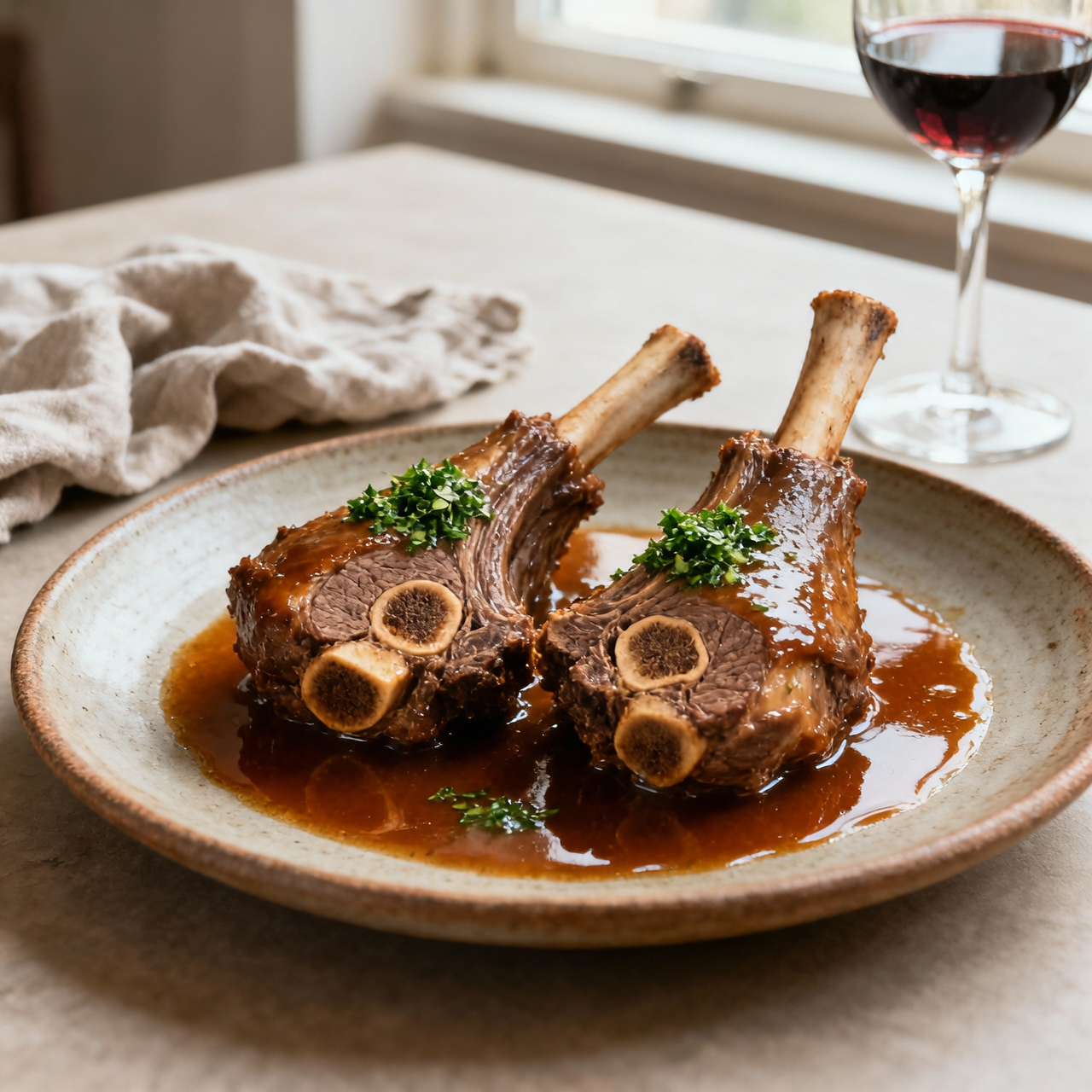
Osso Buco
Osso buco has always struck me as the ultimate testament to Italian culinary patience, a dish born in the Lombardy region during the nineteenth century when frugal Milanese cooks transformed humble veal shanks into a masterpiece of slow-braised richness. The name itself, meaning "bone with a hole," points directly to the marrow nestled within the cross-cut shank, an element that many overlook but which I consider the absolute soul of the recipe. When done properly, the marrow melts into the braising liquid, lending a silken, unctuous depth that simply cannot be replicated. What makes this dish so profoundly important to me is its celebration of transformation through time; it demands that you surrender control and let the gentle heat work its quiet magic. Yet, I have watched countless home cooks rush the process, searing the meat too aggressively and then drowning it in a boiling liquid that tightens the collagen into an unyielding toughness. The most frequent pitfall, however, lies in the handling of the wine. While many recipes call for pouring it directly into a cold pan, I insist on reducing it first to cook off the harsh alcohol, leaving behind only the bright, concentrated acidity that cuts through the richness. Another common misstep is discarding the gremolata until the very end, forgetting that its sharp parsley, garlic, and lemon zest are not merely garnishes, but essential counterpoints to the heavy, savory sauce. To truly honor osso buco, you must embrace the slow simmer, respect the marrow, and never underestimate the finishing touch. It is not just a meal; it is a lesson in restraint and tradition.
Nutrition
| Per serving | Calories | Protein | Carbs | Fat | Sat fat | Fibre | Sugar | Sodium |
|---|---|---|---|---|---|---|---|---|
| beginner | 508kcal | 32g | 34g | 22g | 5g | 4g | 5g | 1545mg |
| intermediate | 508kcal | 32g | 34g | 22g | 5g | 4g | 5g | 1545mg |
| expert | 508kcal | 32g | 34g | 22g | 5g | 4g | 5g | 1545mg |
Per serving · Ava-estimated — a guide, not a clinical figure.
- 800 gVeal shank— cross-cut, about 2 inches thick
- 100 gAll-purpose flour— for dredging
- 60 mlOlive oil— extra virgin
- 150 gYellow onion— peeled and finely chopped
- 100 gCarrot— peeled and finely chopped
- 80 gCelery stalk— finely chopped
- 15 gGarlic— minced
- 250 mlDry white wine— unoaked
- 500 mlVeal stock— low sodium
- 200 gCrushed tomato— passata or canned
- 2 pcsBay leaf— dried
- 10 gSalt— kosher or fine sea
- 5 gBlack pepper— freshly cracked
- 30 gParsley— flat-leaf, fresh
- 1 pcsLemon— zested and juiced
This approach strips away the intimidation factor while preserving the core flavor profile. You will rely on a few reliable shortcuts to streamline the process without sacrificing comfort. The mirepoix comes pre-diced, and the braising liquid uses a high-quality jarred stock combined with a splash of dry white wine. The key to success is managing heat and moisture. Because we are using a quicker method, you must keep the pan tightly covered and resist lifting the lid, which drops the temperature and stalls tenderization. Pay close attention to the initial sear; even a brief two-minute crust on each side builds foundational flavor that shortcuts cannot replicate. When adding the sauce base, stir vigorously to prevent scorching. Watch for the sauce to thicken slightly around the edges before transferring to the oven. The gremolata is simplified to a quick mix of dried parsley and pre-minced garlic with lemon juice, which you will sprinkle generously just before serving. Trust the timer, but always verify tenderness by gently pressing the meat with a fork. It should yield easily. This version gives you a reliable, comforting result on a busy weeknight, proving that convenience and quality coexist when technique is applied with intention.
Equipment
- Heavy-bottomed pan— non-stick is fine here
- Tongs— silicone or metal
- Measuring cup— standard liquid
Method
- 1
Dredge the veal shanks in flour until evenly coated.
Tap off excess before cooking.
coating~ 1 min - 2
Heat olive oil in a heavy pan over medium-high heat and sear the shanks for two minutes per side.
Do not crowd the pan.
searing~ 4 minTricky bit - 3
Add the pre-diced mirepoix to the pan and stir for three minutes until softened.
Keep the heat at medium to avoid burning.
sweating~ 3 min - 4
Pour in the white wine and jarred stock, scraping the bottom gently to release browned bits.
Listen for a steady sizzle.
deglazing~ 1 min - 5
Cover the pan tightly and simmer on low heat for twenty-five minutes until the meat yields easily.
Check halfway and baste once.
braising~ 25 min - 6
Combine the dried parsley, garlic powder, and lemon zest in a small bowl and sprinkle over the finished dish.
Mix thoroughly before garnishing.
garnishing~ 1 min