
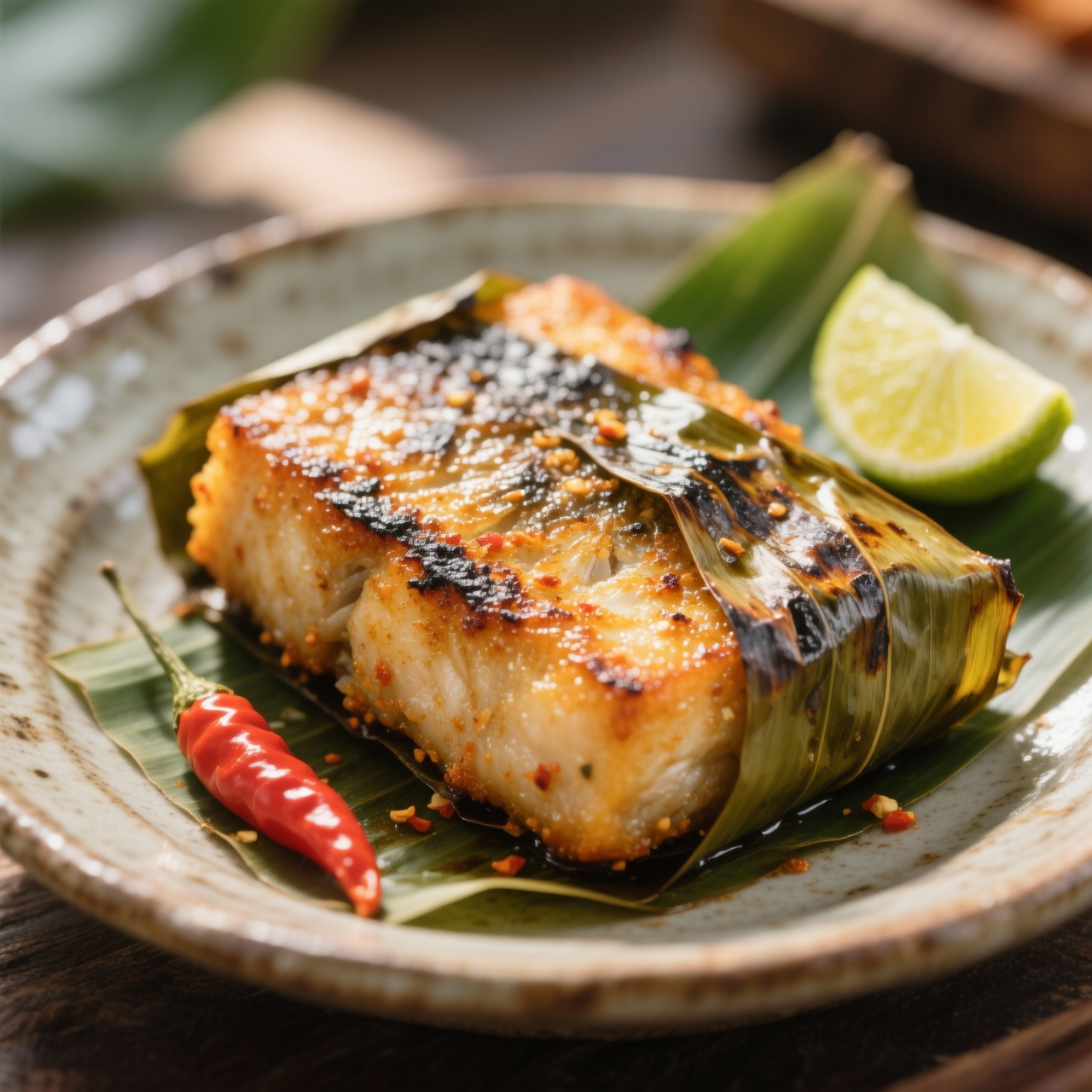
Otak-Otak (Grilled Fish Cake)
I first encountered otak-otak at a bustling Palembang street stall, where the smoky perfume of grilled banana leaves instantly pulled me in. This Indonesian fish cake is more than a snack; it is a testament to coastal ingenuity, transforming humble river fish and fresh aromatics into something deeply savory and subtly sweet. Today, you will find mass-produced versions in supermarket freezers for roughly four dollars a pack, but those pale imitations rely on starch fillers, artificial colorants, and heavy sodium to mimic the real thing. They lack the delicate balance of toasted shrimp paste, bruised galangal, and bright kaffir lime that defines an authentic batch. Making it from scratch guarantees a cleaner, pescatarian-friendly bite, but it demands patience. The most common pitfall is overworking the fish paste, which turns it rubbery instead of springy. You must pound or pulse it just until it binds, folding in the spice paste and coconut milk gently. Another frequent mistake is rushing the grill. Banana leaves scorch instantly over direct flame, so they need a quick blanch or pass over low heat first to become pliable. Once wrapped, the parcels cook best over gentle, indirect heat, allowing the coconut milk to emulsify with the fish and spices without leaking out. When you finally peel back that charred leaf, the aroma alone justifies every careful step. This is slow, intentional cooking that rewards you with a tender, spiced cake that simply cannot be replicated by a factory line or a microwave.
Nutrition
| Per serving | Calories | Protein | Carbs | Fat | Sat fat | Fibre | Sugar | Sodium |
|---|---|---|---|---|---|---|---|---|
| beginner | 240kcal | 25g | 12g | 12g | 6g | 1g | 3g | 520mg |
| intermediate | 235kcal | 19g | 11g | 11g | 6g | 2g | 3g | 390mg |
| expert | 285kcal | 24g | 14g | 17g | 9g | 2g | 3g | 410mg |
Per serving · Ava-estimated — a guide, not a clinical figure.
- 250 gSpanish mackerel fillet— Skinless, boneless, and well-chilled for easier binding
- 80 mlcoconut milk— Full-fat, kept cold to maintain emulsion
- 30 gtapioca starch— Provides structure and chew
- 1 sheetbanana leaf— Cut into 12x12 cm squares and briefly passed over an open flame to soften
- 4 piecesshallot— Peeled
- 3 piecesgarlic clove— Peeled
- 3 piecesred chili pepper— Stems removed
- 1 tspshrimp paste— Dry-toasted briefly to mellow the flavor
- 2 pieceskaffir lime leaf— Tough midribs removed and finely shredded
- 1 tspsalt
- 1 tspsugar
Store-bought otak-otak costs roughly four dollars for a small pack and relies heavily on extenders, artificial coloring, and preservatives to mimic the texture of real seafood. This from-scratch version delivers authentic Indonesian flavor using fresh white fish, rich coconut milk, and a bright spice blend, with zero fillers. The beginner method replaces traditional mortar-and-pestle pounding with a straightforward food-processor technique, cutting active time in half while preserving the signature bouncy, cohesive paste. Watch your fish temperature closely during blending; keeping everything thoroughly chilled prevents the emulsion from breaking and ensures the final cakes spring back when pressed. Preparing the banana leaves correctly is equally vital. Briefly passing them over a flame softens the tough fibers, making them flexible enough to fold without splitting. Once wrapped, the parcels cook in a covered skillet that traps steam, mimicking the gentle heat of a charcoal grill. This forgiving two-stage approach guarantees the center sets completely before the exterior develops a subtle, aromatic char. The result is a clean, fragrant snack that scales effortlessly for freezer storage.
Equipment
- Food processor or high-speed blender— essential for quick emulsion
- Heavy-bottomed skillet with tight-fitting lid— creates steam for even cooking
- Kitchen shears or sharp knife— for trimming banana leaves
Method
- 1
Pass banana leaves briefly over an open flame until they soften and become fragrant.
Prevents tearing during folding.
blanching~ 1 min - 2
Pulse shallots, garlic, red chilies, fresh turmeric, and tamarind paste in a food processor until a coarse mixture forms.
Scrape down sides to ensure even texture.
macerating~ 2 min - 3
Add chilled white fish fillets, thick coconut milk, tapioca starch, salt, and sugar to the processor and blitz until completely smooth and glossy.
Keep ingredients chilled to maintain protein structure for bounce.
emulsifying~ 2 minTricky bit - 4
Scoop three tablespoons of the fish mixture onto the center of each leaf, fold the sides tightly inward, and secure the ends with a toothpick.
Do not overfill; expansion occurs during cooking.
parceling~ 3 minTricky bit - 5
Arrange the wrapped parcels seam-side down in a dry heavy-bottomed skillet, cover tightly with a lid, and cook over medium-low heat.
Low heat gently sets the protein without bursting the leaves.
steaming~ 10 min - 6
Remove the lid, increase the heat to medium, and carefully flip each parcel to crisp both sides until the leaves darken and blister.
Listen for the sizzle; two minutes per side is sufficient.
pan-roasting~ 4 min
Cooking from frozen
Thaw overnight in the fridge, then steam or pan-grill until heated through, basting lightly to restore moisture.
Storage times are a guide — always use your judgement and store food safely.