
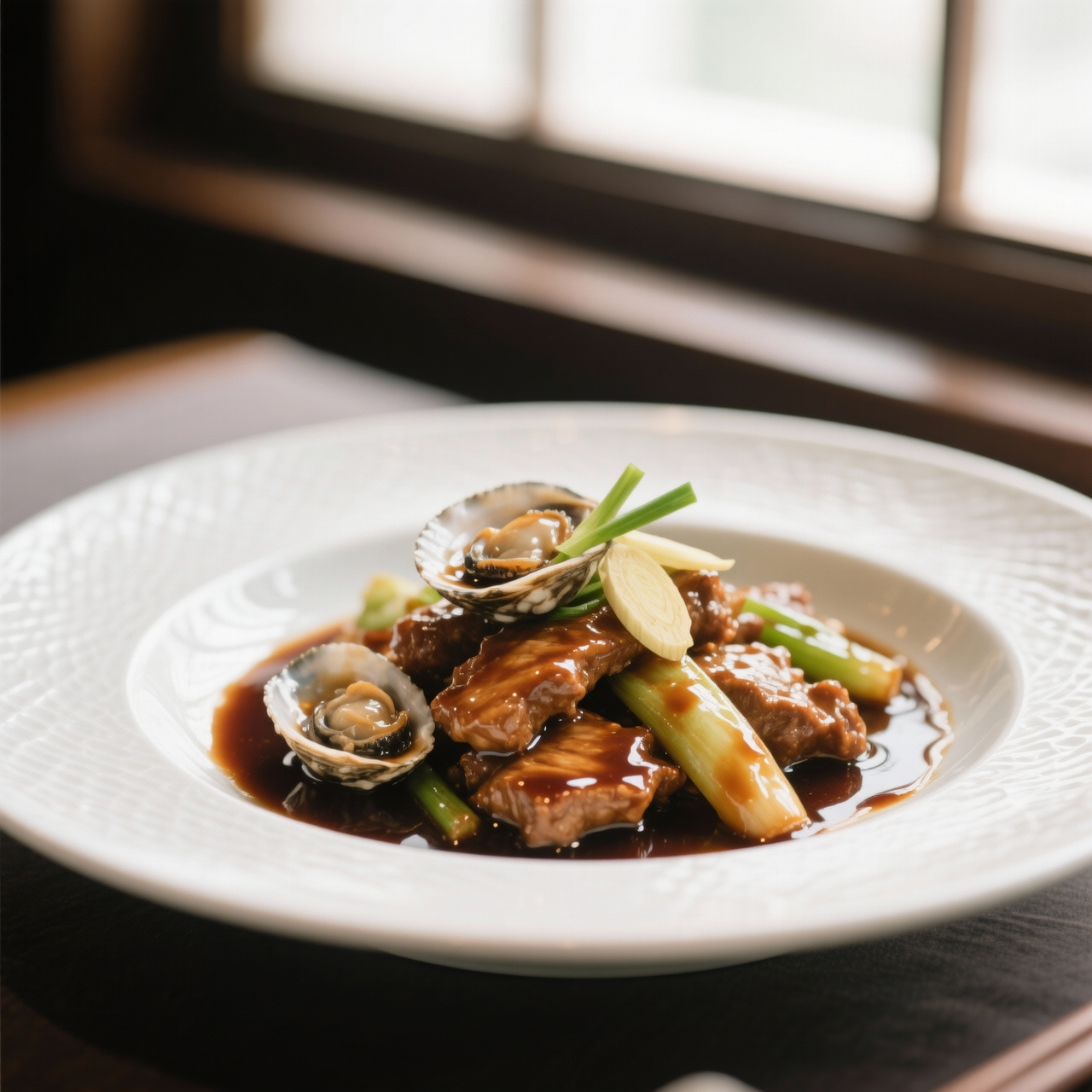
Oyster Sauce
When I first learned to simmer down oyster brine and shellfish essence into a dark, syrupy glaze, I was chasing the quiet magic of southern Chinese coastal kitchens. True oyster sauce is not just a condiment; it is a bridge between the sea and the wok, born in the Guangdong province where generations of cooks reduced fresh oyster liquor over low heat until it caramelized into something deeply savory. I make it today because that slow reduction captures an umami that bottled versions, often thickened with starch and bolstered by sugar, simply cannot replicate. For pescatarian cooks, it is a revelation, offering a way to bring that profound, meaty depth to vegetables, noodles, and stir-fries without crossing into animal broths. The beauty of this sauce lies in its restraint. You are not boiling it aggressively; you are coaxing it. The most common mistake I see is rushing the reduction or letting the heat climb too high, which scorches the natural sugars and turns a glossy, balanced glaze into something bitter and harsh. Another pitfall is over-relying on soy sauce or added thickeners too early. Let the oyster essence speak first. As it reduces, the liquid transforms from a pale, briny broth into a rich, mahogany syrup that clings beautifully to a spoon. Strain it carefully, cool it quickly, and store it properly. When you finally toss it through a hot wok, you will taste why coastal cooks guarded these reductions so closely. It is not about overpowering your ingredients; it is about elevating them with a quiet, oceanic richness that lingers long after the meal is finished.
Nutrition
| Per serving | Calories | Protein | Carbs | Fat | Sat fat | Fibre | Sugar | Sodium |
|---|---|---|---|---|---|---|---|---|
| beginner | 35kcal | 1g | 7g | 0g | 0g | 0g | 4g | 740mg |
| intermediate | 48kcal | 1g | 10g | 0g | 0g | 0g | 8g | 680mg |
| expert | 48kcal | 2g | 9g | 0g | 0g | 0g | 8g | 850mg |
Per serving · Ava-estimated — a guide, not a clinical figure.
- 300 goyster— fresh, shucked and thoroughly rinsed
- 400 mlwater— for simmering and extracting natural juices
- 30 mllight soy sauce— low-sodium preferred
- 20 grock sugar— crushed for easier dissolution
- 15 gginger— thinly sliced to infuse during simmering
- 10 mldark soy sauce(optional)— optional, for deeper color and caramelized notes
This beginner-friendly version skips traditional oyster extraction and focuses on elevating a trusted jarred sauce into a versatile glaze. You will enhance a bottled base with pantry staples like light soy sauce, brown sugar, and a cornstarch slurry. The goal is confidence: you will learn to balance salty, sweet, and umami notes without guesswork. Keep the heat strictly on medium-low to prevent sugars from caramelizing too quickly and turning bitter. Stir continuously with a flexible spatula to avoid scorching the bottom, especially once the thickener hits the pan. Watch for the nappe stage, where the sauce coats a spoon and leaves a clean trail when you drag a finger through it. This visual cue guarantees perfect stir-fry cling. If the glaze tightens too much after cooling, simply whisk in warm water before use. Transfer to a clean glass jar, cool completely, and refrigerate. It keeps for three weeks or freezes perfectly in ice cube trays for instant weeknight upgrades.
Equipment
- Heavy-bottomed saucepan— prevents hot spots and scorching
- Silicone spatula— flexible edge for scraping corners
- Small whisk— for lump-free cornstarch slurry
Method
- 1
Combine the jarred oyster sauce, light soy sauce, brown sugar, and minced garlic in a small bowl until fully blended.
Sugar must dissolve completely before heating to avoid graininess.
mise en place~ 2 min - 2
Pour the mixture into a heavy-bottomed pan over medium-low heat and stir constantly until the liquid begins to gently bubble.
Never rush this step with high heat, or the edges will scorch and turn bitter.
simmering~ 3 minTricky bit - 3
Whisk the cornstarch and cold water in a separate ramekin until smooth, then slowly drizzle the slurry into the simmering sauce while stirring.
Add gradually to prevent sudden over-thickening.
slurry activation~ 1 min - 4
Continue cooking for exactly two minutes until the sauce coats the back of a spoon and holds a clean line.
Remove from heat immediately once thickened, as carryover heat will tighten it further.
nappe consistency~ 2 minTricky bit - 5
Transfer the hot glaze to a heatproof container and allow it to cool completely to room temperature before sealing.
Sealing while warm will create condensation and spoil the sauce faster.
cooling and storage~ 15 min
Cooking from frozen
Thaw overnight in the refrigerator and whisk gently over low heat to restore its syrupy consistency.
Storage times are a guide — always use your judgement and store food safely.