
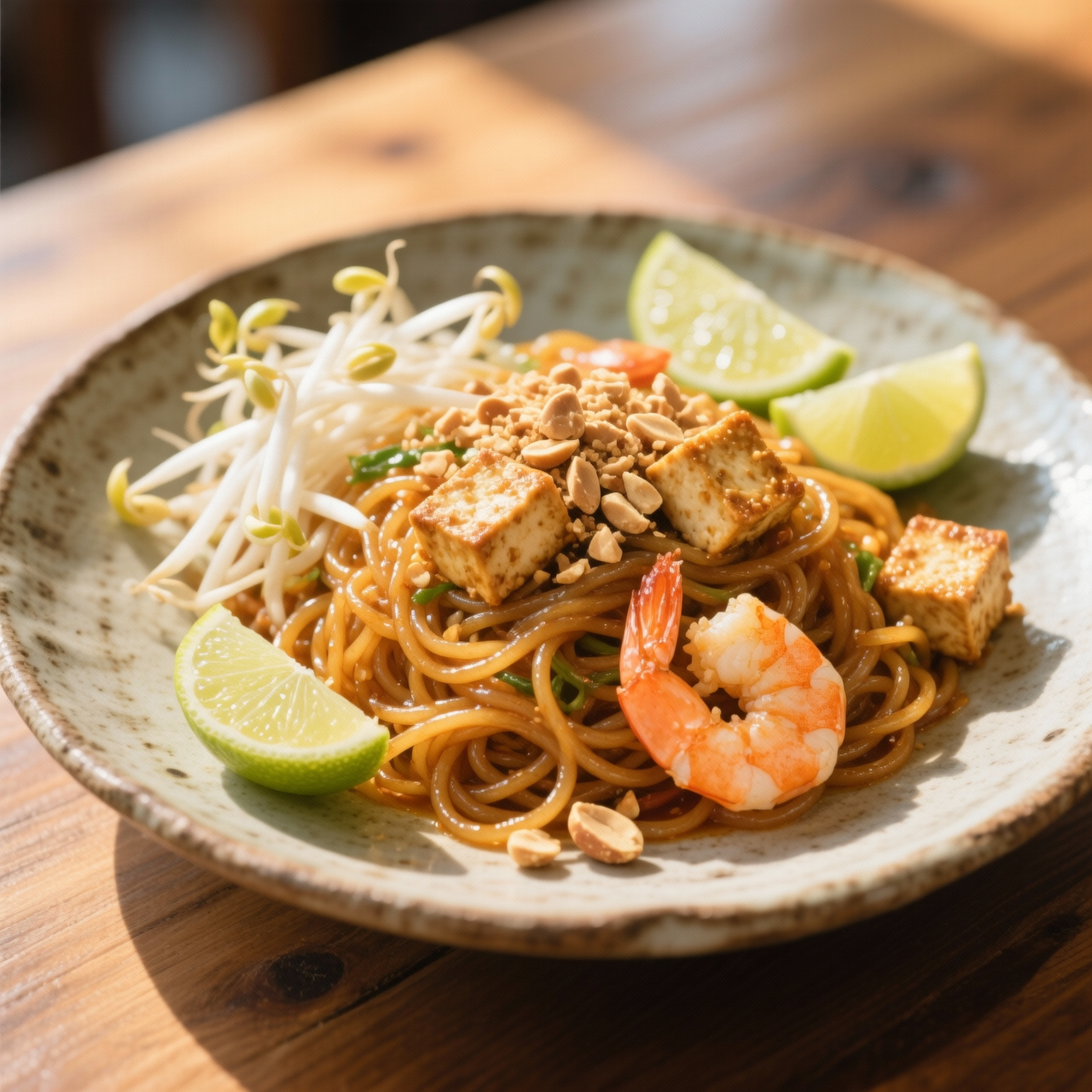
Pad Thai
I have always believed that Pad Thai is less a dish and more a cultural negotiation, born from necessity but elevated into something deeply personal. In the late 1930s, Prime Minister Plaek Phibunsongkhram championed it as a unifying national symbol, replacing rice-heavy staples with noodles during wartime shortages while subtly weaving in Chinese stir-frying techniques and indigenous Thai flavors. That historical pivot matters to me because it reminds us that great cooking is often born from constraint, not abundance. When I approach a wok to make Pad Thai, I am not just tossing rice noodles; I am honoring a legacy of adaptation. Yet, so many home cooks stumble over the same invisible tripwires. The first is the sauce. I have watched countless batches drown in a swamp of tamarind, fish sauce, and palm sugar, never tasting the delicate balance that should make your palate sing. The secret lies in tasting as you mix, adjusting until the sour, salty, and sweet notes sit in perfect harmony. The second pitfall is the noodles themselves. Over-soaking turns them into a gummy paste, while under-soaking guarantees a chewy, unyielding mess. They need just enough warm water to soften before hitting the scorching heat of the wok. And please, never crowd the pan. Pad Thai demands a furious, high-heat sear that caramelizes the edges while keeping the center tender. Rushing the heat or over-stirring kills the texture. When done right, it is a symphony of smoky char, bright lime, and crushed peanuts, all wrapped around supple noodles that practically dance on the fork. It is not fast food; it is mindful fire.
Ingredients
- 220 grice noodle— flat, 8mm width, dried
- 60 gtamarind paste— concentrated, seedless
- 50 gpalm sugar— finely grated
- 45 mlfish sauce— traditional Thai brand
- 150 gfirm tofu— pressed and cubed
- 150 gshrimp— medium, peeled and deveined
- 30 gdried shrimp— small, rinsed and patted dry
- 15 ggarlic— minced
- 40 gshallot— thinly sliced
- 2 pieceegg— large, lightly beaten
- 100 gbean sprout— fresh, trimmed
- 30 gChinese chive— cut into 2-inch lengths
- 40 groasted peanut— unsalted, roughly crushed
- 2 piecelime— cut into wedges
- 30 mlvegetable oil— neutral, high smoke point
Method
Pick a skill levelThis version prioritizes confidence and consistency over traditional intensity. You will combine the sauce components in advance, eliminating the panic of balancing flavors over a scorching pan. A heavy nonstick skillet replaces the wok, allowing gentler, more forgiving heat control. The noodles are fully softened before they ever touch the oil, which prevents the dreaded clumping and sticking that ruins first attempts. Pay close attention to the moment the eggs hit the pan; let them set for exactly ten seconds before scrambling, ensuring they coat the noodles rather than turning into dry curds. Keep your mise en place organized in small bowls, as the cooking window is narrow but manageable. Do not crowd the pan. Cook in two batches if necessary, as steaming the noodles will ruin their texture. The goal here is a reliably delicious, glossy plate that introduces you to the dish’s fundamental rhythm without demanding professional-grade reflexes. Trust the pre-mixed sauce ratio, taste a strand before plating, and adjust the final squeeze of lime to your personal preference.
Method
- 1
Soak the rice noodles in warm water until pliable and opaque.
Check at 20 minutes to prevent mushiness.
soaking~ 20 min - 2
Whisk together the tamarind paste, palm sugar, and fish sauce in a medium bowl until completely smooth.
Microwave for 15 seconds if the sugar resists dissolving.
emulsifying~ 3 min - 3
Heat the vegetable oil in the skillet over medium-high heat.
The oil should shimmer but never smoke.
heating~ 1 min - 4
Add the minced garlic and sliced shallots to the hot oil and cook until fragrant and translucent.
Keep the heat steady to avoid browning.
sweating~ 2 min - 5
Add the cubed tofu and raw shrimp to the skillet and cook until the shrimp turns pink and opaque.
Do not stir constantly; let them sear for thirty seconds first.
searing~ 3 min - 6
Pour the prepared sauce into the skillet and bring it to a gentle simmer.
Bubbles should form slowly, not violently.
simmering~ 1 min - 7
Drain the softened noodles thoroughly and add them to the skillet along with the dried shrimp and beaten eggs.
Push noodles to one side to let eggs cook slightly before folding in.
tossing~ 2 minTricky bit - 8
Add the fresh bean sprouts and Chinese chives, then use tongs to mix everything until the vegetables just begin to wilt.
Residual heat will finish cooking the greens.
wilting~ 1 min - 9
Transfer the noodles to serving plates and garnish immediately with crushed peanuts and lime wedges.
Serve while hot to preserve the glossy texture.
plating~ 1 min
This approach bridges home convenience and authentic technique, demanding active heat management and precise sequencing. You will build the sauce directly in the pan, allowing the palm sugar to melt into the tamarind and fish sauce under controlled medium-high heat, which creates a deeper, more integrated flavor base. A carbon steel wok or heavy skillet is essential for developing the characteristic slight char on the tofu and shrimp without burning the aromatics. The noodles are parboiled just until pliable, then immediately shocked in cold water to halt gelatinization and preserve their chew. Watch the oil temperature closely; if it smokes, the garlic will turn bitter in seconds. You must work quickly once the noodles enter the pan, using a tossing motion rather than stirring to ensure even coating without breaking the strands. The dried shrimp require a brief toast to awaken their briny umami, a step that separates a flat dish from a layered one. Monitor the sauce reduction carefully. It should cling to every strand, leaving the wok nearly dry. This version rewards patience during prep and decisiveness during execution.
Method
- 1
Parboil the rice noodles in boiling water for exactly three minutes, then drain and rinse under cold water to halt cooking.
They should bend without snapping.
shocking~ 4 min - 2
Heat the carbon steel wok over medium-high heat until the metal begins to radiate warmth, then swirl in the vegetable oil.
Tilt the pan to coat the entire cooking surface.
seasoning~ 2 min - 3
Add the minced garlic and sliced shallots to the wok and stir constantly until they release their aroma and soften.
Watch for the edges to just catch a pale gold color.
blooming~ 1 minTricky bit - 4
Add the dried shrimp, cubed tofu, and raw shrimp to the wok, tossing frequently until the seafood curls and firms up.
Keep ingredients moving to prevent sticking to the carbon steel.
searing~ 3 min - 5
Push the protein mixture to the side, crack the eggs into the cleared space, and scramble them rapidly until just set.
Break them into small curds before mixing with the rest.
scrambling~ 1 min - 6
Pour the drained noodles into the wok, followed immediately by the tamarind paste, palm sugar, and fish sauce.
Add the sauce directly over the noodles for even distribution.
reducing~ 2 minTricky bit - 7
Use a wok spatula to continuously fold and lift the ingredients, allowing the sauce to coat every strand and evaporate excess moisture.
Listen for a sharp sizzle that indicates proper heat retention.
tossing~ 2 minTricky bit - 8
Add the bean sprouts and Chinese chives, tossing vigorously for ten seconds until they retain their crisp texture.
Do not overcook the vegetables or they will turn soggy.
wilting~ 0 min - 9
Remove from heat, transfer to warmed plates, and finish with crushed peanuts and fresh lime wedges.
The contrast of temperature and texture is essential.
plating~ 1 min
This rendition demands mastery of thermal dynamics and an intuitive grasp of the four-flavor equilibrium. You will grind the tamarind, palm sugar, and aromatics in a stone mortar, releasing essential oils that pre-mixed bowls cannot replicate. The wok must reach a smoking point before the first drop of oil, creating an immediate thermal barrier that sears ingredients while preventing absorption. Noodles are soaked at precise ambient temperature, then drained and separated by hand to guarantee individual strand integrity. The sauce is added in two distinct waves: first to infuse the tofu and dried shrimp, then a final splash to glaze the noodles at peak heat, generating the coveted breath of fire. Timing is non-negotiable. Eggs are cracked directly onto the hottest oil edge, allowed to blister, then rapidly folded into the noodles while still liquid. The dried shrimp are toasted until they release a sharp, oceanic fragrance that signals peak umami. You will taste and adjust on the fly, balancing sharp tamarind against deep fish sauce with a pinch of sugar. This version trusts your palate, your reflexes, and your respect for high-heat alchemy.
Method
- 1
Grind the tamarind paste, palm sugar, and minced garlic in a stone mortar until they form a uniform, glossy emulsion.
Apply steady pressure to release the tamarind's full acidity.
pounding~ 3 min - 2
Place the carbon steel wok over a high-BTU flame and heat it until the surface begins to lightly smoke, then add the vegetable oil.
The oil should coat the metal instantly without pooling.
flaming~ 1 min - 3
Add the sliced shallots and dried shrimp to the smoking wok, tossing rapidly until the shrimp releases a sharp, toasted aroma.
This brief burst of heat unlocks deep umami notes.
blooming~ 1 minTricky bit - 4
Add the cubed tofu and raw shrimp, spreading them across the wok surface to achieve a quick, hard sear before tossing.
Do not crowd the pan; cook in batches if needed.
searing~ 2 minTricky bit - 5
Crack the eggs directly onto the hottest oil edge of the wok, allowing the whites to blister and set instantly.
Let them rest for five seconds before scrambling into the noodles.
frying~ 1 min - 6
Add the hand-separated rice noodles to the center of the wok, then immediately pour the tamarind-sugar-garlic paste directly over them.
The sauce should hit the noodles at peak temperature for instant absorption.
infusing~ 1 minTricky bit - 7
Execute a continuous, aggressive tossing motion with a wok spatula, folding the ingredients upward to coat every strand evenly.
Maintain a relentless rhythm to prevent scorching and build wok hei.
tossing~ 1 minTricky bit - 8
Add the fresh bean sprouts and Chinese chives, tossing them into the mix for exactly eight seconds to preserve their raw crunch.
Residual heat will soften them perfectly without wilting.
wilting~ 0 min - 9
Plate the noodles immediately, garnishing with freshly crushed peanuts and lime wedges while the dish is still radiating intense heat.
The contrast of hot noodles and cool garnish completes the experience.
plating~ 0 min