
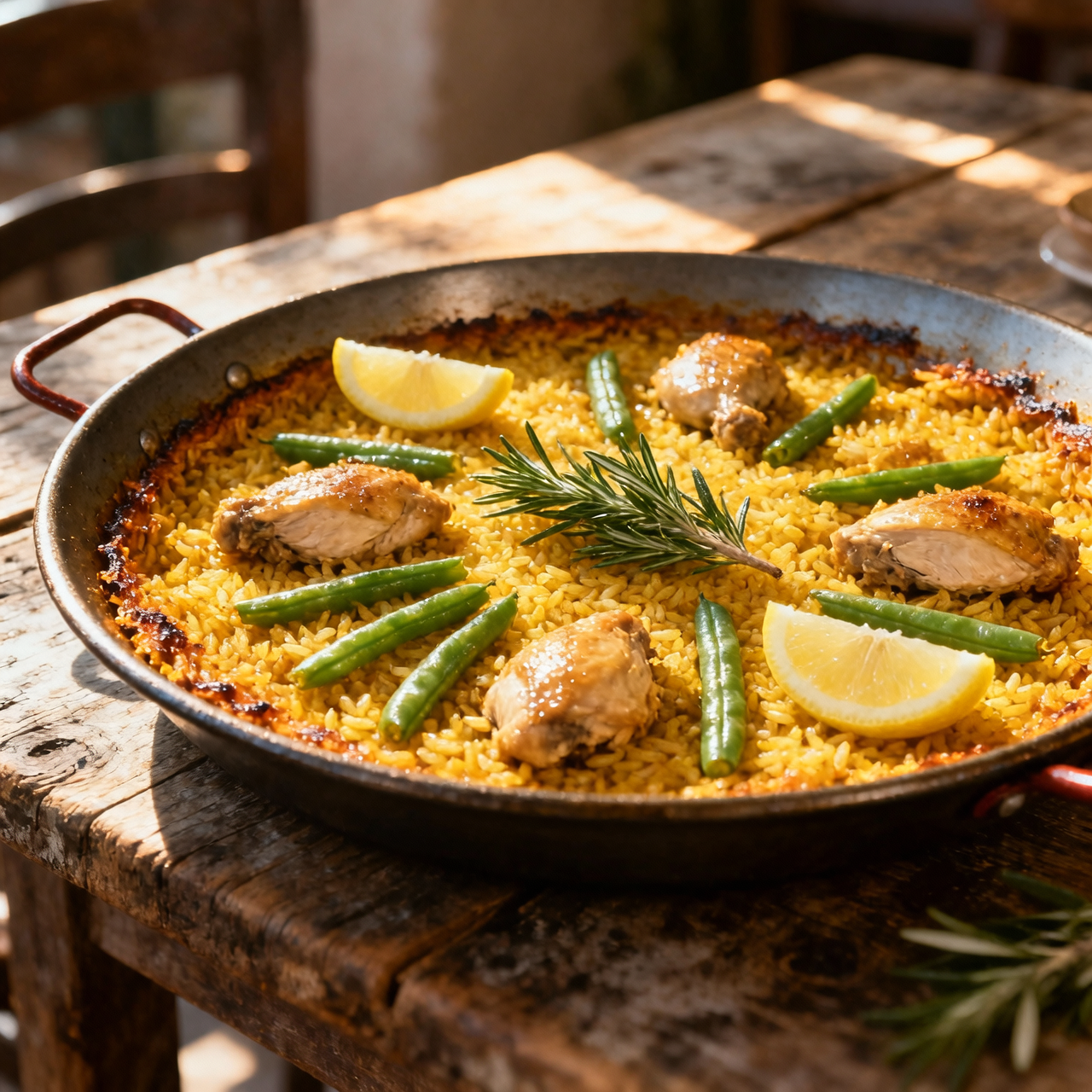
Paella Valenciana
When I first stood over a wide, shallow pan in the sun-baked fields outside Valencia, I finally understood why paella is never just a meal—it is a conversation with the land. Born in the Albufera wetlands, this dish was originally a humble farmer lunch, crafted over open wood fires with whatever the marshes offered: rabbit, snails, green beans, and the prized bomba rice that drinks in saffron-infused broth like a thirsty sponge. To me, it represents the quiet dignity of Spanish terroir, where patience and respect for ingredients matter more than theatrical presentation. Yet time and again, I watch well-meaning cooks unravel its soul through a handful of stubborn missteps. The most common is treating it like a stir-fry; paella demands stillness. Once the rice settles into the simmering liquid, you must resist the urge to agitate it, letting that coveted socarrat form through undisturbed heat. Another frequent error is drowning the dish in seafood or chorizo, which belongs to other regional variations, not the strict, protected tradition of Paella Valenciana. Authenticity is not about rigid gatekeeping, but about honoring the rhythm the land established centuries ago. When I make it now, I measure my success not by how perfectly it photographs, but by whether the rice grains remain distinct, the broth has fully surrendered to the grain, and the smoky whisper of orange wood still lingers in the kitchen. It is a dish that asks you to slow down, listen, and trust the fire.
Nutrition
| Per serving | Calories | Protein | Carbs | Fat | Sat fat | Fibre | Sugar | Sodium |
|---|---|---|---|---|---|---|---|---|
| beginner | 860kcal | 46g | 86g | 35g | 5g | 4g | 4g | 980mg |
| intermediate | 860kcal | 46g | 86g | 35g | 5g | 4g | 4g | 980mg |
| expert | 860kcal | 46g | 86g | 35g | 5g | 4g | 4g | 980mg |
Per serving · Ava-estimated — a guide, not a clinical figure.
- 400 gbomba rice— short-grain, do not substitute with long-grain
- 500 gchicken thigh— bone-in, skin-on, cut into serving pieces
- 200 grabbit loin(optional)— cut into 2-inch pieces
- 150 gflat green bean— trimmed and halved
- 100 gbutter bean— dried garrofón, soaked overnight
- 150 groma tomato— grated, skins discarded
- 120 mlextra virgin olive oil— high smoke point preferred
- 1 gsaffron thread— toasted lightly before steeping
- 5 gsweet smoked paprika— pimentón de la vera
- 2 sprigsfresh rosemary— woody stems intact
- 4 clovesgarlic clove— finely minced
- 10 gkosher salt— coarse grain for even distribution
- 1200 mlwater— room temperature
- 2 wholelemon— quartered for serving
This version prioritizes confidence over tradition, using a high-quality jarred sofrito and pre-mixed paella spice blend to eliminate the most technical steps. You will still build flavor through proper browning and broth reduction, but the tedious grating, toasting, and grinding phases are replaced with reliable pantry shortcuts. The focus here is on heat management and resisting the urge to stir once the liquid is added. Watch closely for the moment the rice absorbs the broth; if it looks dry before it’s tender, add a splash of warm water. Do not cover the pan, and never shake it aggressively. Your goal is to achieve distinct, tender grains and a light, golden crust at the bottom. Even with shortcuts, timing is everything. Keep your ingredients pre-measured, maintain a steady medium-high heat for the first ten minutes, then drop to medium-low for the finish. If your kitchen lacks a traditional paella pan, a wide skillet with heavy base will suffice. Trust your instincts, listen for the gentle sizzle of the final minutes, and you will produce a deeply satisfying, restaurant-adjacent dish on your very first attempt.
Equipment
- Wide non-stick skillet— 14-inch diameter minimum
- Wooden spoon— flat-edged for spreading rice
- Measuring cups— for liquid and rice
- Sharp knife— for trimming meat and vegetables
Method
- 1
Heat half the olive oil in your skillet over medium-high heat.
Oil should shimmer but not smoke.
heating~ 1 min - 2
Season the meat with salt and sear until deeply browned on all sides.
Work in batches to avoid steaming.
searing~ 5 minTricky bit - 3
Stir in the jarred sofrito and spice blend until the oil separates.
Scrape any browned bits from the bottom.
blooming~ 2 min - 4
Pour in the water and steeped saffron, then bring to a gentle simmer.
Taste the broth now; it should be well seasoned.
simmering~ 3 min - 5
Scatter the rice evenly across the pan and arrange the vegetables on top.
Do not stir after adding rice.
layering~ 1 min - 6
Reduce heat to medium and cook uncovered until the liquid is absorbed.
Watch the edges for early drying.
absorption~ 18 minTricky bit - 7
Remove from heat, tent loosely with foil, and let rest before serving.
Resting sets the grains.
resting~ 5 min