
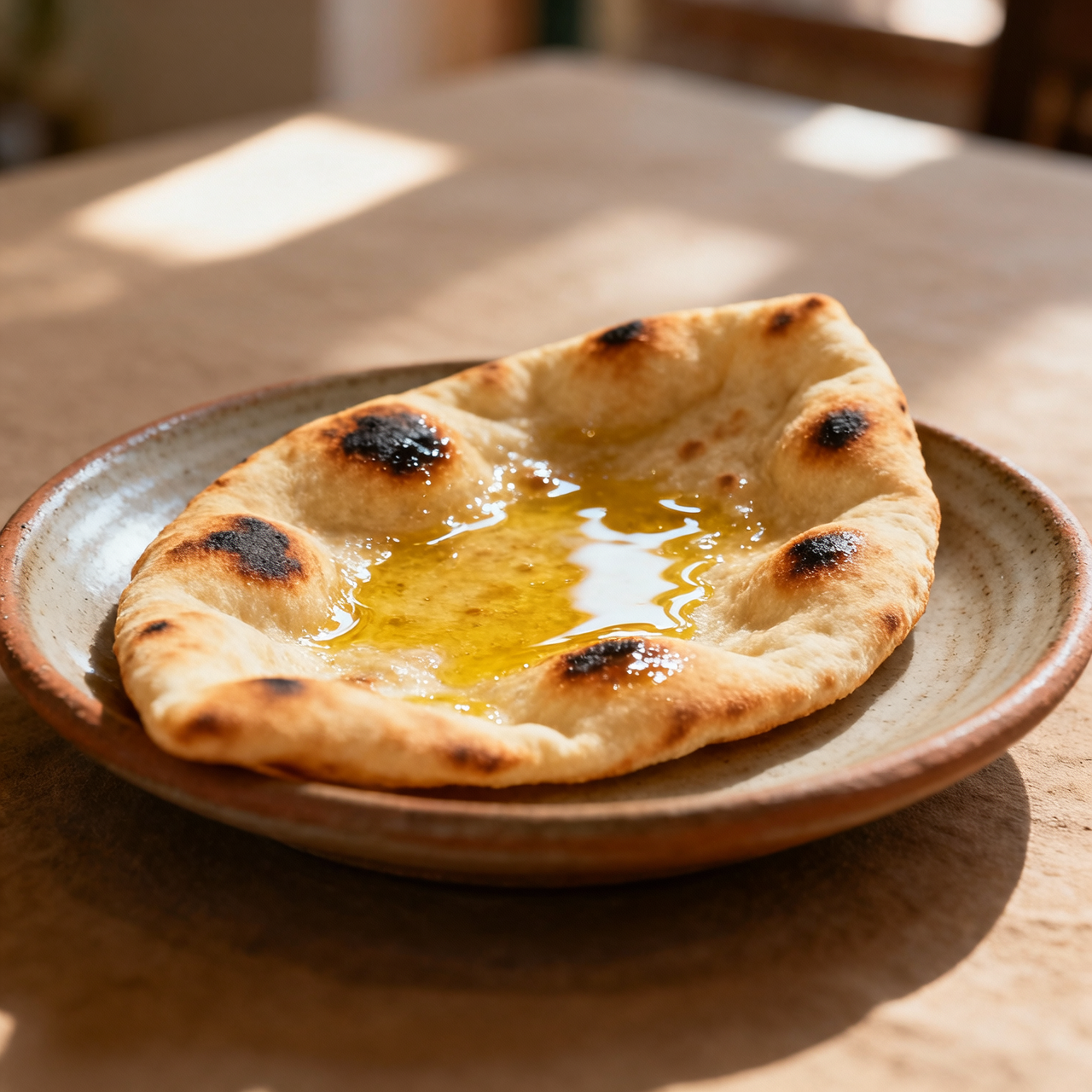
Naan
I’ve spent years trying to replicate the exact pillowy blister of a proper Pakistani naan, and I finally gave up on the supermarket packs that promise it. Those shrink-wrapped discs usually cost around two pounds for a four-pack, yet they bake up rubbery, dry, and laced with chemical softeners that leave a metallic, stale tang on your tongue. Real naan isn’t meant to survive a supply chain; it’s meant to hit the searing heat of a tandoor or a screaming-hot skillet within minutes of being rolled. The bread’s lineage stretches back through centuries of trade routes into the Indian subcontinent, where it evolved from simple wheat flatbreads into a dairy-enriched, yeast-leavened staple that anchors every family table. Making it from scratch matters because you control the crumb. The common pitfalls are almost always about patience and heat management. People rush the dough, skipping the long, slow rest that allows gluten to relax and fermentation to develop depth, then they cook it on lukewarm pans that steam rather than char. You end up with dense, pale discs instead of something that puffs and blisters. This recipe leans on a straightforward proof, using nothing but flour, water, yogurt, yeast, a touch of sugar, and salt. When you roll it thin and press it against a blistering surface, the trapped moisture flashes into steam, lifting the dough into those signature irregular pockets. It’s a ritual that rewards attention but never demands perfection. Once you master the balance of hydration and direct heat, you’ll never look back at the processed alternatives.
Nutrition
| Per serving | Calories | Protein | Carbs | Fat | Sat fat | Fibre | Sugar | Sodium |
|---|---|---|---|---|---|---|---|---|
| beginner | 250kcal | 7g | 39g | 6g | 3g | 2g | 3g | 300mg |
| intermediate | 280kcal | 8g | 46g | 6g | 3g | 2g | 3g | 380mg |
| expert | 185kcal | 5g | 30g | 5g | 2g | 1g | 2g | 340mg |
Per serving · Ava-estimated — a guide, not a clinical figure.
- 500 gall-purpose flour— Sifted before measuring for accurate volume
- 120 gplain yogurt— Full-fat, brought to room temperature
- 200 mlwarm water— Heated to approximately 38°C to activate yeast
- 7 gactive dry yeast— Standard one-packet amount
- 15 ggranulated sugar— Provides food for yeast activation
- 8 gfine sea salt— Enhances flavor and controls fermentation
- 30 mlvegetable oil— Neutral-tasting oil for dough elasticity
- 30 mlghee(optional)— Melted for post-bake brushing
- 20 ggarlic clove(optional)— Finely minced for traditional topping
- 10 gfresh cilantro(optional)— Leaves and tender stems only, finely chopped
Store-bought naan typically costs three to four dollars per pack and relies on chemical leaveners, stale preservatives, and a tough, rubbery texture. This beginner-friendly from-scratch version skips complex folding techniques or traditional tandoor setups, relying instead on a highly forgiving, quick-mix dough that comes together with minimal handling. We use a straightforward warm-water yeast activation followed by a brief twenty-minute rest, giving the gluten just enough time to relax without demanding hours of proofing or temperature monitoring. Watch your cooking surface temperature closely; too cool and the bread stays dense and doughy, while too hot will char the exterior before the interior fully sets. Roll each portion to a consistent quarter-inch thickness so they blister and puff reliably. A quick brush of melted butter or ghee right after cooking delivers that signature soft, pliable chew. You will achieve authentic, pillowy results at a fraction of the grocery store cost, and the dough scales effortlessly for batch par-baking and long-term freezing.
Equipment
- Large mixing bowl— stainless steel or glass works best
- Rolling pin— standard wooden type
- Heavy cast iron skillet— retains heat better than thin pans
Method
- 1
Whisk warm water, sugar, and instant yeast in a large bowl until dissolved, then let sit until visibly foamy.
Water should feel comfortably warm to the touch, not hot enough to kill the yeast.
proofing~ 5 min - 2
Add flour, salt, yogurt, and oil to the bowl, then stir vigorously until a shaggy dough forms.
No kneading required; the rest period will develop the gluten structure.
mixing~ 3 min - 3
Cover the bowl with a damp towel and let the dough rest undisturbed.
A warm spot speeds this up, but room temperature works perfectly fine.
bulk fermentation~ 20 min - 4
Turn the dough onto a lightly floured surface, divide into four equal pieces, and roll each into a quarter-inch oval.
Dust with flour only as needed to prevent sticking to the board.
shaping~ 5 min - 5
Heat a dry heavy skillet over medium-high heat until a water droplet evaporates instantly.
Consistent heat is crucial for proper puffing.
preheating~ 3 minTricky bit - 6
Lay a dough oval flat in the pan and cook until large bubbles form on the surface and the bottom is deeply browned.
Do not press down with a spatula or you will deflate the pockets.
blistering~ 2 min - 7
Flip the naan, cook the second side for thirty seconds, then transfer to a plate and brush generously with melted ghee or butter.
Stack and cover with foil immediately to trap steam and keep them soft.
finishing~ 1 min
Cooking from frozen
Par-bake slightly until just set, cool completely, then freeze. Reheat directly from frozen in a hot dry skillet or oven until fully blistered and pliable.
Storage times are a guide — always use your judgement and store food safely.