
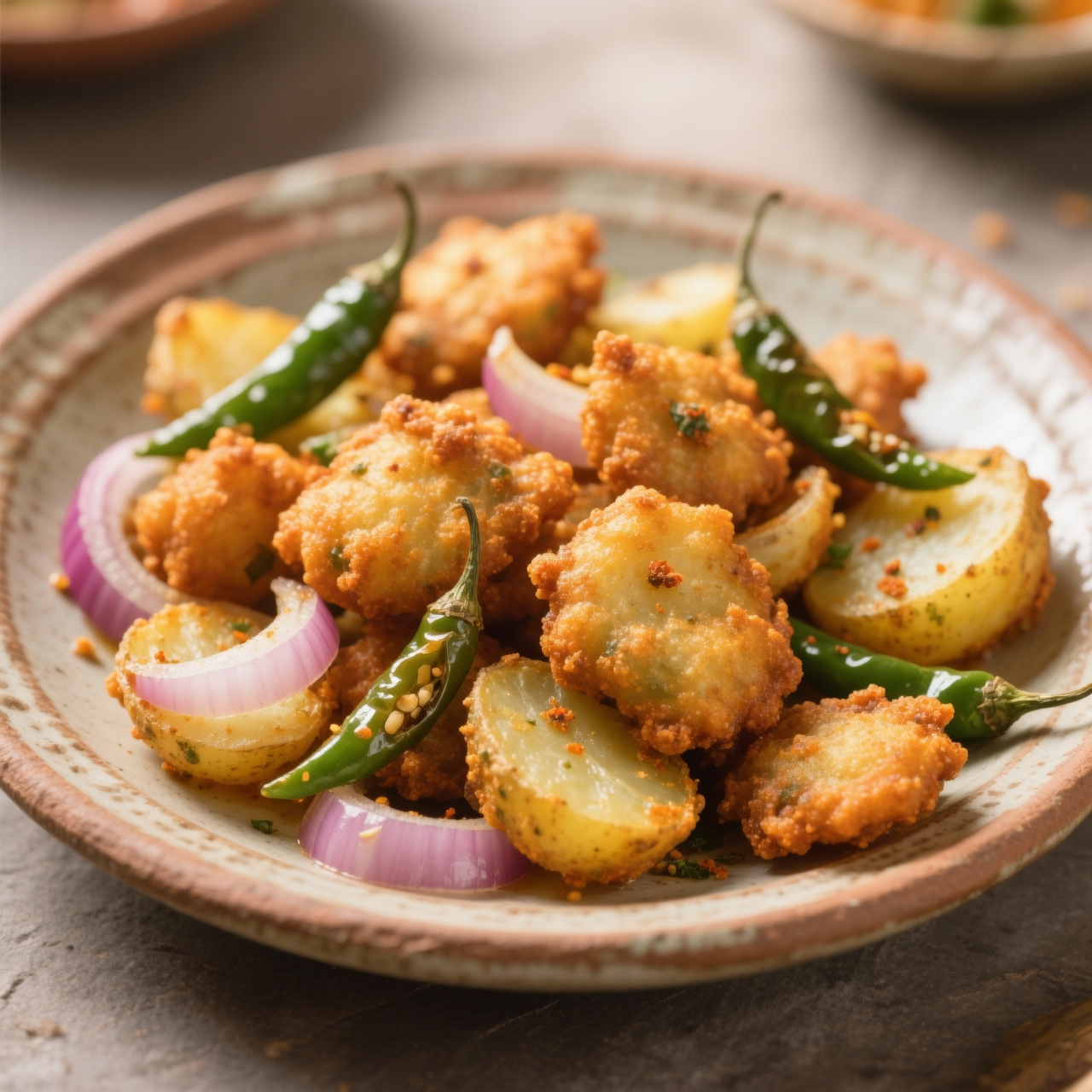
Pakoras
I’ve always believed that the true magic of pakoras lies in the quiet rhythm of monsoon rain and the sizzle of gram flour meeting hot oil. Originating from the broader Indian subcontinent and deeply woven into Pakistani street culture, these humble fritters are far more than a quick snack. They are a testament to resourcefulness, born from the simple alchemy of besan, water, and whatever vegetables the market or garden yields. Today, you’ll find frozen, pre-fried versions in supermarket freezers, usually priced at four or five dollars a bag. They taste like cardboard and stale grease, relying on stabilizers and artificial flavor enhancers to mimic a crunch that only fresh oil and properly hydrated flour can deliver. Making them from scratch isn’t just about avoiding processed shortcuts; it’s about reclaiming a sensory ritual that connects you to generations of home cooks who knew how to coax crispness out of earthy legumes. The most common pitfall I see is overworking the batter or getting the oil temperature wrong. If you stir too much, you develop the gluten-like proteins in the chickpea flour, resulting in a dense, chewy coating instead of a delicate, shattering crust. Too cool, and the fritters drink the oil and turn soggy; too hot, and they brown before the insides cook through. The secret is a loose, lumpy batter that rests just long enough for the starch to hydrate, paired with steady, medium-high heat and a light hand. When done right, pakoras are golden, impossibly crisp, and deeply savory—a vegan triumph that proves the best street food never needed a factory.
Nutrition
| Per serving | Calories | Protein | Carbs | Fat | Sat fat | Fibre | Sugar | Sodium |
|---|---|---|---|---|---|---|---|---|
| beginner | 295kcal | 11g | 36g | 13g | 2g | 7g | 4g | 380mg |
| intermediate | 260kcal | 9g | 28g | 14g | 2g | 5g | 2g | 380mg |
| expert | 285kcal | 10g | 35g | 12g | 2g | 6g | 3g | 410mg |
Per serving · Ava-estimated — a guide, not a clinical figure.
- 200 gGram flour— Sifted
- 250 gOnion— Thinly sliced
- 150 gPotato— Peeled and thinly sliced
- 100 gFresh spinach— Roughly chopped
- 15 gGreen chili— Finely chopped
- 15 gFresh coriander leaf— Chopped
- 3 gCarom seed— Lightly crushed
- 4 gGround cumin
- 4 gGround coriander
- 2 gTurmeric powder
- 3 gRed chili powder
- 5 gSalt— Adjust to taste
- 500 mlVegetable oil— For deep frying
- 120 mlCold water— Approximate amount for thick batter consistency
This beginner-friendly approach strips pakoras down to their most forgiving fundamentals, focusing on a straightforward one-bowl batter that eliminates guesswork. Instead of wrestling with complex spice blends or worrying about batter thickness, you will use a simple water-to-gram-flour ratio that naturally adjusts to your vegetables’ moisture. Watch the oil temperature closely; a wooden chopstick should bubble steadily when dipped, not violently or silently. We drop spoonfuls of coated onion, potato, and spinach directly into the hot oil, turning them just once for a crisp, golden shell. While frozen supermarket pakoras cost around four dollars a box, they arrive pale, greasy, and packed with stabilisers and artificial flavourings that dull the earthy chickpea taste. Making them from scratch with whole chickpea flour, fresh aromatics, and pantry spices takes barely longer than preheating your oven, yet delivers a vibrant, crackling crunch and a wholesome, clean finish. This version guarantees a confident first fry without the stress of deep-frying technique, ensuring your fritters stay light, not dense or soggy.
Equipment
- Heavy-bottomed pan or Dutch oven— holds steady heat for consistent frying
- Slotted spoon or spider strainer— for lifting and draining fritters
- Large mixing bowl— roomy enough to toss vegetables without spilling
Method
- 1
Whisk gram flour, cumin, coriander, turmeric, and salt together in a large bowl.
Sift if lumps form.
dry mixing~ 1 min - 2
Gradually pour in cold water while stirring until a thick, pancake-like batter forms, then rest for ten minutes.
The batter will thicken as the flour absorbs liquid.
hydrating~ 10 min - 3
Add thinly sliced onions, diced potatoes, and spinach to the bowl and toss until every piece is heavily coated.
Press vegetables down to submerge them fully.
coating~ 2 min - 4
Heat neutral oil to one hundred seventy-five degrees Celsius in a heavy pan until a wooden chopstick bubbles steadily when dipped.
Maintain medium heat to avoid burning the exterior.
temperature control~ 5 minTricky bit - 5
Carefully drop heaped spoonfuls of the coated vegetables into the hot oil, spacing them evenly to prevent steaming.
Do not overcrowd the pan.
shallow frying~ 4 minTricky bit - 6
Flip once when the underside turns deep golden, fry until crisp, then transfer to a wire rack to drain.
Avoid paper towels, which trap steam and soften the crust.
draining~ 2 min
Cooking from frozen
Reheat directly from frozen in a hot oven or air fryer to restore the crisp exterior.
Storage times are a guide — always use your judgement and store food safely.