
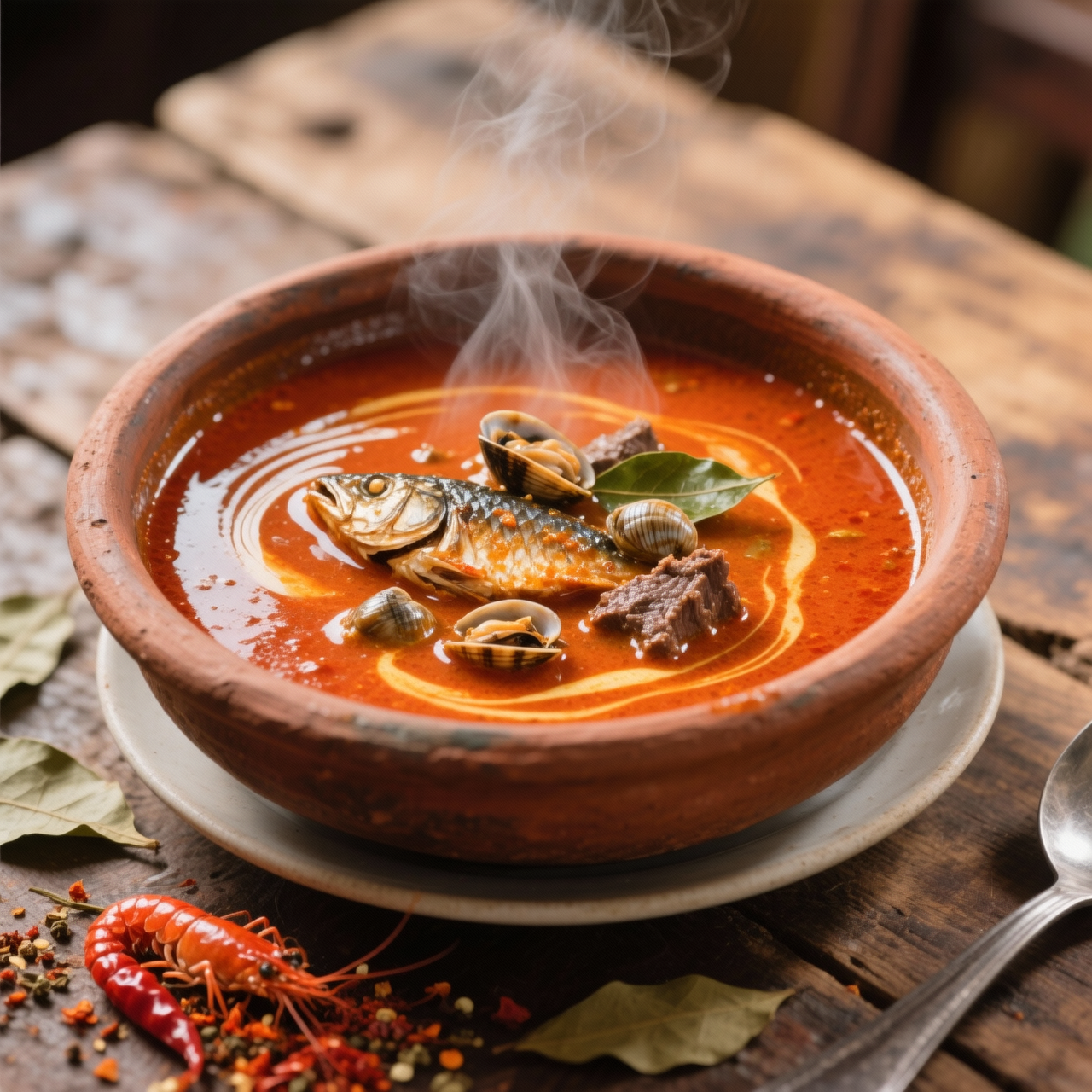
Palm nut soup base (banga)
When I first learned to coax a proper banga base from pressed palm fruit concentrate, I realized how deeply this rust-colored foundation is woven into the culinary memory of the Niger Delta. Traditionally, the process began with boiling fresh palm fruits and pounding them until the rich, oily essence separated—a labor-intensive ritual that connected families to the land. Today, using a high-quality, pre-pressed concentrate honors that heritage while making the dish accessible without sacrificing depth. This base matters because it carries the soul of the region’s riverine cuisine, acting as a canvas for whatever protein or vegetable you choose to fold in. For those of us cooking plant-forward, it proves that profound umami doesn’t require animal products; the natural earthiness of the palm oil and the subtle tang of fermentation do the heavy lifting. Yet, the pitfalls are real and easily stumbled into if you rush. The most common mistake I see is overheating the concentrate too early, which causes the delicate red oil to separate and turn bitter, leaving behind a greasy, unbalanced mess. Another trap is skipping the slow simmer that allows the starches and natural sugars to meld into a cohesive, velvety body. I always remind myself to keep the heat low, stir consistently, and let time do the work. When you respect the concentrate’s natural properties, you’re rewarded with a broth that tastes of sun-warmed groves and generations of careful hands. It’s not just a soup starter; it’s a living archive of West African resilience.
Nutrition
| Per serving | Calories | Protein | Carbs | Fat | Sat fat | Fibre | Sugar | Sodium |
|---|---|---|---|---|---|---|---|---|
| beginner | 380kcal | 4g | 14g | 34g | 16g | 7g | 2g | 220mg |
| intermediate | 310kcal | 4g | 12g | 26g | 11g | 3g | 4g | 480mg |
| expert | 340kcal | 3g | 9g | 33g | 15g | 3g | 1g | 35mg |
Per serving · Ava-estimated — a guide, not a clinical figure.
- 400 gpalm nut concentrate— Pressed palm-fruit concentrate for soups
- 150 gonion— finely diced
- 200 gtomato— chopped
- 10 gscotch bonnet pepper— whole or halved to control heat
- 30 mlvegetable oil(optional)— neutral or red palm oil
- 5 gsalt— adjust to taste
- 500 mlwater— for adjusting consistency
This beginner-friendly Banga base skips the traditional labor of boiling, pounding, and straining fresh palm nuts by relying on a high-quality, ready-to-use palm nut concentrate or jarred banga sauce. The goal here is a reliable, flavorful foundation without the guesswork or heavy equipment. You’ll focus on properly rehydrating and blooming the concentrate with warm water to unlock its rich, earthy notes before gently simmering it into a smooth, velvety sauce. Watch the heat carefully—palm oil separates easily if boiled too hard, which can leave a greasy film instead of a silky finish. Stir frequently during the first few minutes to prevent scorching at the bottom of the pan, and taste early to adjust salt and acidity. If your concentrate is thick or contains sediment, a quick whisk or brief blend will ensure a uniform texture. This streamlined approach gives you a confident first attempt that captures the deep, nutty essence of traditional West African cooking in under an hour. Once mastered, it becomes a versatile, freezer-ready base for proteins, vegetables, or starches whenever you crave authentic flavors on a busy weeknight.
Equipment
- Heavy-bottomed saucepan— non-stick or stainless steel prevents scorching
- Balloon whisk— breaks up clumps in the thick concentrate
Method
- 1
Combine the jarred palm nut concentrate with warm water and whisk until completely smooth.
Warm water prevents clumping and jump-starts the emulsion.
slurry~ 2 min - 2
Transfer the mixture to a heavy-bottomed pan over medium-low heat and stir constantly until bubbles form at the edges.
Keep the heat gentle to avoid splitting the natural oils.
blooming~ 7 minTricky bit - 3
Maintain a gentle simmer for twenty minutes, stirring occasionally to prevent sticking, until the sauce thickens slightly.
Look for a glossy sheen, not a thick paste.
reduction~ 20 min - 4
Remove the pan from the heat, taste for seasoning balance, and let the base rest uncovered for five minutes before use.
Resting allows the flavors to meld and the texture to stabilize.
resting~ 5 min
Cooking from frozen
Thaw overnight in the refrigerator, then reheat gently over low heat with a splash of water while stirring to restore its silky emulsion.
Storage times are a guide — always use your judgement and store food safely.