
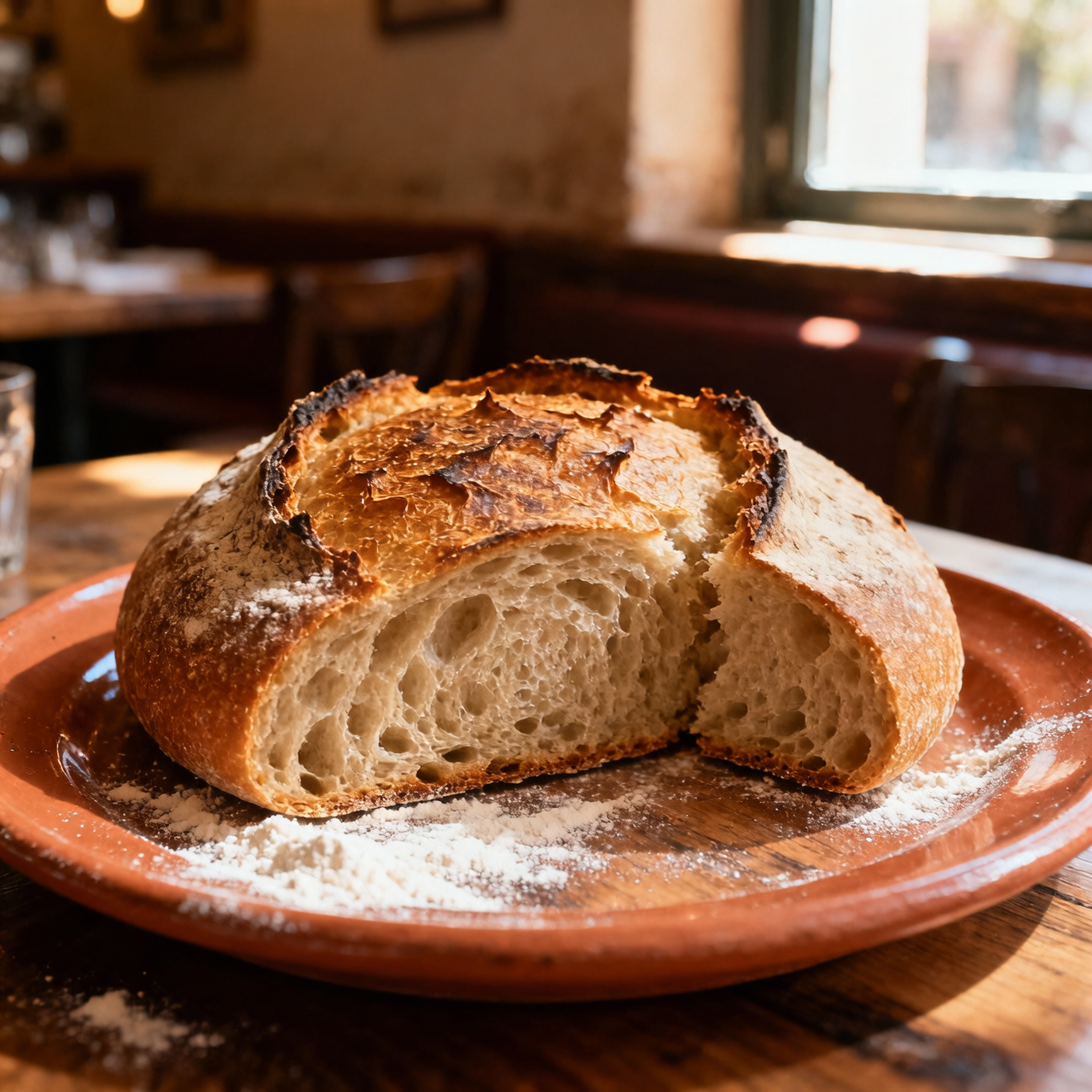
Pan rústico (rustic bread)
I have spent years watching home bakers reach for the shrink-wrapped loaves on supermarket shelves, unaware of what they are sacrificing for convenience. That €2.50 packaged rustic bread might seem like a harmless shortcut, but it is packed with emulsifiers, preservatives, and stale flour that has been sitting in warehouses for months. The crust never truly crackles, the crumb gums together, and you are paying for plastic and chemical stabilisers instead of patience and craft. True Spanish pan rústico was born in village bakeries where wood-fired ovens and long, cool fermentations coaxed wild, complex flavours from nothing but flour, water, salt, and a living culture. Making it from scratch is a quiet rebellion against industrial baking, and it remains entirely vegan by design. The magic lies in respecting the dough’s natural rhythm. The most common pitfall I see is impatience: overworking the dough until the gluten network turns tight, or rushing the bulk fermentation because the kitchen feels cool. Another is neglecting steam during the first ten minutes of baking, which is what gives that iconic, shattering crust. Do not fear sticky dough; high hydration is your ally. Handle it gently, fold rather than punch, and let the oven spring do its work. This recipe demands only four basic ingredients and time, rejecting every commercial shortcut. When you finally hear that hollow tap on the bottom of the loaf, you will understand why abandoning the packaged aisle was worth every flour-dusted minute.
Nutrition
| Per serving | Calories | Protein | Carbs | Fat | Sat fat | Fibre | Sugar | Sodium |
|---|---|---|---|---|---|---|---|---|
| beginner | 345kcal | 9g | 69g | 1g | 0g | 3g | 1g | 475mg |
| intermediate | 240kcal | 7g | 48g | 1g | 0g | 2g | 0g | 380mg |
| expert | 260kcal | 8g | 53g | 1g | 0g | 3g | 1g | 580mg |
Per serving · Ava-estimated — a guide, not a clinical figure.
- 500 gbread flour— Strong flour with at least 11% protein ensures proper gluten development
- 350 mlwater— Should be around 30°C to properly activate the yeast
- 10 gfine sea salt— Mix thoroughly into the flour before adding liquid
- 5 gactive dry yeast— Can be substituted with 15g fresh yeast or a maintained sourdough starter
- 15 mlextra virgin olive oil(optional)— Adds traditional Spanish flavor and improves crust texture
This beginner-friendly method strips rustic bread baking down to its essentials: flour, water, salt, and a touch of yeast. Unlike standard packaged loaves that cost upwards of €2.50 per bag and rely on dough conditioners, excess sodium, and preservatives that leave the crumb stale within a day, this from-scratch version costs pennies per loaf and delivers a crisp, blistered crust with a soft, open interior. You will skip traditional complex folding or overnight cold ferments in favour of a single, forgiving bulk rise at room temperature and a gentle stretch-and-fold technique that builds gluten without intensive kneading. Watch the dough carefully during proofing; it should feel airy and spring back slowly when pressed, not collapse. Keep your work surface lightly floured but avoid adding too much extra flour, which can toughen the crust. The oven steam trick using a tray of boiling water ensures a professional-quality oven spring without requiring a Dutch oven or specialty steam injectors. By mastering this straightforward approach, you gain complete control over fermentation and texture, replacing plastic-wrapped staples with a wholesome, shelf-stable alternative that freezes beautifully.
Equipment
- Large mixing bowl— stainless steel or glass
- Digital kitchen scale— essential for accurate hydration
- Heavy baking sheet— preheat for better crust
- Parchment paper— prevents sticking
Method
- 1
Combine 400g strong bread flour, 10g fine sea salt, and 3g instant yeast in a large bowl, then pour in 300ml lukewarm water and stir with a wooden spoon until a shaggy mass forms.
No kneading required at this stage.
mixing~ 3 min - 2
Cover the bowl tightly with a damp cloth and let the dough rest undisturbed in a warm, draft-free spot for 45 minutes.
This short bulk fermentation develops flavour without long waiting.
autolyse~ 45 min - 3
Wet your hands, grab a section of dough, stretch it upward, and fold it over itself, repeating around the bowl four times to build structure.
Gentle tension prevents tearing.
stretch-and-fold~ 3 min - 4
Transfer the dough to a lightly floured surface, shape it into a tight round by pulling edges under, and place seam-side down on parchment-lined baking tray.
Surface tension creates a better crust.
tension shaping~ 4 minTricky bit - 5
Cover loosely, proof for 40 minutes until puffy, slash the top with a sharp blade, and bake with a tray of boiling water on the lower oven rack for 35 minutes.
Steam guarantees oven spring and crispness.
oven spring~ 70 min
Cooking from frozen
Thaw at room temperature overnight, then refresh in a 180°C oven for 5 to 8 minutes.
Storage times are a guide — always use your judgement and store food safely.