
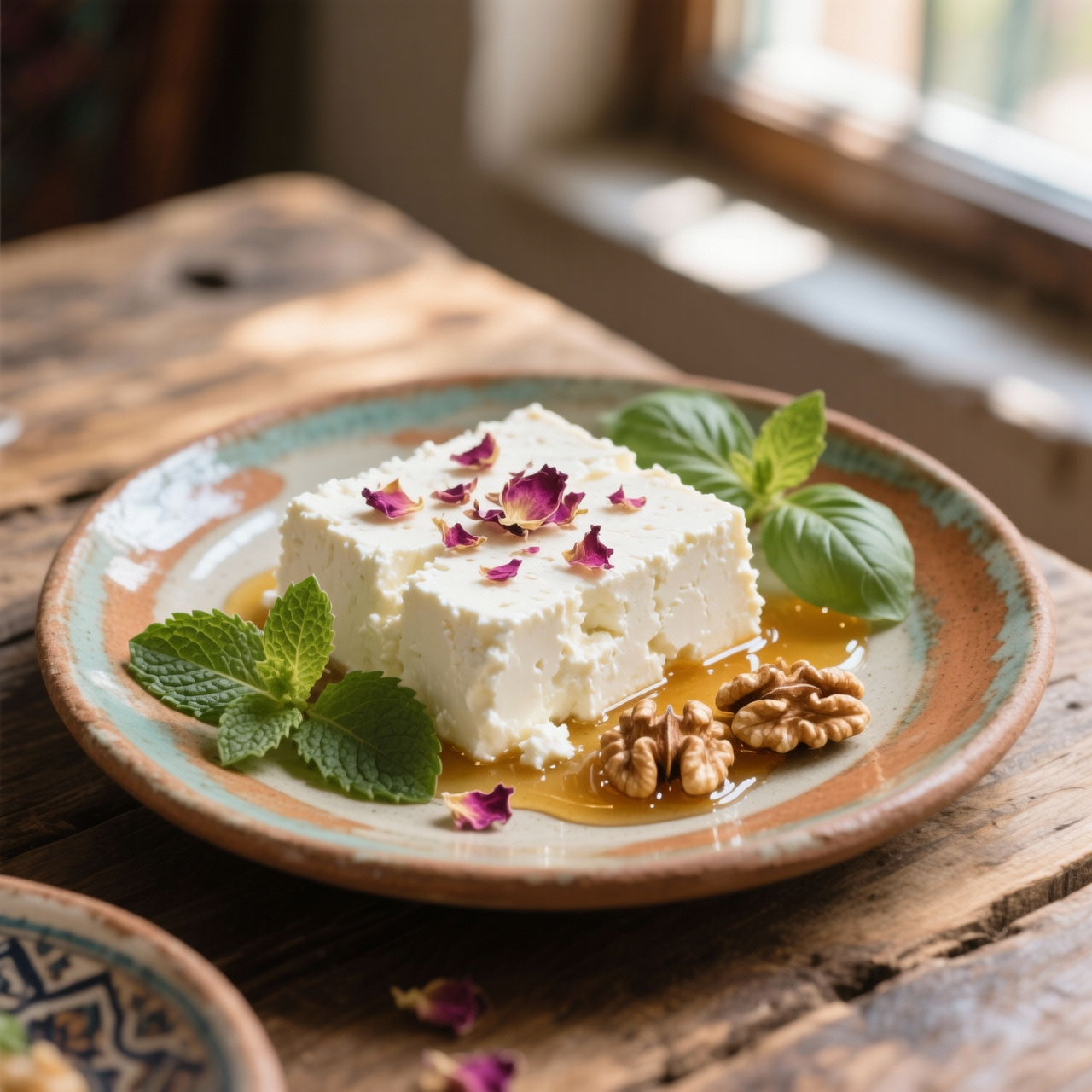
Panir (fresh Persian cheese)
When I first learned to make panir in a sunlit kitchen in Shiraz, I realized why this humble breakfast cheese anchors so many Persian mornings. It’s not merely a dairy product; it’s a quiet ritual. Traditionally, panir is a soft, fresh curd brined to preserve it through hot summers and long journeys. Today, most people grab a plastic tub of factory-made feta or paneer substitutes from the supermarket, paying upwards of six dollars for something that tastes aggressively salty, rubbery, and stripped of any cultural memory. Making it from scratch is a gentle rebellion against those industrial shortcuts. The beauty of panir lies in its simplicity: just whole milk, a touch of acid like fresh lemon juice or vinegar, salt, and patience. Yet, simplicity is where most beginners stumble. The most common pitfall is rushing the curd separation or boiling the milk too fiercely, which yields a tough, crumbly mass instead of the delicate, moist curds you want. Another frequent mistake is under-salting the brine, which leads to a bland, perishable block that lacks that signature bright, clean finish. When you take the time to coax the milk slowly to a gentle simmer, watch the curds form like tiny clouds, and press them lightly under a cool weight, you’re rewarded with a cheese that melts softly on warm sangak bread and pairs perfectly with walnuts, fresh herbs, and sweet tea. It’s vegetarian, deeply nourishing, and costs pennies per batch compared to the sterile blocks lining supermarket shelves. Once you taste the difference, you’ll never look at packaged cheese the same way again.
Nutrition
| Per serving | Calories | Protein | Carbs | Fat | Sat fat | Fibre | Sugar | Sodium |
|---|---|---|---|---|---|---|---|---|
| beginner | 155kcal | 8g | 3g | 11g | 6g | 0g | 2g | 340mg |
| intermediate | 185kcal | 12g | 3g | 14g | 8g | 0g | 3g | 450mg |
| expert | 170kcal | 15g | 2g | 11g | 7g | 0g | 2g | 410mg |
Per serving · Ava-estimated — a guide, not a clinical figure.
- 2000 mlwhole milk— Full-fat milk yields the creamiest texture
- 120 mllemon juice— Freshly squeezed and strained
- 45 gfine sea salt— Use non-iodized salt for best results in both curding and brining
- 1000 mlcold water— Filtered or bottled water preferred for brine
This beginner-friendly approach strips away the intimidation of traditional cheesemaking while staying strictly from-scratch. Instead of precise temperature probes or specialty cultures, we use whole milk and fresh lemon juice to coax out tender curds through gentle heat and natural acidity. The process is highly forgiving: a slightly cooler or warmer milk temperature won’t ruin the batch, and visual cues replace strict thermometry. Watch for the moment the whey turns translucent and the curds pull away cleanly from the pot’s sides—this signals it’s time to strain. Avoid vigorous stirring once the acid hits, as overworking creates a tough, rubbery texture rather than a soft, sliceable breakfast cheese. Commercial panir or feta blocks typically run six to eight dollars at the grocer and rely on stabilizers, excess sodium, and industrial pasteurization that dulls their natural milky sweetness. By making it yourself, you spend a fraction of that cost on just three pantry staples, yielding a bright, clean-tasting cheese that melts softly on the palate. The key is patience during the draining phase; letting gravity do the heavy pressing work guarantees a delicate, flaky crumb perfect for morning spreads or herb pairings.
Equipment
- Heavy-bottomed pot— Stainless steel or enamel-coated; avoid reactive metals
- Fine-mesh sieve— Line with two layers of damp muslin or a clean cotton tea towel
- Kitchen thermometer(optional)— Helpful but not mandatory; steam and visual cues work fine
- Airtight glass container— For curing and storing the brine safely
Method
- 1
Pour the whole milk into the heavy-bottomed pot and warm it over medium-low heat until it gently steams and small bubbles form around the edges.
Do not let the milk reach a rolling boil or scald, as high heat toughens the curds.
scalding~ 8 min - 2
Remove the pot from the heat and slowly drizzle in the fresh lemon juice while stirring once or twice in a gentle figure-eight motion.
Stop stirring immediately once white curds separate from clear yellowish whey.
curdling~ 1 minTricky bit - 3
Let the mixture rest undisturbed until the whey turns mostly clear and the curds settle at the bottom.
The pot should feel warm to the touch; if it cools too quickly, place it near a warm oven vent.
resting~ 10 min - 4
Ladle the curds into the lined sieve and allow them to drain under their own weight for twenty minutes without pressing.
Gravity drainage preserves a soft, sliceable texture; squeezing makes the cheese dense.
draining~ 20 min - 5
Transfer the drained cheese to the glass jar and cover completely with a cooled mixture of water and dissolved salt.
Store in the refrigerator for at least four hours before serving to let the brine penetrate evenly.
brining~ 5 min
Cooking from frozen
Thaw overnight in the refrigerator, then submerge in a fresh salt brine to restore moisture and texture.
Storage times are a guide — always use your judgement and store food safely.