
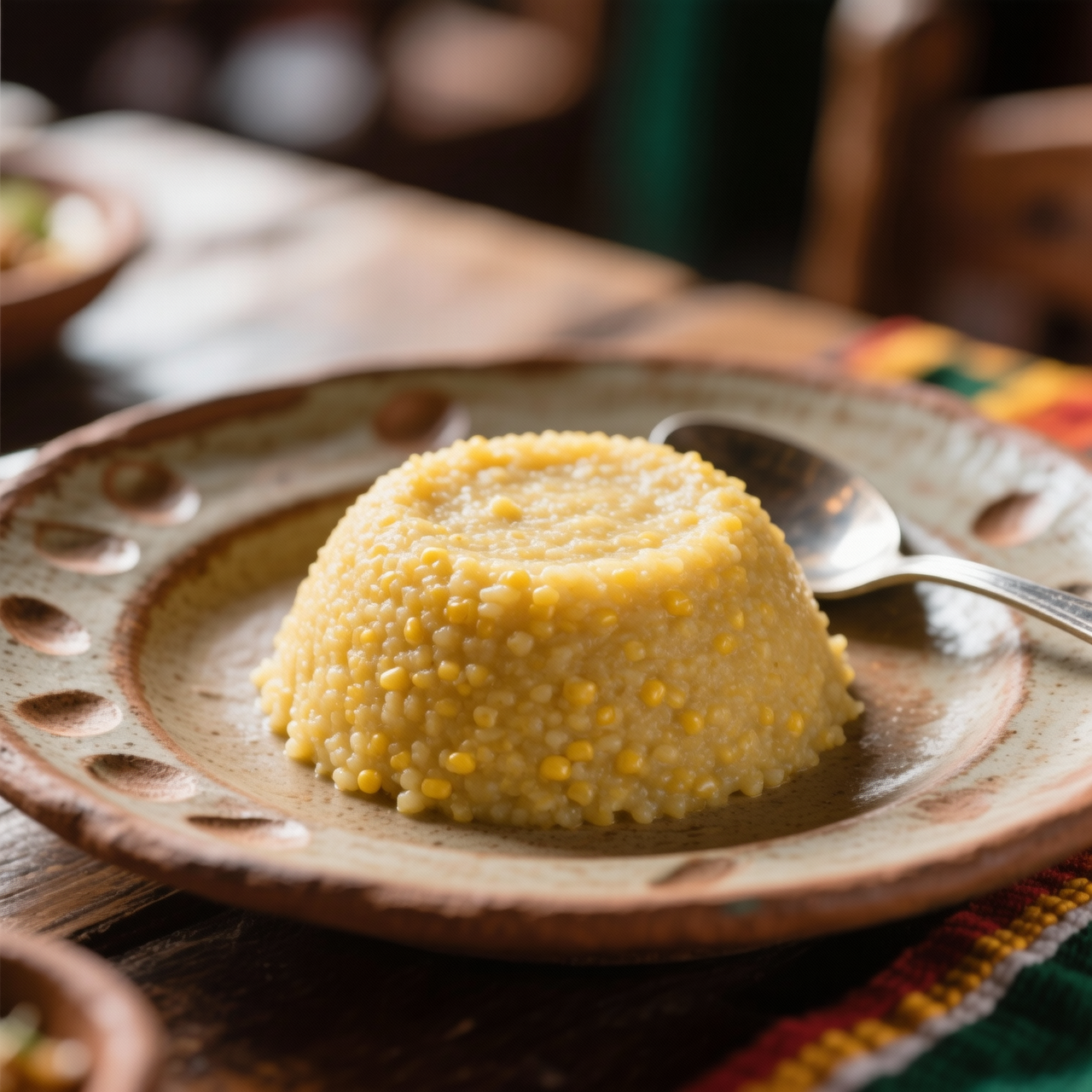
Pap (maize porridge)
I’ve always believed that pap is the quiet heartbeat of the South African table, a dish born from necessity and refined by generations of home cooks who knew how to coax silk from coarse maize meal. Its roots stretch back to indigenous grain traditions that predate colonial trade, eventually evolving into the staple we now call pap. What makes it so vital isn’t just its affordability or its vegan simplicity, but its role as a canvas for stews, chakalaka, and braai leftovers. Yet, I constantly see people surrender to the supermarket aisles, grabbing those foil packets of instant pap that promise speed but deliver a gluey, chalky disappointment. You’re paying nearly three times the price for a product stripped of its natural texture, loaded with stabilisers, and often tasting faintly of cardboard. The real magic happens when you commit to the slow stir, the gradual pour, and the patience to let the maize meal hydrate properly. The most common pitfall is rushing the heat or dumping the meal all at once, which guarantees lumps and a scorched bottom. I’ve learned the hard way that a wide, heavy-based pot, steady medium heat, and a wooden spoon are non-negotiable. When you respect the grain, you get a firm, sliceable staple that holds its shape and carries flavour without apology. Making it from scratch takes barely twenty minutes, costs pennies per serving, and reconnects you to a culinary rhythm that instant mixes simply cannot replicate. It’s not just about saving money; it’s about honouring a dish that has sustained millions with nothing but fire, water, and patience.
Nutrition
| Per serving | Calories | Protein | Carbs | Fat | Sat fat | Fibre | Sugar | Sodium |
|---|---|---|---|---|---|---|---|---|
| beginner | 185kcal | 4g | 38g | 1g | 0g | 4g | 0g | 240mg |
| intermediate | 180kcal | 4g | 36g | 1g | 0g | 4g | 0g | 240mg |
| expert | 180kcal | 4g | 38g | 2g | 0g | 3g | 0g | 45mg |
Per serving · Ava-estimated — a guide, not a clinical figure.
- 250 gmaize meal— Medium grind white maize meal, sifted if clumpy
- 500 mlwater— Room temperature, divided for initial mixing and cooking
- 5 gsalt(optional)— Fine sea salt, adjust to preference
This beginner-friendly approach strips pap down to its absolute essentials, focusing on a forgiving, lump-free technique that guarantees a smooth, stiff result without the need for constant vigilance. Unlike instant or pre-mixed maize meal packets, which cost around $3 per box and rely on refined starches, anti-caking agents, and artificial fortification that dulls the natural corn flavour and yields a gummy, pasty texture, this from-scratch version uses only three pantry staples: coarse white maize meal, water, and salt. The key difference at this level is the “cold water slurry” method, which eliminates the dreaded lumps that plague first-timers. You will simply whisk the meal into cool water before it ever touches the heat, then slowly bring it to a gentle simmer while stirring in one direction. Watch for the critical moment when the mixture thickens and begins to pull away from the pan’s edges—that is your visual cue to stop stirring, cover, and let residual heat finish the job. Resist the urge to crank the burner, as high heat scorches the bottom and creates a bitter crust. With this gentle, low-maintenance rhythm, you will achieve a traditional, clean-tasting staple that forms a perfect base for stews or relishes.
Equipment
- Heavy-bottomed saucepan— stainless steel or enamel works best for even heat distribution
- Wooden spoon— flat edge helps scrape the base without scratching
Method
- 1
Whisk the maize meal into cold water in a large bowl until completely smooth and free of dry pockets.
Starting cold prevents immediate gelatinisation and clumping.
slurry_preparation~ 2 min - 2
Pour the slurry into your pan, add the salt, and place it over medium-low heat.
Gentle initial heat allows the starch to hydrate evenly.
initial_heating~ 1 min - 3
Stir continuously in one direction, scraping the bottom and corners to keep the mixture moving as it warms.
Switch to a steady, rhythmic motion once it starts thickening.
continuous_agitation~ 5 minTricky bit - 4
Reduce the heat to low and stop stirring once the pap thickens and pulls away cleanly from the pan edges.
The surface will look smooth and slightly glossy when ready.
setting~ 2 min - 5
Cover the pan tightly and let it steam undisturbed on the lowest setting until the cook time finishes.
Residual moisture finishes the cooking without scorching.
covered_simmer~ 10 min - 6
Remove from the heat and let it rest off the burner for five minutes before gently turning it out onto a serving dish.
Resting firms the texture for clean slicing or scooping.
carryover_cooking~ 5 min
Cooking from frozen
Thaw overnight in the fridge, then reheat gently with a splash of water while stirring vigorously to restore the original texture.
Storage times are a guide — always use your judgement and store food safely.