
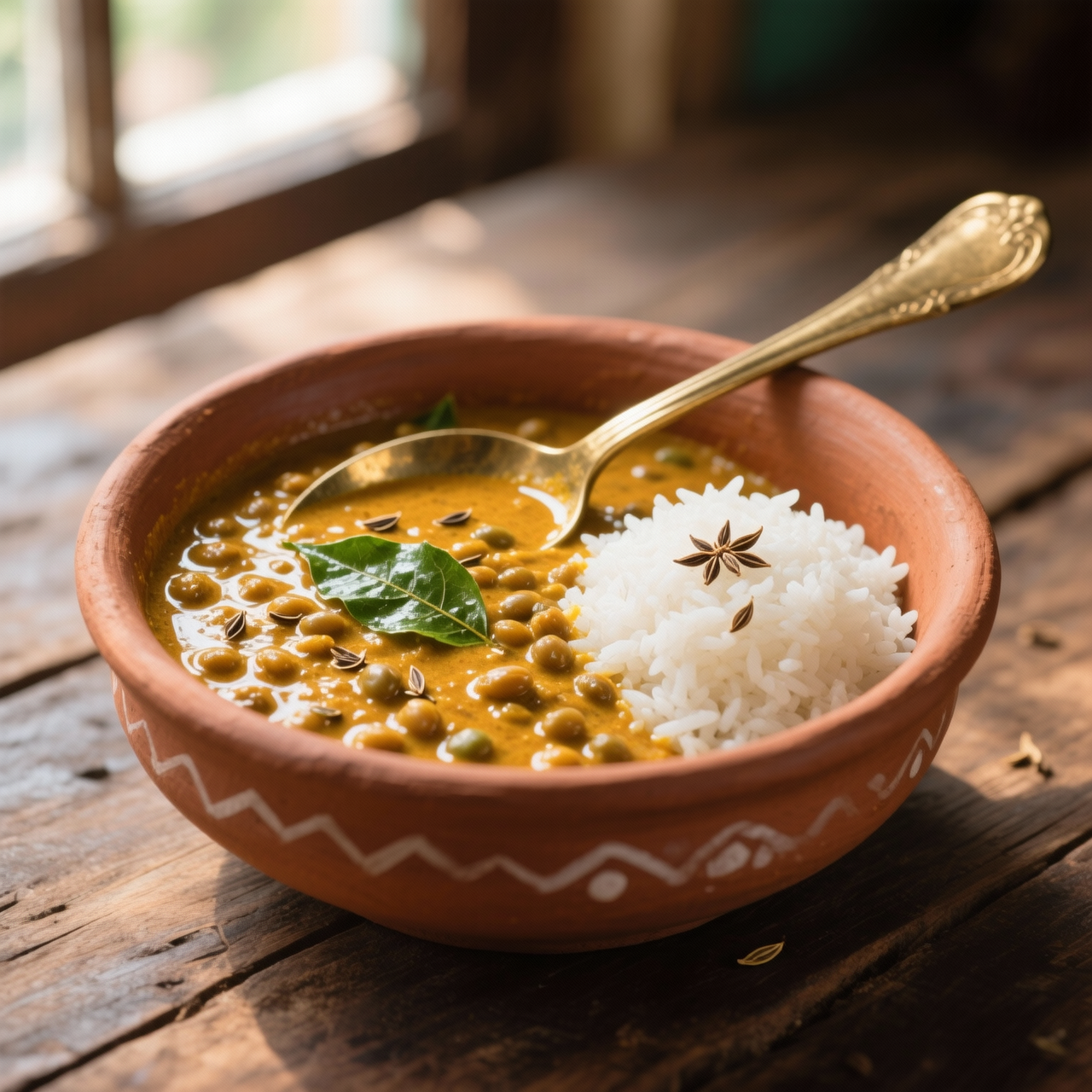
Parippu Dhal Curry
When I first learned to make parippu dhal curry in my grandmother’s sunlit kitchen in Colombo, I quickly understood that this humble lentil stew is the quiet heartbeat of Sri Lankan home cooking. Unlike the heavily spiced curries that often steal the spotlight at festive gatherings, parippu relies on restraint and rhythm. It traces its roots to the island’s ancient agrarian traditions, where split red lentils were prized for their quick cooking time and nourishing warmth, eventually merging with coastal coconut harvests and Portuguese-introduced chili to become the staple it is today. I return to this dish whenever I need comfort, not just for its creamy texture but for how it embodies the Sri Lankan ethos of balance: earthy lentils, rich coconut milk, and a careful bloom of mustard seeds, curry leaves, and pandan. Yet, its simplicity is also its greatest trap. The most common mistake I see is rushing the tempering or boiling the coconut milk too aggressively, which causes it to split and lose its velvety mouthfeel. Another frequent misstep is overcooking the dhal until it turns to mush; you want the lentils tender but still holding their shape, absorbing the spice-infused broth without dissolving entirely. I always remind myself to let the dish rest off the heat for a few minutes before serving, allowing the flavors to marry. When done right, it’s a quiet masterpiece that pairs effortlessly with rice, roti, or even a simple papadam, proving that true culinary depth rarely needs to shout.
Nutrition
| Per serving | Calories | Protein | Carbs | Fat | Sat fat | Fibre | Sugar | Sodium |
|---|---|---|---|---|---|---|---|---|
| beginner | 560kcal | 19g | 51g | 38g | 33g | 8g | 8g | 550mg |
| intermediate | 560kcal | 19g | 51g | 38g | 33g | 8g | 8g | 550mg |
| expert | 560kcal | 19g | 51g | 38g | 33g | 8g | 8g | 550mg |
Per serving · Ava-estimated — a guide, not a clinical figure.
- 250 gred lentil (masoor dhal)— rinsed thoroughly until water runs clear
- 400 mlthick coconut milk— full-fat, well-shaken
- 250 mlthin coconut milk— or water
- 150 gred onion— finely diced
- 4 unitgarlic clove— peeled
- 20 gfresh ginger— peeled
- 15 leafcurry leaf— fresh, wiped clean
- 1 tspmustard seed— black or brown
- 1 tspcumin seed— whole
- 0.5 tspground turmeric— pure, vibrant
- 1.5 tspSri Lankan chili powder— mild or roasted variety
- 30 mlcoconut oil— refined or unrefined
- 5 gfine sea salt— adjust to taste
This version removes the friction of spice preparation so you can focus entirely on timing and texture. Instead of toasting and grinding individual seeds, you will rely on a trusted jarred curry paste that delivers the foundational flavor profile instantly. The goal here is consistency and confidence. Watch the lentils closely as they soften; they must collapse into a smooth, cohesive base before the coconut milk is added. If the mixture thickens too aggressively, splash in a little water to maintain a pourable consistency. The tempering step is simplified to a quick pan sizzle that awakens the mustard seeds without burning them. Keep your heat at medium to prevent the coconut milk from splitting, and resist the urge to rush the simmer. A great beginner batch should coat the back of a spoon without clinging heavily. Taste for salt before serving, and adjust gently. You are building muscle memory here, and the forgiving nature of this approach guarantees a deeply comforting, restaurant-adjacent result on your very first attempt.
Equipment
- medium saucepan— heavy base preferred
- fine mesh sieve— for rinsing lentils
- wooden spoon— heat-resistant
Method
- 1
Rinse the red lentils in a fine mesh sieve under cold running water.
Continue until runoff is completely clear.
rinsing~ 1 min - 2
Place the rinsed lentils and thin coconut milk into a medium saucepan over medium heat.
Cover loosely with a lid.
combining~ 1 min - 3
Simmer uncovered until the lentils completely collapse into a thick paste.
Stir every three minutes to prevent sticking.
simmering~ 10 minTricky bit - 4
Stir in the jarred curry paste and thick coconut milk until fully incorporated.
Use a paste containing equivalent spice ratios.
blending~ 2 min - 5
Heat the coconut oil in a separate small pan until shimmering, then add mustard seeds.
Wait for rapid popping before removing from heat.
tempering~ 1 minTricky bit - 6
Pour the sizzling oil directly over the cooked dhal and stir in the fine sea salt.
Listen for a sharp hiss to confirm proper temperature.
folding~ 1 min