
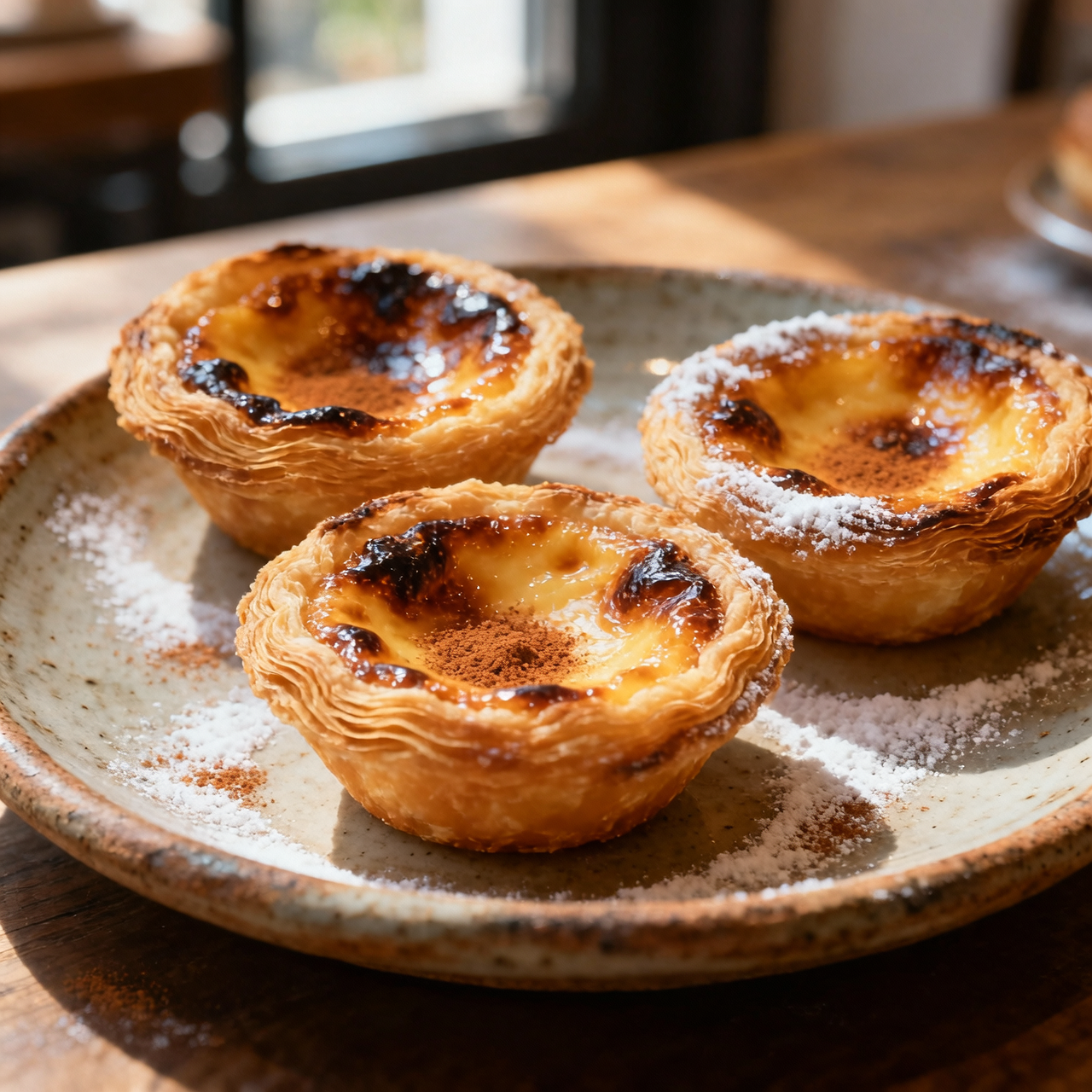
Pasteis de Nata
I first encountered pasteis de nata not in a bustling Lisbon bakery, but through a faded Italian pastry book that somehow crossed paths with my grandmother’s kitchen. While the dish is undeniably Portuguese, born in the eighteenth century at the Jerónimos Monastery in Belém, its soul resonates with the broader Mediterranean reverence for simple, precise ingredients. To me, these custard tarts matter because they are a quiet lesson in patience and balance. The flaky, laminated dough must be rolled thin enough to shatter, yet sturdy enough to hold a rich, vanilla-kissed custard that caramelizes into a blistered, golden crown. Yet, so many bakers rush the process, and that is where the magic unravels. The most common pitfall I see is neglecting the dough’s rest; without adequate chilling, the butter weeps into the flour, yielding a tough, greasy crust instead of delicate layers. Another frequent misstep is overbaking or underbaking the filling. The custard must be poured into pre-baked shells and cooked at a fiercely hot temperature so the top scorches beautifully while the center remains luxuriously set. When you respect the rhythm of folding, resting, and watching the oven’s fierce heat, you are not merely baking a dessert—you are honoring centuries of monastic ingenuity and cross-cultural pastry craft. Every blistered top tells a story of restraint, and every bite is a quiet triumph over haste.
Nutrition
| Per serving | Calories | Protein | Carbs | Fat | Sat fat | Fibre | Sugar | Sodium |
|---|---|---|---|---|---|---|---|---|
| beginner | 330kcal | 5g | 38g | 18g | 10g | 1g | 19g | 190mg |
| intermediate | 330kcal | 5g | 38g | 18g | 10g | 1g | 19g | 190mg |
| expert | 330kcal | 5g | 38g | 18g | 10g | 1g | 19g | 190mg |
Per serving · Ava-estimated — a guide, not a clinical figure.
- 300 gall-purpose flour— high-protein preferred for lamination
- 150 gunsalted butter— cold, European-style fat content
- 120 mlcold water— ice temperature for dough tension
- 5 gfine sea salt— for dough seasoning
- 480 mlwhole milk— full-fat for custard richness
- 120 mlheavy cream— 35% fat minimum
- 6 piecelarge egg yolk— room temperature
- 200 ggranulated sugar— divided for syrup and filling
- 1 piecelemon zest strip— pith removed
- 1 piececinnamon stick— whole, for infusion
This version prioritizes accessibility and confidence over traditional complexity. You will rely on pre-rolled puff pastry sheets and a simplified stovetop custard method that eliminates the need for precise temperature control or extended resting periods. The goal here is to demystify the assembly process and deliver a reliably crisp shell with a smooth, vanilla-kissed filling on your very first attempt. Watch your oven temperature closely, as domestic ovens often run cooler than professional decks; an instant-read thermometer near your baking tray will prevent the dreaded pale, under-baked crust. When preparing the filling, whisk vigorously to incorporate air, then strain it immediately to catch any accidental curds before they set. Avoid overworking the dough once it touches the pan, as finger heat will melt the butter layers and ruin the flakiness you are trying to preserve. The shortcut does not mean cutting corners on flavor; it means directing your attention toward the elements that matter most. By focusing on even distribution and aggressive heat, you will achieve that signature blistered surface without the intimidation of manual lamination. This is your gateway to mastering one of the world’s most beloved pastries.
Equipment
- standard muffin tin— lightweight aluminum works best
- pastry brush— silicone bristles preferred
- mixing bowls— stainless steel or glass
Method
- 1
Unroll the pre-made pastry sheets and cut twelve even circles using a round cutter.
Press gently to avoid compressing layers.
cutting~ 5 min - 2
Press each dough circle firmly into a standard muffin tin until it conforms to the base.
Leave slight overhang for shrinkage.
molding~ 3 min - 3
Combine milk, cream, sugar, and citrus zest in a saucepan over medium heat until steaming.
Do not boil.
infusing~ 4 min - 4
Whisk egg yolks into the hot dairy mixture slowly to prevent scrambling.
Constant motion required.
tempering~ 2 minTricky bit - 5
Strain the custard through a fine mesh sieve and pour into each prepared shell.
Leave one centimeter headspace.
straining~ 3 min - 6
Bake at maximum oven temperature until the custard blisters and the crust turns golden.
Rotate tray halfway.
caramelization~ 15 minTricky bit