
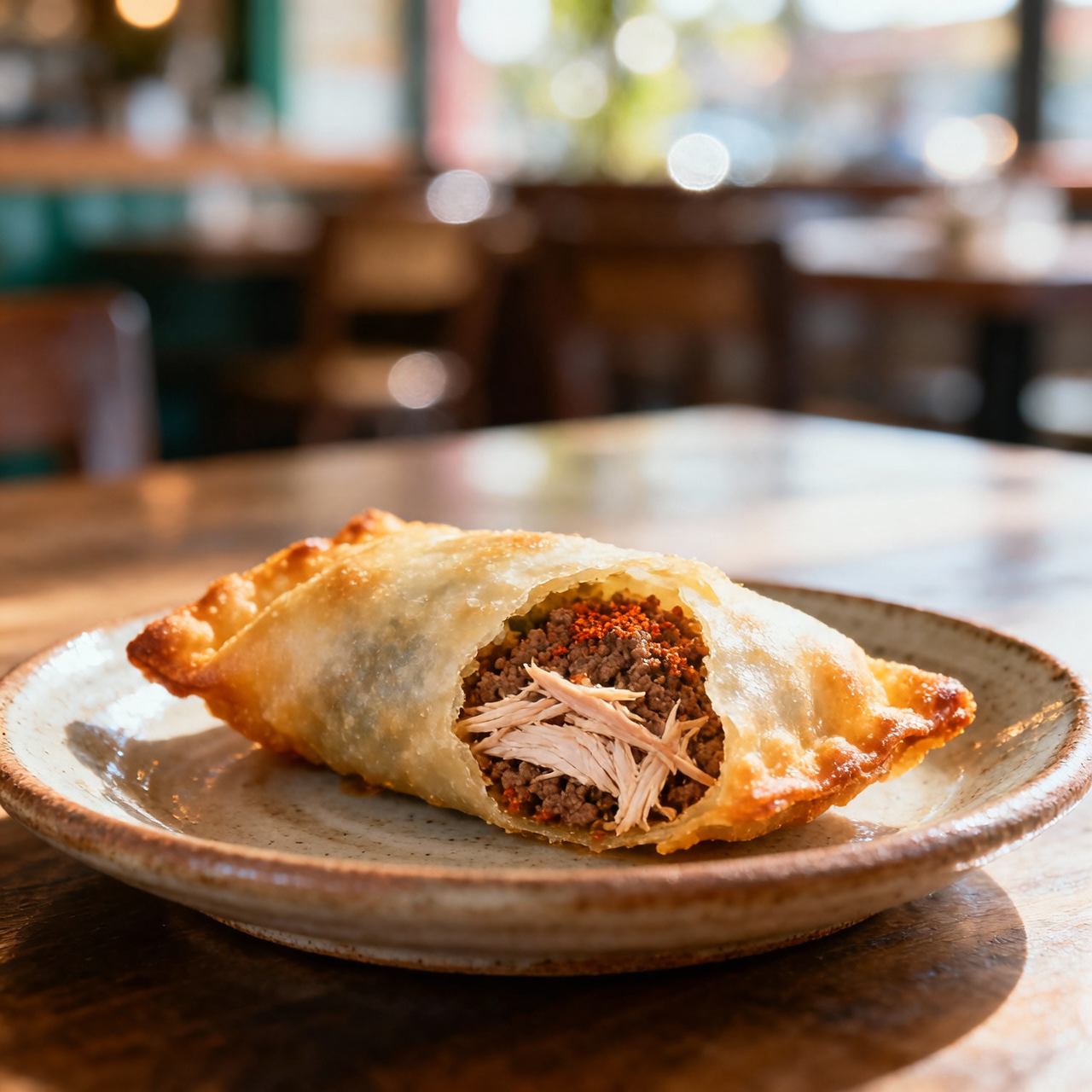
Pastel
I’ve always believed that the true soul of a Brazilian street market lives in the humble pastel. Originating from Japanese immigrants adapting their fried dumplings to local tastes in the 1940s, this crispy, blistered turnover is a masterpiece of texture and flavor. When you rely on the frozen, shop-bought versions found in supermarket aisles, you’re paying nearly two dollars a pop for a greasy, thick-crusted disappointment filled with bland, heavily processed meat that tastes more like cardboard than beef. Making pastel from scratch is a revelation; the cost per portion drops significantly, and the flavor leaps into the stratosphere. The secret lies entirely in the dough. A common pitfall is rolling it too thick or using a leavened dough, which results in a heavy, bread-like shell rather than a shatteringly crisp, delicate blister. You want a simple, unleavened mixture of flour, water, a touch of salt, and a splash of cachaça or vinegar to inhibit gluten and create those signature bubbles. For the filling, we use freshly ground beef, slowly simmered with real onions, garlic, and a touch of paprika, completely avoiding any stock cubes or packet seasonings. As a batch hero, these uncooked, filled pastels freeze beautifully. You can spend a Sunday rolling and stuffing dozens, laying them flat on a tray to freeze solid before bagging them. This means you’ll always have a superior, from-scratch snack ready to drop straight into hot oil, completely bypassing the overpriced, underwhelming frozen aisle.
Nutrition
| Per serving | Calories | Protein | Carbs | Fat | Sat fat | Fibre | Sugar | Sodium |
|---|---|---|---|---|---|---|---|---|
| beginner | 837kcal | 26g | 50g | 52g | 16g | 4g | 5g | 750mg |
| intermediate | 820kcal | 24g | 48g | 58g | 22g | 4g | 5g | 750mg |
| expert | 850kcal | 35g | 75g | 45g | 14g | 4g | 4g | 600mg |
Per serving · Ava-estimated — a guide, not a clinical figure.
- 500 gground beef— lean, such as sirloin or round
- 150 gonion— finely chopped
- 10 ggarlic— minced
- 100 gtomato— seeded and finely diced
- 500 gwheat flour— all-purpose
- 200 mlwater— cold
- 50 mlvegetable oil— for the dough
- 30 mlcachaça— adds crispiness to the dough
- 15 gsalt— divided for filling and dough
- 5 gblack pepper— freshly ground
Shop-bought pasteis cost around $2 each and rely on highly processed dough loaded with margarine, preservatives, and artificial flavors, while the filling often uses low-grade meat and excessive sodium. This beginner from-scratch version delivers a superior, blistered crunch using real oil and fresh ground beef, completely avoiding the industrial aftertaste. The technique here skips complex lamination; instead, we use a simple, relaxed dough enriched with a splash of vinegar, which inhibits gluten formation and guarantees a crispy fry without the fuss. The filling is a straightforward, deeply flavored refogado that cools while the dough rests. Watch your oil temperature closely: if it’s too hot, the pastry burns before the filling heats through; if it’s too cool, the dough absorbs excess oil and becomes greasy. Also, ensure your filling is completely cold before wrapping, otherwise the heat will melt the fat in the dough and cause leaks during frying. This approach yields a forgiving, highly rewarding batch that freezes beautifully for future cravings.
Equipment
- Heavy-bottomed pot or deep fryer— essential for maintaining stable oil temperature
- Skillet— for cooking and reducing the filling
- Rolling pin— a pasta machine works best for achieving paper-thin dough
Method
- 1
Cook the ground beef with diced onion, minced garlic, and grated fresh tomato until the liquid evaporates, then stir in chopped black olives and let the filling cool completely.
The filling must be completely cold to prevent the dough from tearing and leaking during frying.
reducing~ 15 min - 2
Whisk together flour, salt, oil, water, and a splash of white vinegar until a shaggy dough forms, then knead briefly until smooth and rest it covered for twenty minutes.
The vinegar inhibits gluten development, ensuring a crispy, blistered crust without needing complex lamination.
resting~ 20 min - 3
Roll the dough out paper-thin on a lightly floured surface and cut it into uniform rectangles or circles using a pastry wheel or sharp knife.
Roll it as thin as possible; the dough will puff and blister dramatically when it hits the hot oil.
sheeting~ 10 min - 4
Place a spoonful of the cold filling onto each dough piece, fold over to enclose, and firmly crimp the edges with a fork to seal.
Press out any trapped air pockets before sealing to prevent the pastel from bursting in the fryer.
crimping~ 10 minTricky bit - 5
Fry the pasteis in batches in deeply heated oil until they are golden brown and blistered, then drain them upright on a wire rack.
Maintain the oil at 180C; if it drops, the pastry will absorb excess oil and become greasy.
deep frying~ 10 minTricky bit
Cooking from frozen
Fry directly from frozen, adding a minute or two to the cooking time until golden and crisp.
Storage times are a guide — always use your judgement and store food safely.