
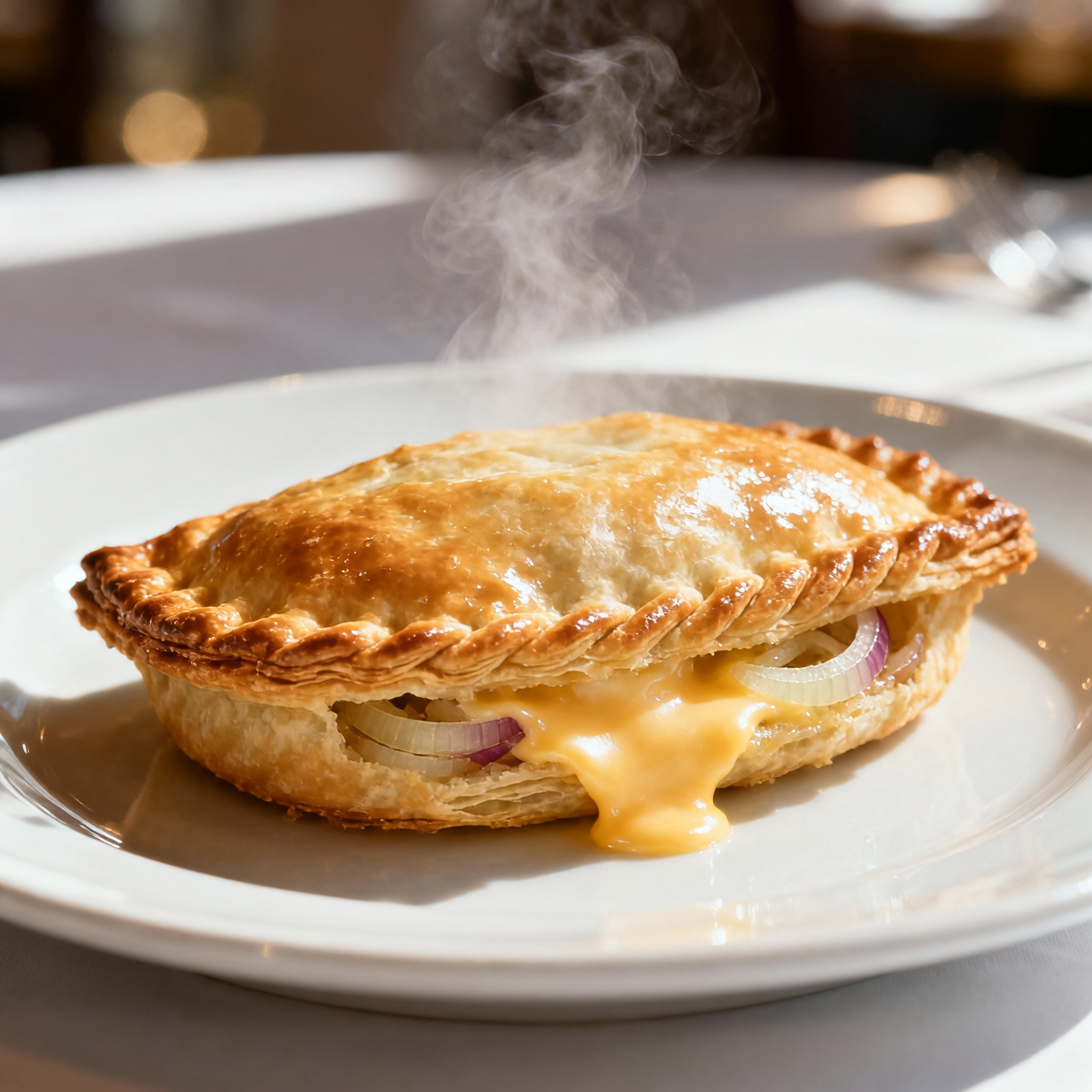
Pasty (cheese & onion)
I find there is a profound comfort in a proper cheese and onion pasty. While the meat-filled Cornish pasty gets all the historical glory, I believe the vegetarian cheese and onion variant has been a beloved staple across Britain for generations, offering a deeply savoury, melty centre encased in robust pastry. When you buy these from a supermarket for about two pounds each, you are usually met with a tragic disappointment: a pale, flabby crust that shatters into dust, hiding a mushy onion filling and rubbery cheese, all pumped full of palm oil and preservatives. I always say making them from scratch is a revelation. You get a rich, buttery shortcrust and a filling of properly caramelised onions and sharp, mature cheddar. The secret to a flawless pasty lies in temperature. The biggest pitfall I see is a soggy bottom or burst seams. To avoid this, your pastry fat must be ice-cold, and you must never overfill the centre, leaving a generous border to crimp tightly. Because they are the ultimate batch hero, I recommend making a large batch, crimping them raw, and freezing them solid on a tray before bagging. This means I can bake them straight from frozen whenever the craving strikes, yielding a golden masterpiece that completely eclipses any shop-bought imitation. It is a bit of work, but the reward of a truly authentic, unprocessed bake is worth every minute.
Nutrition
| Per serving | Calories | Protein | Carbs | Fat | Sat fat | Fibre | Sugar | Sodium |
|---|---|---|---|---|---|---|---|---|
| beginner | 650kcal | 18g | 65g | 35g | 20g | 4g | 3g | 600mg |
| intermediate | 680kcal | 16g | 54g | 45g | 25g | 4g | 3g | 475mg |
| expert | 430kcal | 14g | 45g | 22g | 14g | 4g | 4g | 650mg |
Per serving · Ava-estimated — a guide, not a clinical figure.
- 250 gplain flour— plus extra for dusting
- 5 gsalt— divided between pastry and filling
- 125 gbutter— cold and diced
- 60 mlwater— ice cold
- 200 gmature cheddar cheese— cut into small cubes
- 300 gonion— finely diced
- 2 gblack pepper— freshly ground
- 1 largeegg— beaten, for glazing
Shop-bought cheese and onion pasties often cost around £3 to £4 each and are typically laden with palm oil, emulsifiers, and dehydrated onion powder to cut costs and extend shelf life. The pastry is usually tough and lacks the rich, buttery flavor of a true Cornish-style bake. This beginner version strips away those processed shortcuts, relying entirely on real, recognizable ingredients: a simple, forgiving shortcrust pastry made from scratch with real butter, and a fresh, chunky filling of potatoes, onions, and mature cheddar. At this level, the technique is simplified for a confident first attempt. We use a straightforward hand-rubbed pastry method and a rough dice for the vegetables, which actually helps them steam evenly inside the crust without needing a food processor. The key thing to watch for is keeping the butter ice-cold when making the dough, and ensuring the filling is completely cool before sealing the pasties to prevent the butter from melting out during the crimp. This approach guarantees a flaky, golden crust and a deeply savory, wholesome filling that easily beats the processed supermarket alternatives.
Equipment
- Large mixing bowl— for making the pastry dough
- Rolling pin— to roll out the shortcrust
- Baking sheet— lined with parchment paper
- Pastry brush(optional)— for applying the milk wash
Method
- 1
Rub the cold, cubed butter into the flour and salt until the mixture resembles fine breadcrumbs, then stir in ice-cold water to bring the dough together.
Keep everything as cold as possible to ensure a flaky crust.
rubbing in~ 5 min - 2
Wrap the dough in cling film and chill in the refrigerator for at least thirty minutes.
This relaxes the gluten and firms up the butter.
resting~ 30 min - 3
Peel and dice the potatoes and onions into small, uniform half-centimetre cubes, then toss them in a bowl with the grated cheese, salt, and black pepper.
A rough, small dice ensures the vegetables cook evenly inside the pastry.
dicing~ 10 min - 4
Roll out the chilled pastry on a lightly floured surface and cut it into four equal, large circles.
Use a plate or bowl as a guide if you do not have a pastry cutter.
rolling~ 5 min - 5
Mound the filling onto one half of each pastry circle, leaving a clear two-centimetre border around the edge.
Do not overfill, or the pasties will burst during baking.
filling~ 4 min - 6
Fold the empty half of the pastry over the filling, press the edges firmly to seal, and crimp them tightly by folding and pinching the dough.
A tight crimp is essential to lock in the savory juices.
crimping~ 5 minTricky bit - 7
Brush the pasties with a little milk, score a small steam vent in the top of each, and bake until the pastry is deeply golden and crisp.
The steam vent prevents the pasties from splitting open in the oven.
baking~ 45 min
Cooking from frozen
Bake directly from frozen at 200C for 35-40 minutes until golden and piping hot.
Storage times are a guide — always use your judgement and store food safely.