
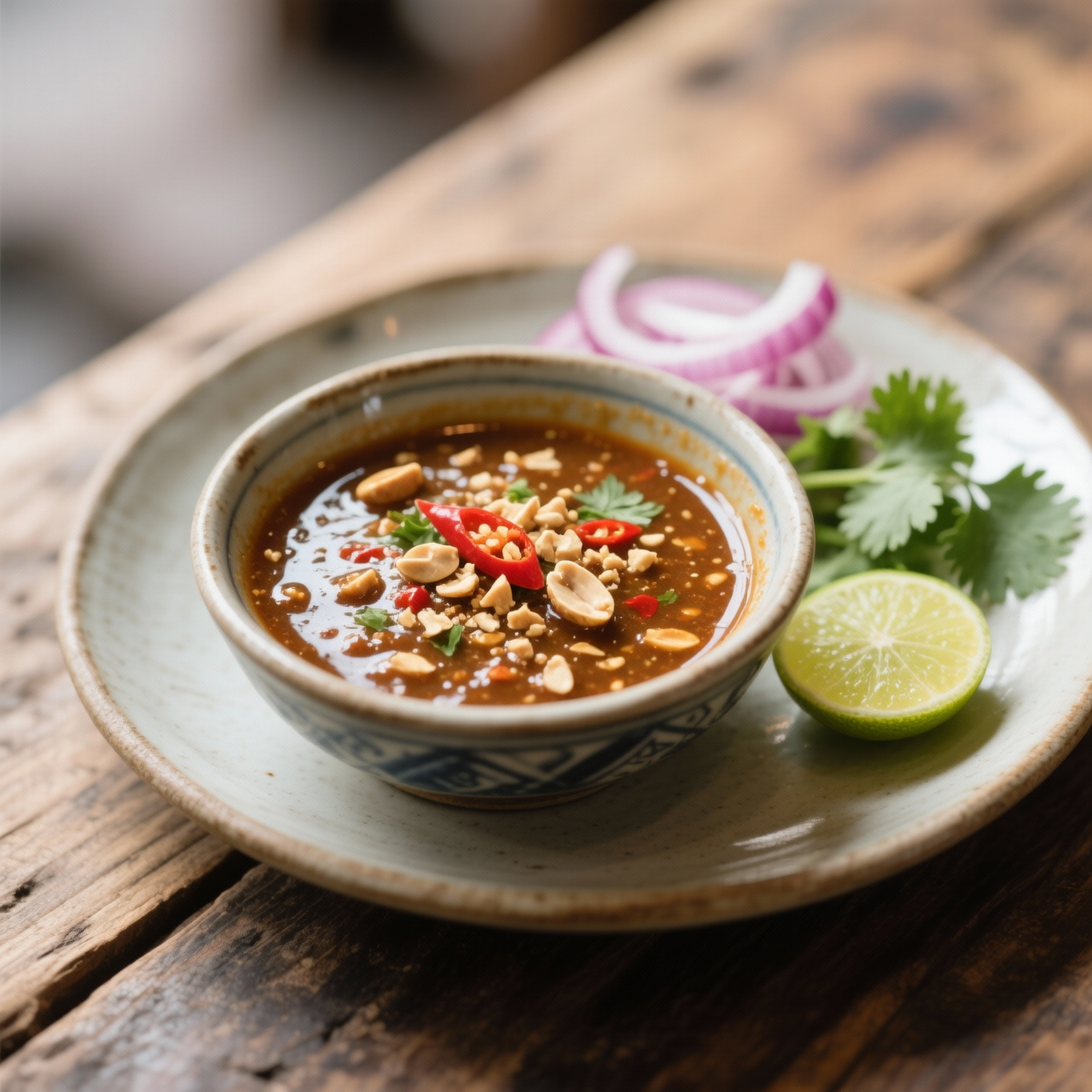
Peanut Satay Sauce
I’ve always believed that the true soul of a kitchen lives in its sauces, and few capture that warmth quite like a properly crafted satay. While modern street vendors and restaurant menus have globalized this peanut-rich staple, its roots run deep into the spice-laden trade routes of maritime Southeast Asia, eventually finding a beloved home in Thai street food culture. What makes this vegan version so vital to me isn’t just the creamy, roasted depth of the peanuts, but the way it bridges comfort and complexity. A great satay sauce should cling to vegetables or tofu with a velvety grace, balancing sweet, salty, sour, and a quiet hum of heat. Yet, I see cooks stumble at the same crossroads every time: rushing the simmer, overcooking the coconut milk until it splits into oil and solids, or drowning the delicate aromatics in heavy sugar. The magic happens in patience. You must coax the paste gently, allowing the toasted peanuts and fresh galangal to marry slowly over low heat. Don’t fear a little water or extra lime juice to loosen it toward the end, and never skip the resting period. Let it sit off the heat for ten minutes before you even think of serving it; the flavors need that quiet moment to settle and deepen. When you finally lift a spoonful, it should coat the back without slipping away too quickly. That’s your sign. Jar it while it’s still warm, seal it tight, and you’ve got weeks of effortless dinners waiting in your pantry. It’s not just a condiment. It’s a promise of ease, ready whenever you are.
Nutrition
| Per serving | Calories | Protein | Carbs | Fat | Sat fat | Fibre | Sugar | Sodium |
|---|---|---|---|---|---|---|---|---|
| beginner | 210kcal | 7g | 9g | 17g | 5g | 2g | 6g | 420mg |
| intermediate | 240kcal | 7g | 12g | 18g | 6g | 2g | 8g | 320mg |
| expert | 310kcal | 8g | 14g | 26g | 12g | 3g | 6g | 380mg |
Per serving · Ava-estimated — a guide, not a clinical figure.
- 200 groasted peanut— Unsalted, finely ground
- 400 mlcoconut milk— Full-fat canned variety
- 45 mlsoy sauce— Use tamari for gluten-free
- 40 gpalm sugar— Grated or finely chopped
- 25 gvegan red curry paste— Verify no shrimp paste is included
- 15 ggarlic— Peeled and minced
- 15 gfresh ginger— Peeled and finely grated
- 30 mllime juice— Freshly squeezed
- 120 mlwater— Adjust during simmering for desired consistency
This beginner-friendly approach prioritizes confidence and speed by leaning on high-quality store-bought curry paste instead of grinding whole spices from scratch. The goal is to demystify the simmering process while delivering a rich, restaurant-style sauce you can proudly serve or store for later. You will start by gently warming the jarred paste in a splash of neutral oil to wake up the aromatics without scorching them. Next, whisk in creamy coconut milk, a touch of smooth peanut butter for body, and your chosen sweetener, letting the mixture bubble softly rather than boil vigorously. Constant stirring is your safety net here, as the natural sugars and nut oils can cling to the pan quickly. Watch closely for the moment the sauce thickens enough to coat the back of a spoon, which signals it is ready. Taste and adjust with a splash of acid to cut through the richness. Once cooled slightly, ladle the sauce into clean, airtight glass jars for effortless meal prep or batch freezing. This streamlined method guarantees a smooth, emulsified result on your very first try, removing guesswork and building foundational skills for future Thai-inspired cooking.
Equipment
- Medium heavy-bottomed saucepan— non-stick works well for easy cleanup
- Silicone whisk— helps blend thick peanut butter smoothly
- Glass storage jars(optional)— heat-safe for warm sauce transfer
Method
- 1
Heat a neutral oil in your saucepan over medium-low heat and add the jarred curry paste.
Stir constantly for 30 seconds until fragrant to avoid burning.
blooming~ 1 min - 2
Pour in the coconut milk, smooth peanut butter, and sweetener, then whisk until fully combined.
If the peanut butter is cold, let it sit at room temperature for easier mixing.
emulsifying~ 2 min - 3
Bring the mixture to a gentle simmer and cook for ten minutes, stirring frequently with a spatula.
Reduce heat immediately if bubbles become aggressive or sauce starts sticking.
reducing~ 10 minTricky bit - 4
Remove from heat and stir in lime juice or vinegar to brighten the flavor profile.
Taste and adjust salt or sweetness before cooling.
balancing~ 1 min - 5
Allow the sauce to cool slightly before transferring it into sterilized glass jars for refrigeration or freezing.
Leave a quarter-inch headspace to account for expansion if freezing.
jarring~ 3 min
Cooking from frozen
Thaw overnight in the refrigerator and whisk in a splash of warm water to restore its silky emulsion.
Storage times are a guide — always use your judgement and store food safely.