
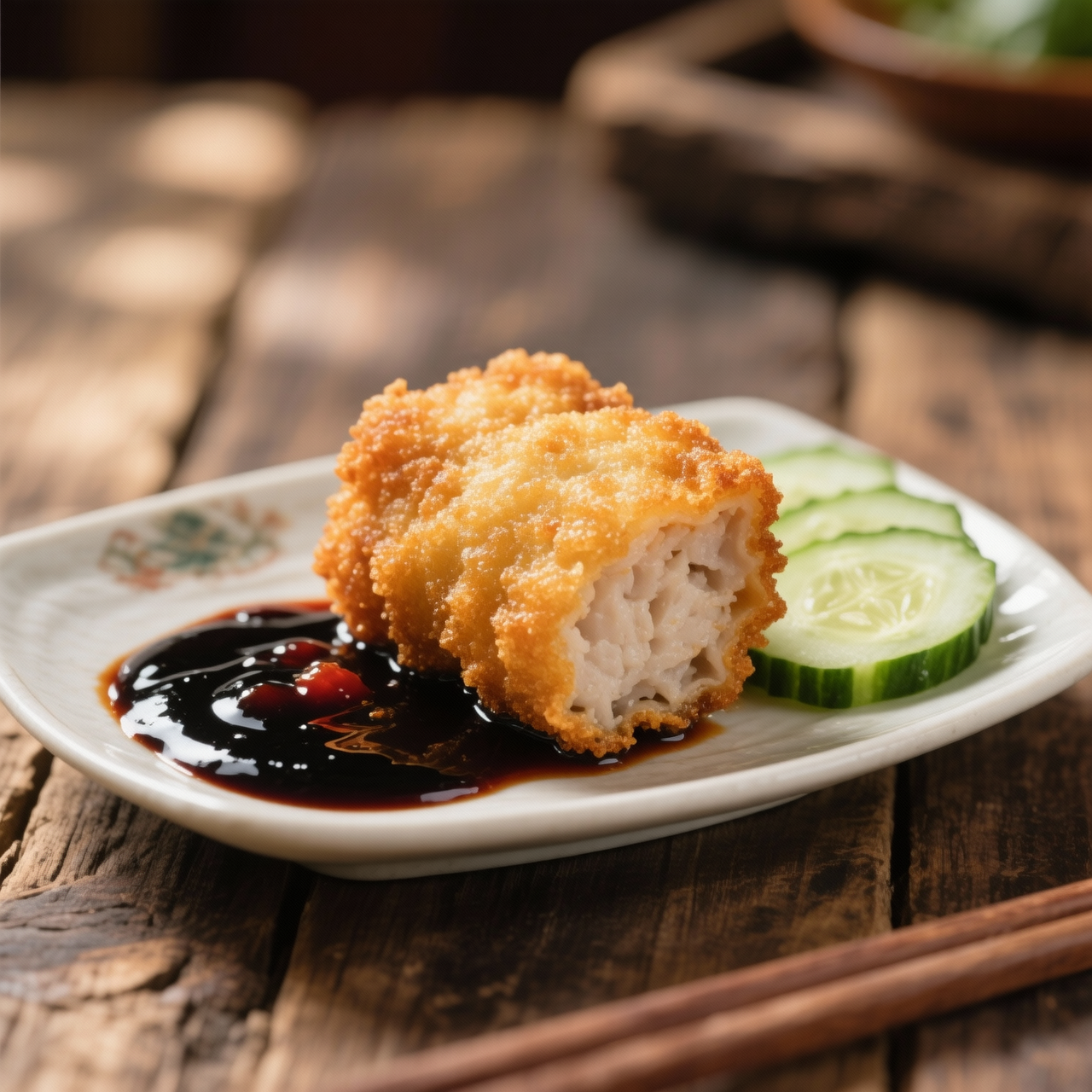
Pempek (Fish Cake)
I first fell for pempek on a humid street corner in Palembang, watching vendors pull chewy, golden cakes from bubbling oil and drench them in dark, sweet-sour kuah cuka. These aren’t just fish cakes; they’re a testament to the ingenuity of coastal Sumatran cooks who turned modest mackerel and tapioca into something transcendent. When you make them from scratch, you’re reclaiming a craft that mass-produced versions have quietly flattened. Those frozen supermarket packs usually run around five dollars for a plastic-wrapped tray of rubbery, heavily breaded discs that taste faintly of freezer burn and artificial seasoning. They skip the vital resting phase, overwork the dough, and drown everything in stabilizers, leaving you with a snack that lacks that signature springy bite and clean ocean sweetness. Making them yourself is surprisingly forgiving once you respect the ratios. The biggest pitfall is rushing the emulsion—if you add the ice water too fast or knead the dough past the point of tackiness, the starch will turn gummy instead of bouncy. You also can’t skimp on the resting time; the dough needs those quiet hours in the fridge to let the gluten and tapioca hydrate evenly before shaping. I always keep a damp towel over my bowl while I work, and I shape each piece just before the water hits a rolling boil. The result is a deeply satisfying pescatarian staple that freezes beautifully in batches. You’ll taste the difference in every bite: clean, elastic, and ready to soak up that sharp, vinegar-forward dipping sauce. It’s a little project that rewards patience, and once you’ve made your own, the shop-bought kind simply loses its place in your pantry.
Nutrition
| Per serving | Calories | Protein | Carbs | Fat | Sat fat | Fibre | Sugar | Sodium |
|---|---|---|---|---|---|---|---|---|
| beginner | 360kcal | 22g | 34g | 8g | 2g | 1g | 12g | 320mg |
| intermediate | 380kcal | 16g | 48g | 14g | 3g | 1g | 14g | 620mg |
| expert | 360kcal | 21g | 45g | 12g | 2g | 2g | 16g | 340mg |
Per serving · Ava-estimated — a guide, not a clinical figure.
- 250 gTenggiri fish fillet— Skinless, deboned, and kept very cold until ready to use
- 150 gTapioca flour— Sifted before measuring to remove clumps
- 80 mlIce water— Added gradually to maintain a cool dough temperature
- 3 cloveGarlic— Peeled and finely minced or crushed into a paste
- 5 gSalt— Fine sea salt for seasoning the fish paste
- 1 largeEgg(optional)— Lightly beaten at room temperature to improve dough elasticity
Store-bought frozen fish snacks run $4–$6 per pack but rely on cheap fillers, excessive sodium, and artificial flavorings that mask low fish content. This beginner-friendly approach skips the intimidating traditional ice-water kneading by using a quick-boil tapioca method that guarantees a foolproof, chewy bind every time. You will work with simple, whole ingredients: fresh white fish fillets, pure tapioca starch, and a pantry-based cuko sauce made by simmering rice vinegar, palm sugar, fresh chilies, and garlic. The dough requires minimal handling to stay tender, and the sauce thickens naturally without commercial stabilizers. Watch the boiling step closely—once the cakes float, they need just two more minutes to set. Overmixing is the only real pitfall, so fold gently until the dough just comes together. The result is a light, springy interior with a crisp exterior that completely outclasses the rubbery commercial alternatives, while the tangy-sweet sauce delivers the authentic Palembang punch without any bottled shortcuts.
Equipment
- Food processor— keeps the fish cold and paste smooth
- Heavy-bottomed pan— essential for even starch heating
- Slotted spoon— for transferring cakes safely
Method
- 1
Pulse the fish fillets with salt and minced garlic in a food processor until a smooth, sticky paste forms.
Keep the motor running in short bursts to avoid warming the protein.
binding~ 2 min - 2
Bring water to a rolling boil in a saucepan, then whisk in tapioca starch until the mixture turns translucent and thick.
Work quickly before it cools, as the starch will set rapidly.
gelatinization~ 3 minTricky bit - 3
Fold the hot starch mixture into the fish paste using a spatula until a cohesive, slightly tacky dough forms.
Do not overwork the dough or the cakes will turn tough and dense.
folding~ 3 min - 4
Shape the dough into 3-inch logs, then gently lower them into a large pot of simmering water.
The cakes are done when they bob to the surface; let them float for exactly two minutes.
poaching~ 8 min - 5
Simmer rice vinegar, palm sugar, water, sliced chilies, and crushed garlic until the liquid reduces to a glossy, syrupy consistency.
Taste and balance the tang and sweetness before removing from heat.
reducing~ 10 min - 6
Drain the poached cakes thoroughly and shallow-fry them in neutral oil until golden and crisp on all sides.
Pat them completely dry first to prevent dangerous oil splatter.
shallow-frying~ 5 minTricky bit
Cooking from frozen
Thaw overnight in the fridge, then deep-fry or air-fry straight from cold until golden and crisp.
Storage times are a guide — always use your judgement and store food safely.