
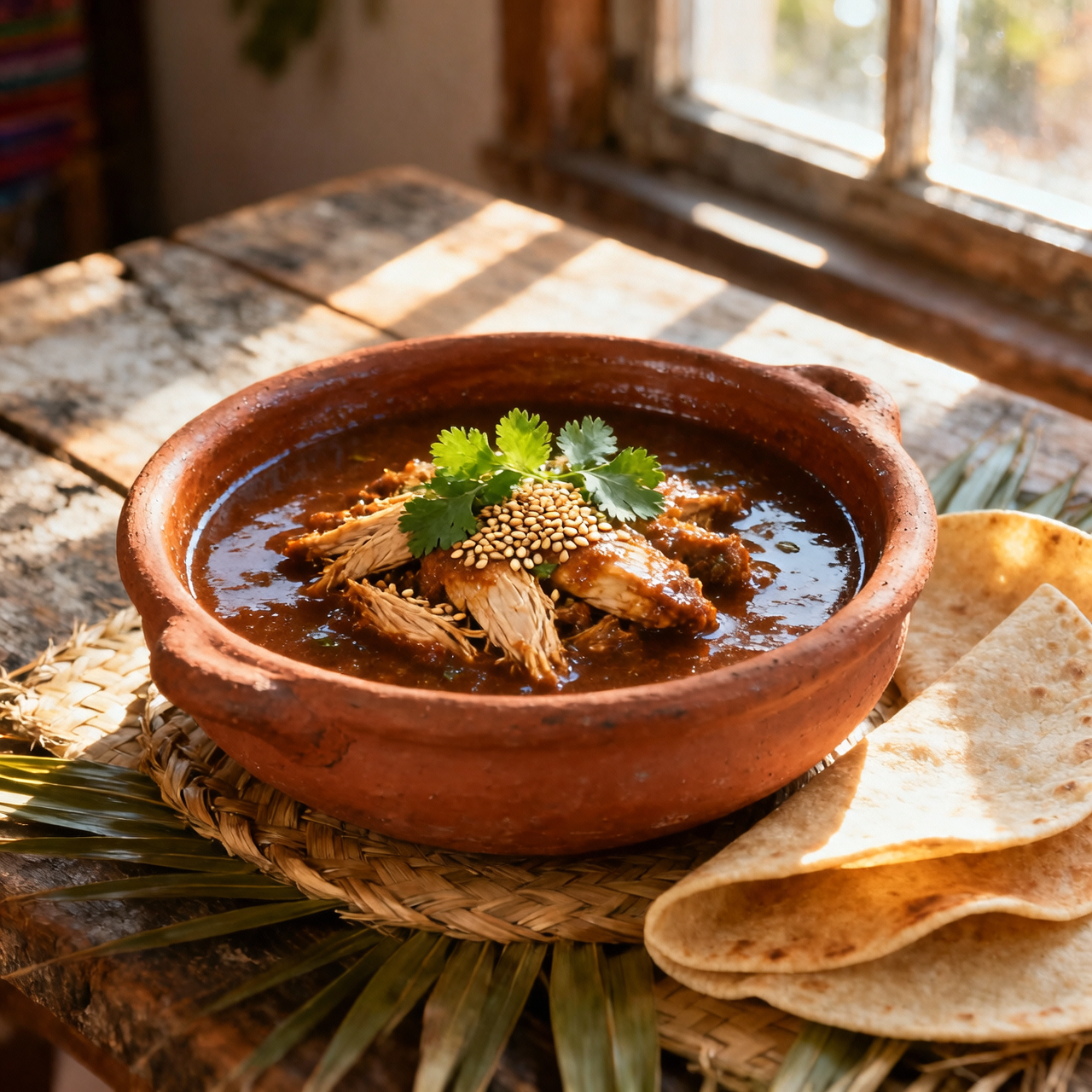
Pepian
When I first learned to coax pepian to life in my kitchen, I quickly understood why it’s often called the soul of Guatemalan cooking. This rich, deeply spiced stew traces its lineage back centuries, weaving together ancient Maya seed-based sauces and the slow-cooking traditions introduced during the colonial era. The word itself echoes from Nahuatl, pointing to the thick, nutty foundation of toasted sesame, pumpkin, and chiles that defines the dish. To me, pepian isn’t just a meal; it’s a living archive of resilience, where every simmered pot tells a story of adaptation, community, and the quiet pride of passing down techniques that refuse to be rushed. Yet, so many home cooks stumble at the very steps that demand patience. The most frequent pitfall is skipping the dry-toasting of seeds and spices, which robs the sauce of its essential depth and leaves behind a flat, one-dimensional flavor. Others over-thicken the stew with corn flour instead of relying on the natural emulsification of ground pepitoria and sesame, or they rush the browning of the meat, missing the fond that anchors the broth. I’ve learned that pepian rewards restraint: let the seeds cool before grinding, toast the chiles just until fragrant, and simmer the finished pot low and slow until the oil gently rises to the surface. It’s a dish that asks for your attention, but gives back a profound, warming comfort that lingers long after the bowl is empty.
Nutrition
| Per serving | Calories | Protein | Carbs | Fat | Sat fat | Fibre | Sugar | Sodium |
|---|---|---|---|---|---|---|---|---|
| beginner | 446kcal | 46g | 17g | 22g | 5g | 7g | 4g | 1680mg |
| intermediate | 446kcal | 46g | 17g | 22g | 5g | 7g | 4g | 1680mg |
| expert | 446kcal | 46g | 17g | 22g | 5g | 7g | 4g | 1680mg |
Per serving · Ava-estimated — a guide, not a clinical figure.
- 800 gchicken thigh— boneless and skinless, trimmed
- 45 gsesame seed— raw, untoasted
- 45 gpumpkin seed— hulled, raw
- 40 gguajillo chile— stems and seeds removed
- 200 groma tomato— cored and halved
- 150 gwhite onion— quartered
- 15 ggarlic clove— peeled
- 5 gground cumin
- 3 gblack peppercorn— whole
- 750 mlchicken broth— low sodium preferred
- 20 gfresh cilantro— leaves and tender stems only
- 10 gkosher salt— fine grain
- 2 gdried oregano— Mexican variety preferred
This version prioritizes approachability without sacrificing the soul of the dish. You will work with a standard countertop blender and a straightforward skillet method, allowing you to build the foundational flavors with minimal equipment. The key here is temperature control; seeds and chiles scorch quickly, so keep your heat at medium-low and stir constantly until fragrant. I have structured the steps to walk you through toasting, blending, and simmering in a linear, low-stress flow. Watch the sauce closely during the final reduction. It should coat the back of a spoon without pooling immediately. If it thickens too fast, simply splash in a bit of extra broth or water to correct the consistency. Do not rush the blending phase; taking the time to process the mixture until completely smooth prevents a gritty mouthfeel. Taste before serving and adjust the salt gradually. This method guarantees a comforting, restaurant-worthy result on your very first try, proving that traditional depth is entirely achievable in a weeknight kitchen.
Equipment
- blender— standard 64-ounce pitcher
- heavy skillet— 12-inch non-stick acceptable
- wooden spoon— for constant stirring
- fine mesh sieve(optional)— for optional smoothing
Method
- 1
Toast the sesame seeds and pumpkin seeds in a dry skillet over medium heat until fragrant.
Stir constantly to prevent burning.
toasting~ 2 min - 2
Add the guajillo chiles to the same pan and warm them gently until pliable.
Do not let them smoke or darken.
warming~ 1 minTricky bit - 3
Sear the chicken thighs in the same skillet until browned on both sides.
Leave the browned bits in the pan.
searing~ 3 min - 4
Combine the toasted seeds, warmed chiles, tomatoes, onion, garlic, cumin, peppercorns, oregano, and half the broth in a blender until completely smooth.
Blend on high for a full sixty seconds.
blending~ 2 min - 5
Pour the blended mixture over the chicken and add the remaining broth.
Stir to combine evenly.
incorporating~ 1 min - 6
Bring the pot to a gentle simmer, cover partially, and cook until the chicken is tender.
Adjust heat to maintain steady bubbles.
simmering~ 15 min - 7
Remove the chicken, shred it, return it to the pot, and reduce the sauce until thickened.
Sauce should coat the back of a spoon.
reducing~ 5 minTricky bit